Kolwezite
Chemical formula: Cu<sup>2+</sup>Co<sup>2+</sup>CO<sub>3</sub>(OH)<sub>2</sub>
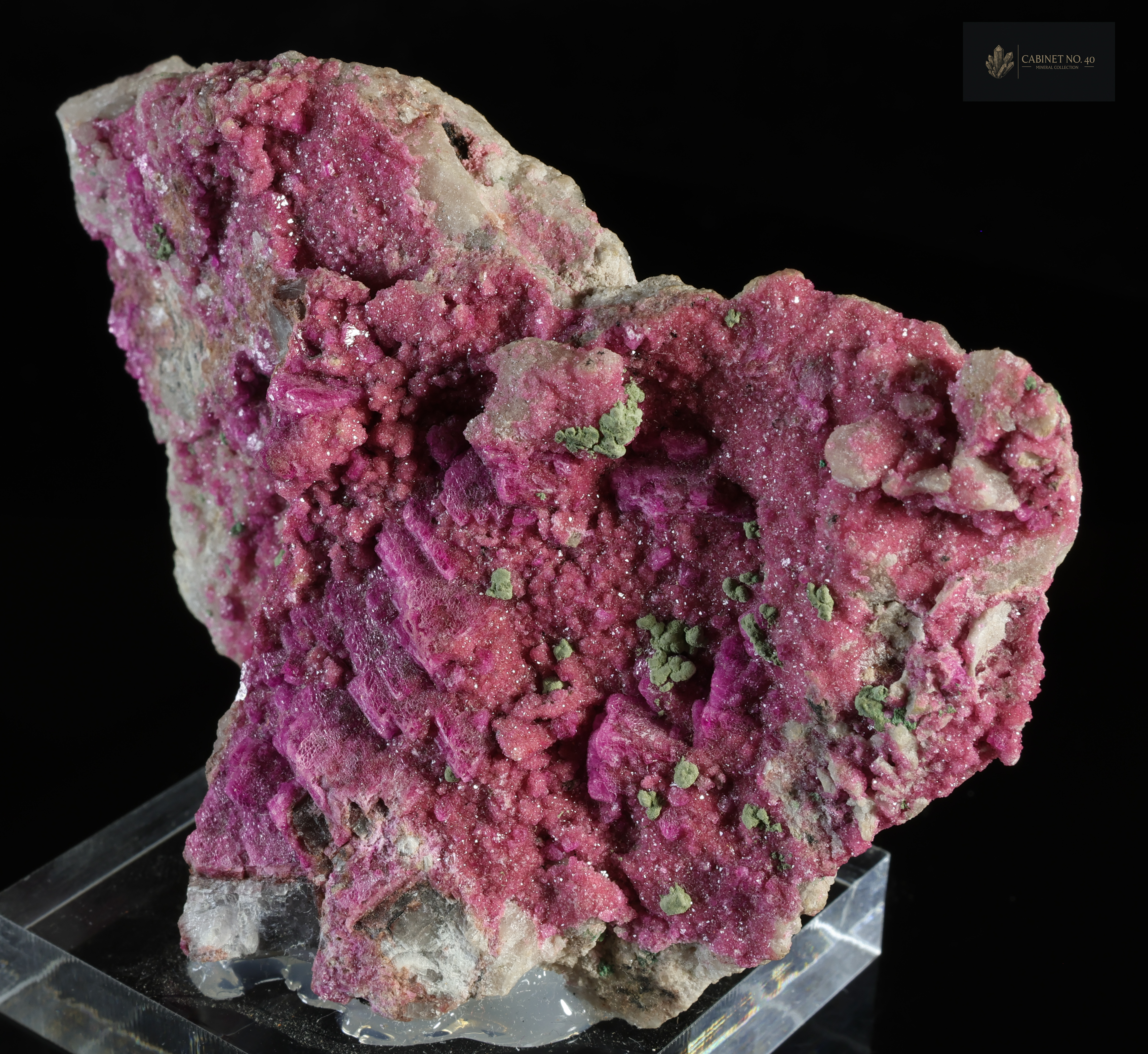
Kolwezite is a rare copper-cobalt carbonate mineral, typically forming fine, fibrous or radial aggregates of variable color.
Properties
- Mohs hardness
- 4
- Luster
- Matowy do ziemistego
- Streak
- Beige
- Density
- 3.97
- Cleavage
- Brak
- Fracture
- Nierówny
- Transparency
- Translucent
- Crystal system
- Triclinic
Diagnostic features
## Identification Kolwezite can be identified by its characteristic fibrous or radial aggregates and variable color, including shades of brown, beige, black, and greenish. Its relatively low hardness (4 on the Mohs scale) and beige streak are also helpful. It often occurs in association with other copper and cobalt minerals, which can be a diagnostic clue. ## Distinguishing from Similar Minerals Kolwezite can be confused with other copper and cobalt carbonate minerals, such as sphaerocobaltite. It differs from them in chemical composition and crystallographic system. It is distinguished from sphaerocobaltite by the presence of copper and a different crystallographic system. Accurate identification often requires laboratory tests, such as X-ray diffraction. ## Crystal Forms Kolwezite most often forms fine, fibrous or radial aggregates. Single, poorly formed crystals are rarer. These aggregates often form coatings or crusts on the surface of other minerals.
Geological environment
## Genesis Kolwezite forms in the oxidation zones of copper and cobalt deposits, where hydrothermal solutions react with primary minerals. These conditions favor the formation of copper and cobalt carbonates. Its presence is closely linked to rich deposits of these metals. ## Mineral Associations Kolwezite often co-occurs with other secondary copper and cobalt minerals, such as malachite, azurite, heterogenite, sphaerocobaltite, and various copper and cobalt oxide and hydroxide minerals. It may also occur in association with quartz and calcite. ## Localities The most important and well-known localities for kolwezite are in the Democratic Republic of Congo, especially in the Katanga region, around the city of Kolwezi. This is the type locality for this mineral. Other, less significant occurrences may appear in similar copper-cobalt deposits worldwide, but specimens from Congo are the most prized.
Rarity
Very Rare
For collectors
## Quality Criteria The most prized kolwezite specimens are characterized by intense and distinct color, well-formed, radial or fibrous aggregates, and a lack of mechanical damage. Specimen size is important, but due to the mineral's rarity, even smaller, well-formed specimens are sought after. Purity and contrast with the matrix also affect collector appeal. ## Market Prices Kolwezite prices vary widely and depend on the size, quality, and rarity of the specimen. Small but well-formed specimens can cost from tens to hundreds of Polish zlotys. Larger and more aesthetic specimens, especially those from well-documented localities, can fetch prices ranging from several hundred to even several thousand Polish zlotys. ## Popular Localities The most sought-after kolwezite specimens come from the Democratic Republic of Congo, particularly from mines in the Katanga region, such as Musonoi or Mashamba West, near Kolwezi. Specimens from these localities are valued for their typical form and color.
Care and storage
## Cleaning Kolwezite is a relatively soft mineral, so it requires gentle cleaning. It is best to use a soft brush and lukewarm distilled water. Avoid vigorous scrubbing, which could damage the delicate fibrous aggregates. ## What to Avoid Avoid using chemical cleaning agents, which can react with carbonates and damage the mineral's surface. Kolwezite is also sensitive to high temperatures and prolonged exposure to direct sunlight, which can lead to color changes. Due to the presence of copper, the mineral may be sensitive to moisture, so it should be stored in a dry environment. ## Storage Kolwezite specimens are best stored in sealed containers, away from dust and moisture. Airtight boxes with soft padding are ideal to prevent mechanical damage. Display should be in a place with stable temperature and away from direct light.