Cobaltocalcite
Chemical formula: (Ca,Co)CO₃
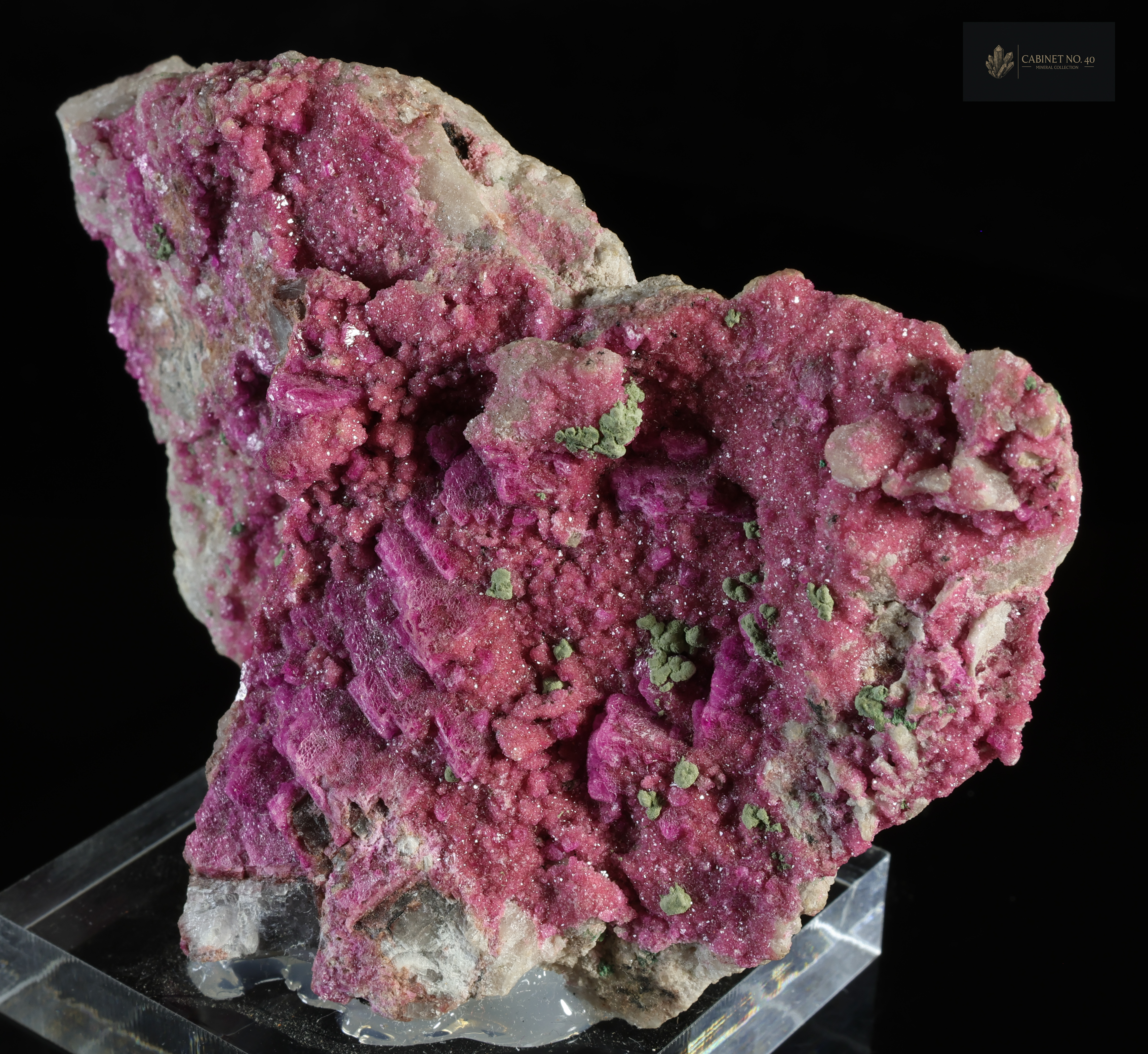
Cobaltocalcite is a rare, pink to red variety of calcite, whose color comes from cobalt impurities.
Properties
- Mohs hardness
- 3
- Luster
- Szklisty do perłowego
- Streak
- Biała
- Density
- 0
- Cleavage
- Doskonała wg {1011}
- Fracture
- Muszlowy do nierównego
- Transparency
- Przezroczysty do przeświecającego
- Crystal system
- Trygonalny
Diagnostic features
## Identification Cobaltocalcite can be identified primarily by its characteristic pink to red color and the typical Mohs hardness of calcite (3). It often occurs in reniform or botryoidal aggregates. It reacts with hydrochloric acid, releasing carbon dioxide, which is a diagnostic feature of calcite. ## Distinguishing from Similar Minerals It can be confused with rhodochrosite, which can also be pink, but rhodochrosite is usually harder (3.5-4 on the Mohs scale) and has different cleavage. It also differs from rose quartz, which is much harder (7 on the Mohs scale). ## Crystal Forms Cobaltocalcite most often occurs as massive, reniform, botryoidal, or radial aggregates. Less frequently, it forms rhombohedral or scalenohedral crystals, typical of calcite.
Geological environment
## Genesis Cobaltocalcite forms in low-temperature, hydrothermal ore veins, often in the oxidation zones of cobalt deposits. It forms by precipitation from solutions rich in carbonates and cobalt ions, which replace calcium ions in the calcite structure. ## Mineral Associations It co-occurs with other oxidation zone minerals, such as malachite, azurite, erythrite, as well as quartz, barite, and other carbonates. ## Localities Known localities for cobaltocalcite include deposits in Bou Azzer, Morocco, where beautiful, intensely pink specimens are found. Other localities include areas in the Democratic Republic of Congo, Germany (e.g., Schneeberg), and the United Kingdom.
Rarity
Rare
For collectors
## Quality Criteria The most prized specimens are those with intense, uniform color, without discoloration or damage. Large, well-formed botryoidal aggregates or crystals with a distinct habit are highly valued. Transparency and luster also contribute to the attractiveness of the specimen. ## Popular Localities The most sought-after specimens come from Bou Azzer, Morocco, which is famous for its exceptionally beautiful and intensely colored cobaltocalcites. Specimens from the Democratic Republic of Congo are also highly regarded.
Care and storage
## Cleaning Cobaltocalcite is a relatively soft mineral, so it requires gentle cleaning. It is best to use a soft brush and lukewarm water, possibly with a small amount of mild soap. After washing, rinse the specimen thoroughly with distilled water and dry with a soft cloth or allow to air dry. ## What to Avoid Avoid using strong chemicals, acids (calcite reacts with acids), and ultrasonic cleaners, which can damage the mineral's surface or cause cracks. Prolonged exposure to direct sunlight can lead to color fading. High temperatures and sudden temperature changes are also not recommended. ## Storage Cobaltocalcite is best stored in closed display cases or boxes, away from dust and direct light. Due to its softness, avoid contact with harder minerals that could scratch it. Stable temperature and moderate humidity are beneficial for preserving the specimen in good condition.