Kermesite
Chemical formula: Sb<sup>3+</sup><sub>2</sub>OS<sup>2-</sup><sub>2</sub>
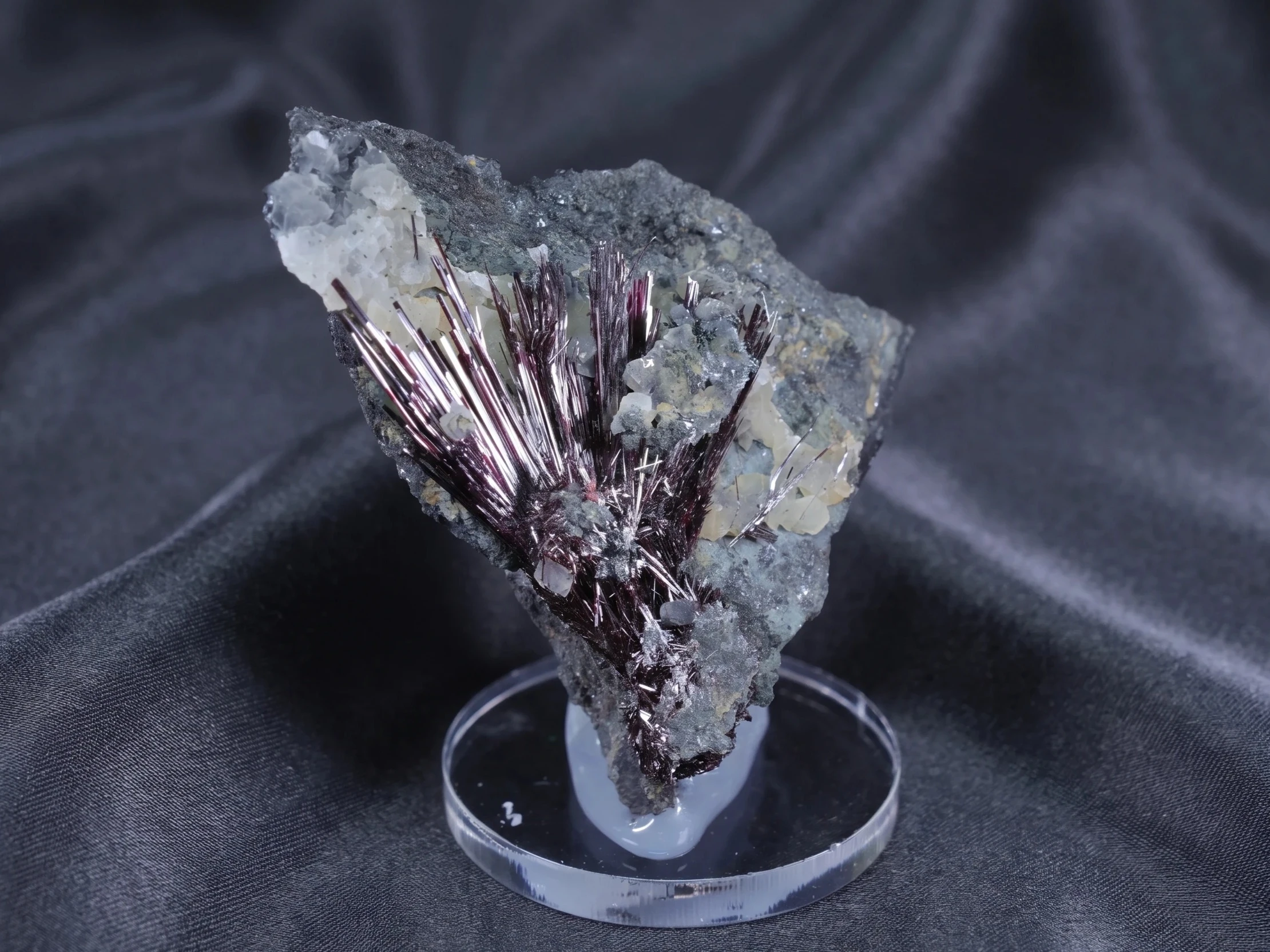
Kermesite is a rare antimony sulfoxide mineral, characterized by its intense red color and acicular habit.
Properties
- Mohs hardness
- 1-1.5
- Luster
- Adamantine
- Streak
- Brownish Red
- Density
- 4.5
- Cleavage
- Perfect on {100}
- Fracture
- Nierówny
- Transparency
- Translucent,Opaque
- Crystal system
- Triclinic
Diagnostic features
## Identification Kermesite can be identified by its characteristic, intense red color, acicular or fibrous crystal habit, and low hardness (it can be scratched with a fingernail). It often forms radial aggregates. The luster is usually metallic or adamantine. ## Distinguishing from Similar Minerals Kermesite can be confused with some sulfide minerals, such as cinnabar, which also has a red color. However, cinnabar is harder (2-2.5 on the Mohs scale) and has a different crystallization habit. Realgar, another red mineral, is more transparent and has a different hardness and chemical formula. Stibnite, although also an antimony mineral, has a metallic luster and a silvery-gray color. ## Crystal Forms Kermesite most commonly occurs as elongated, acicular or fibrous crystals. It often forms radial, fan-shaped, or tangled aggregates. Single, well-formed crystals are less common.
Geological environment
## Genesis Kermesite is a secondary mineral, forming in the oxidation zones of antimony deposits, often as a result of the alteration of stibnite. It forms under low temperature and pressure conditions, in the presence of oxygen and sulfur. ## Mineral Associations Kermesite often co-occurs with other antimony minerals, such as stibnite, valentinite, senarmontite, and with minerals like gypsum, calcite, and quartz. ## Localities Known localities for kermesite include: Příbram in the Czech Republic, Braunsdorf in Germany, Alșász in Romania, St. Andreasberg in the Harz Mountains in Germany, and some localities in China and the USA.
Rarity
Uncommon
For collectors
## Quality Criteria The most prized kermesite specimens are those with an intense, deep red color, well-formed, long, and undamaged crystals that form aesthetic aggregates. The size of the specimen, its purity, and the absence of mechanical damage also influence its collector's value. Specimens from rare localities may also be more sought after. ## Popular Localities Historically, prized specimens came from Alșász in Romania and Příbram in the Czech Republic. Currently, good quality specimens can also be found in China.
Care and storage
## Cleaning Kermesite is a very soft mineral, so it requires gentle cleaning. It is best to use a soft, dry brush to remove dust. For heavier soiling, the specimen can be carefully rinsed with distilled water, avoiding rubbing. ## What to Avoid Avoid using any chemical agents, including detergents and acids, as they can damage the mineral's surface. High temperatures and direct sunlight can also negatively affect kermesite's color, leading to fading. Due to its softness, specimens should be protected from impacts and scratches. ## Storage Kermesite should be stored in a closed display case or box, away from dust and light. Ideal conditions include stable temperature and low humidity. Due to its fragility, it is best to store it separately from harder minerals to prevent damage.