Cassiterite
Chemical formula: Sn<sup>4+</sup>O<sub>2</sub>
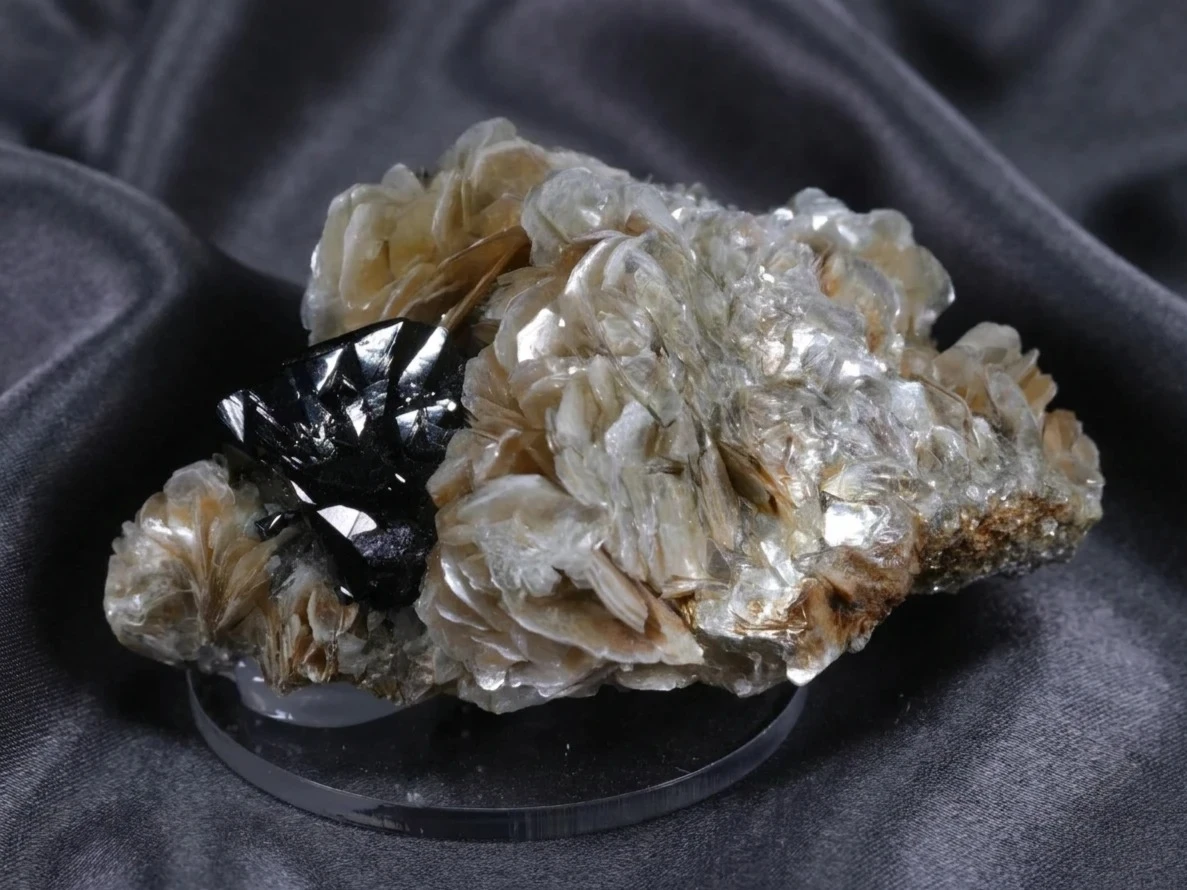
Cassiterite is a mineral from the oxide group, being the main ore of tin, characterized by high density and often occurring in the form of tetragonal crystals.
Properties
- Mohs hardness
- 6-7
- Luster
- Adamantine, Metallic
- Streak
- Brownish white, white, greyish
- Density
- 6.98
- Cleavage
- {100} imperfect, {110} indistinct.
- Fracture
- Muszlowy do nierównego
- Transparency
- Transparent,Translucent,Opaque
- Crystal system
- Tetragonal
Diagnostic features
## Identification Cassiterite can be identified by its high density, which is noticeable even in small specimens. Its adamantine or metallic luster and a Mohs hardness of 6-7 are also characteristic. The color, although variable, is often dark, brown, or black. The streak of cassiterite is white, grayish, or brownish-white. ## Distinguishing from Similar Minerals Cassiterite is sometimes confused with tourmaline, rutile, ilmenite, or other dark minerals. It differs from tourmaline by its higher density and the absence of tourmaline's characteristic triangular cross-section. It differs from rutile by its streak color (rutile has a brown to black streak) and often by its crystal habit. Ilmenite is usually less lustrous and has a black streak. ## Crystal Forms Cassiterite often forms prismatic or bipyramidal crystals with a tetragonal system. Twinning is common, especially geniculate twinning. It can also occur as granular, massive, radial, or reniform aggregates, especially in alluvial deposits.
Geological environment
## Genesis Cassiterite primarily forms in high-temperature hydrothermal veins associated with granites, in pegmatites and greisens. It is also an accessory mineral in some igneous rocks. Due to its resistance to weathering and high density, it often concentrates in secondary deposits, i.e., in river sands and gravels (placer deposits). ## Mineral Associations Cassiterite often co-occurs with quartz, muscovite, topaz, fluorite, wolframite, scheelite, arsenopyrite, pyrite, and other ore minerals. ## Localities Important cassiterite deposits are found in Bolivia (Potosí), China (Yunnan, Guangxi), Malaysia, Indonesia (Bangka and Belitung islands), Australia (Tasmania), Nigeria, Russia (Far East), and Cornwall in the United Kingdom.
Rarity
Very Common
For collectors
## Quality Criteria The most prized cassiterite specimens are well-formed, large, and transparent crystals with intense color and strong luster. Crystals with visible twinning are particularly sought after. The purity of the mineral and the absence of mechanical damage also affect its collector's value. Specimens with aesthetic mineral associations are also highly valued. ## Popular Localities The most prized cassiterite specimens come from Bolivia, especially from the Potosí region, where large, well-formed crystals are found. Other important localities include China, Australia, and Cornwall in the United Kingdom, known for historical and contemporary discoveries of high-quality specimens.
Care and storage
## Cleaning Cassiterite is a relatively hard and durable mineral. For cleaning specimens, warm water with mild soap and a soft brush is usually sufficient. After washing, rinse the mineral thoroughly with clean water and dry with a soft cloth. ## What to Avoid Avoid using strong acids and bases, which can damage the mineral's surface or associated minerals. Cassiterite is resistant to typical environmental conditions, but prolonged exposure to intense sunlight can sometimes affect its color. Temperature changes are usually not a problem, but sudden thermal shocks are not recommended. ## Storage Cassiterite should be stored in a dry, dust-free place. Specimens with high transparency or delicate crystal forms should be protected from scratches by placing them in separate boxes or on a soft surface. Display in a closed cabinet protects against the accumulation of contaminants.