Karibibite
Chemical formula: Fe<sup>3+</sup><sub>3</sub>(As<sup>3+</sup>O<sub>2</sub>)<sub>4</sub>(As<sup>3+</sup><sub>2</sub>O<sub>5</sub>)(OH)
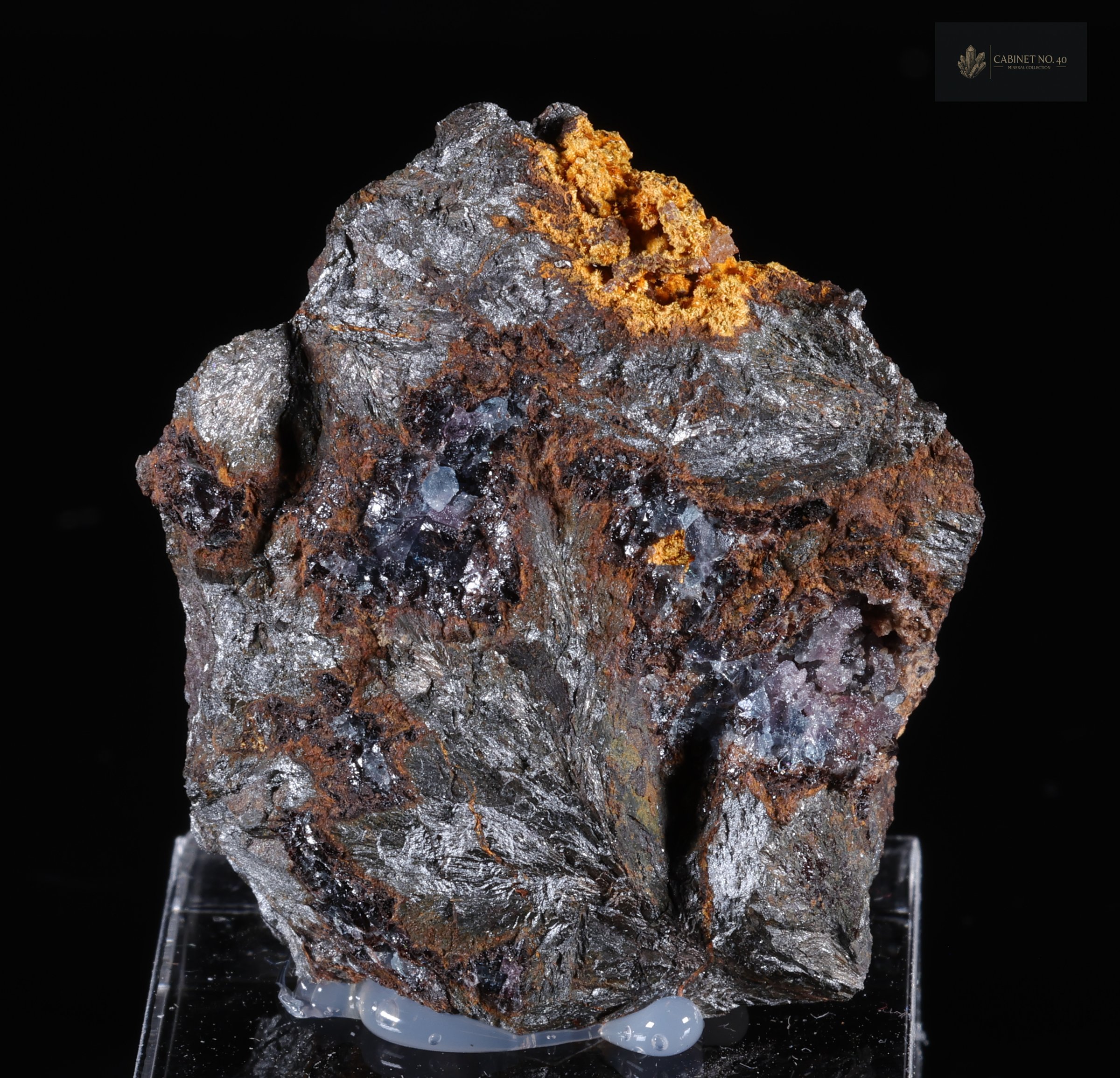
Karibibite is a rare arsenic, iron, and oxygen mineral, characterized by dark, acicular crystals, often forming radial aggregates.
Properties
- Mohs hardness
- 3-4
- Luster
- Metaliczny do półmetalicznego
- Streak
- Czarna
- Density
- 4.07
- Cleavage
- Brak
- Fracture
- Nierówny
- Transparency
- Nieprzezroczysty
- Crystal system
- Orthorhombic
Diagnostic features
## Identification Karibibite can be identified by its characteristic dark, acicular or fibrous crystals, often forming radial aggregates. The metallic or submetallic luster and black streak are also diagnostic features. Occurrence in association with other arsenic and iron minerals can be helpful in identification. ## Distinguishing from Similar Minerals Karibibite can be confused with other dark, acicular minerals such as goethite or pyrolusite. It differs from them in chemical composition (presence of arsenic) and specific occurrence conditions. Precise identification often requires laboratory tests, such as X-ray diffraction. ## Crystal Forms Karibibite most commonly occurs as acicular or fibrous crystals, which often form radial or dense, felt-like aggregates. Single, well-formed crystals are less common.
Geological environment
## Genesis Karibibite is a secondary mineral, formed in the oxidation zones of hydrothermal deposits rich in arsenic and iron. It forms as a result of weathering and transformation processes of other arsenic minerals, under low temperature and pressure conditions. ## Mineral Associations Karibibite often co-occurs with other arsenic minerals, such as pharmacolite, scorodite, as well as iron minerals like goethite and limonite. It can also be found in association with quartz and other silicate minerals. ## Localities The type locality of karibibite is the Arandis mine (Rössing), near Karibib in the Erongo Region, Namibia. Other confirmed occurrences are rare and include isolated occurrences in other regions of the world, always in similar geological environments.
Rarity
Rare
For collectors
## Quality Criteria The most prized karibibite specimens are those that display well-formed, acicular crystals in radial aggregates, with an intense, dark color and distinct luster. The size and aesthetics of the aggregates, as well as the absence of mechanical damage, influence their collector's value. ## Popular Localities The most sought-after karibibite specimens come from its type locality at the Arandis mine (Rössing) in Namibia. Specimens from this location are valued for their typicality and aesthetics.
Care and storage
## Cleaning Due to the brittleness and delicacy of karibibite's acicular crystals, cleaning should be performed with utmost caution. It is recommended to use a soft brush to remove loose dust. Avoid using water and other liquids, which can damage the delicate structures. ## What to Avoid Avoid contact with water, acids, and other chemicals that may react with the mineral. High temperatures and direct sunlight can also be harmful. Due to its arsenic content, caution should be exercised, and direct contact with the mineral without appropriate protection should be avoided. ## Storage Karibibite specimens are best stored in enclosed display cases or boxes, protected from dust and mechanical damage. It is advisable to place them in a dry environment, away from sources of moisture and temperature fluctuations. Due to the potential toxicity of arsenic, specimens should be stored out of reach of children and pets.