Kaolinite
Chemical formula: Al<sub>2</sub>Si<sub>2</sub>O<sub>5</sub>(OH)<sub>4</sub>
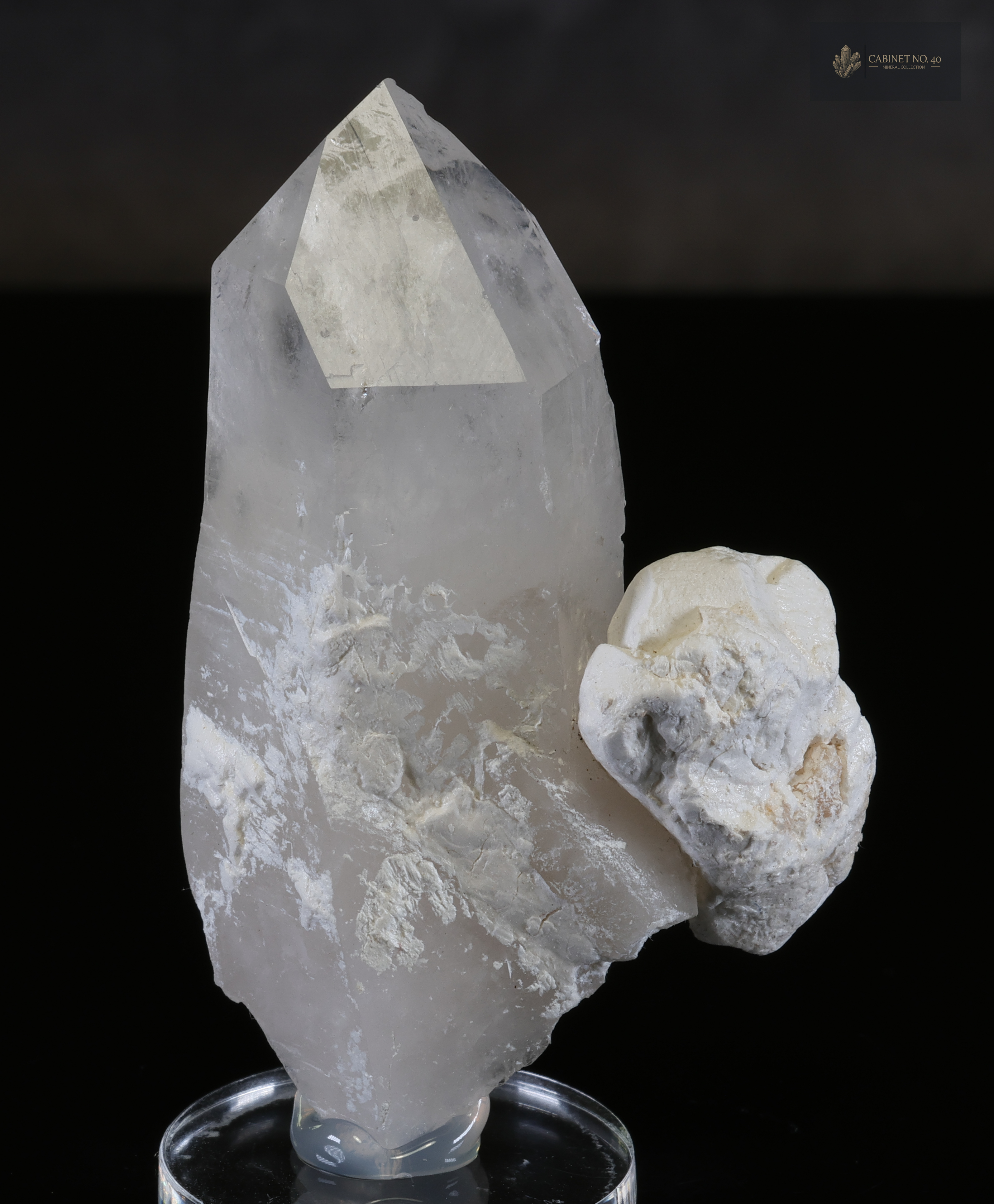
Kaolinite is a clay mineral of the kaolin group, an hydrated aluminum silicate, characterized by its white color and softness.
Properties
- Mohs hardness
- 2-2.5
- Luster
- Ziemisty, matowy
- Streak
- White, or paler than the sample.
- Density
- 2.68
- Cleavage
- on {001}.
- Fracture
- Ziemisty
- Transparency
- Translucent,Opaque
- Crystal system
- Triclinic
Diagnostic features
## Identification Kaolinite can be identified by its characteristic white or light color, earthy appearance, and softness. When moistened with water, it often emits a characteristic, clayey odor. It is a mineral with low hardness, yielding a white streak. To the touch, it can feel soapy or chalky. ## Distinguishing from Similar Minerals Kaolinite can be confused with other clay minerals, such as montmorillonite or halloysite, as well as chalk or talc. It differs from chalk by its lack of reaction with hydrochloric acid. It differs from talc by its lack of distinct cleavage and less slippery feel. Accurate differentiation from other clay minerals often requires laboratory tests, such as X-ray diffraction. ## Crystal Forms Kaolinite rarely forms macroscopic crystals. It usually occurs as very fine, hexagonal plates that form compact earthy, massive, or platy aggregates. These aggregates can also be powdery or compact, forming layers.
Geological environment
## Genesis Kaolinite primarily forms as a result of chemical weathering of aluminosilicate-rich rocks, such as feldspars, under humid and warm climatic conditions. This process, called kaolinization, involves the decomposition of primary minerals by rainwater and groundwater, often enriched in organic acids. It can also form through hydrothermal processes, where hot aqueous solutions alter the composition of rocks. ## Mineral Associations Kaolinite often co-occurs with other clay minerals, such as montmorillonite, illite, and halloysite. It is also found in association with quartz, muscovite, feldspars (especially those from which it formed), as well as iron and titanium minerals, which can be the source of its coloration. ## Localities Significant kaolinite deposits are found worldwide. Important localities include the United States (Georgia, South Carolina), Great Britain (Cornwall), Brazil, China, Australia, Czech Republic (near Karlovy Vary), and France. In Poland, kaolinite occurs, among other places, in Lower Silesia.
Rarity
Very Common
For collectors
## Quality Criteria For collectors who appreciate clay minerals, specimens with a pure, white color, without visible impurities, are important. Although kaolinite rarely forms large, well-formed crystals, specimens in which even microscopic crystalline forms or interesting aggregate textures can be observed are valuable. The size of the specimen is less important than its purity and aesthetics. ## Popular Localities The most prized kaolinite specimens come from localities known for the high purity and aesthetics of kaolin, such as some deposits in the USA (e.g., Georgia) or Great Britain (Cornwall). Specimens from these places are sought after due to their typical appearance and significance for understanding the genesis of clay minerals.
Care and storage
## Cleaning Kaolinite specimens, due to their softness and porosity, require delicate cleaning. It is best to use a soft, dry brush to remove loose dust. For heavier soiling, one can try gently rinsing the specimen with distilled water, avoiding prolonged soaking. After washing, it should be dried at room temperature, away from direct heat sources. ## What to Avoid Avoid using strong chemicals, acids, and bases, which can damage the mineral's structure. Kaolinite is susceptible to abrasion, so mechanical cleaning with hard tools should be avoided. Direct sunlight exposure for extended periods can lead to fading of some colors, although the mineral itself is stable. It is also important to avoid sudden temperature changes. ## Storage Kaolinite is best stored in a dry place, in airtight containers, to protect it from dust and moisture. Due to its softness, specimens should be protected from impacts and abrasions, preferably separately from harder minerals. When displayed in showcases, stable humidity and temperature conditions should be ensured.