Hessonite
Chemical formula: Ca₃Al₂(SiO₄)₃
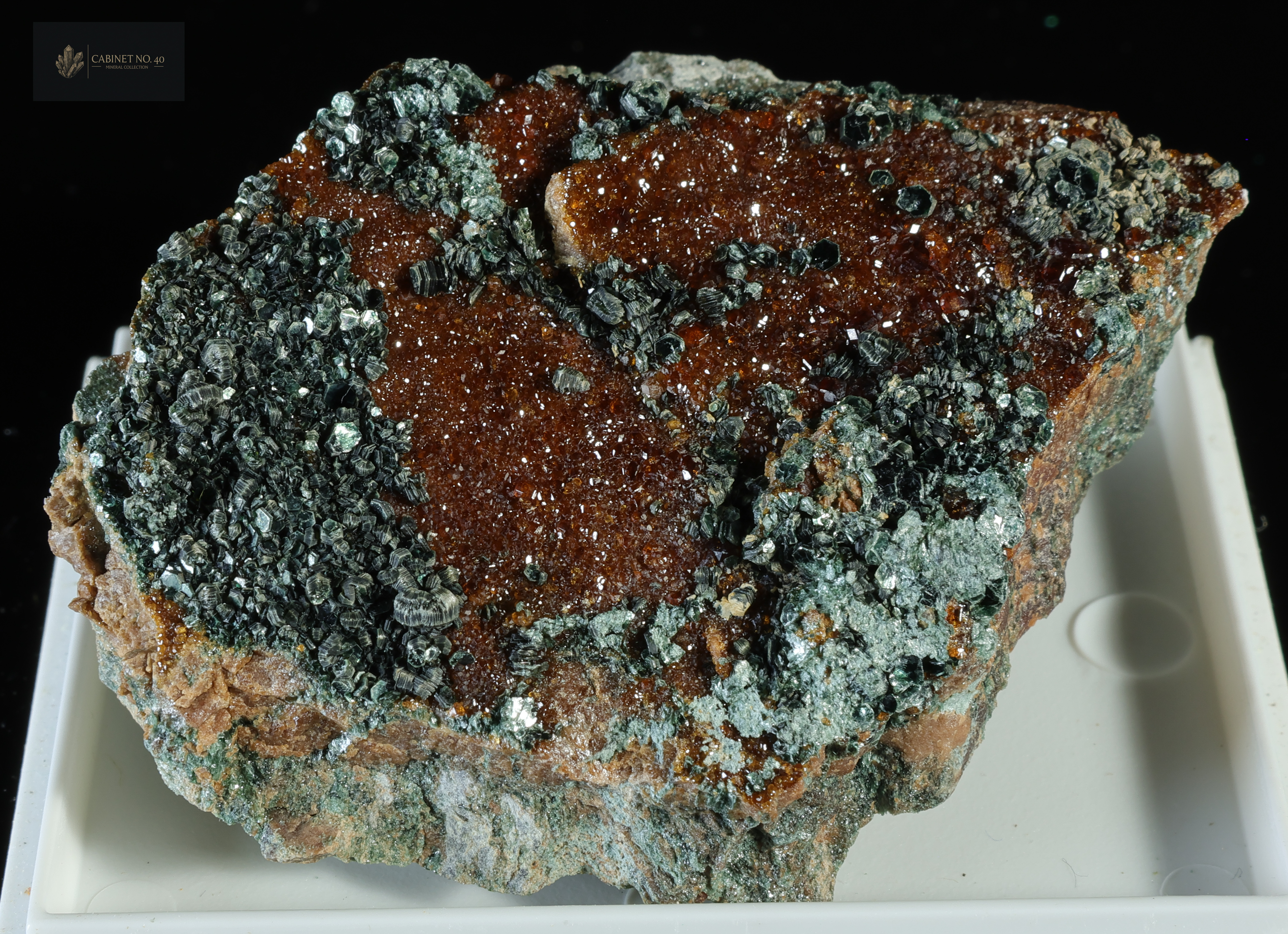
Hessonite is a variety of grossular garnet, characterized by colors ranging from orange-yellow to reddish-brown.
Properties
- Mohs hardness
- 7-7.5
- Luster
- Szklisty
- Streak
- Biała
- Density
- 3.62
- Cleavage
- Brak
- Fracture
- Muszlowy do nierównego
- Transparency
- Przezroczysty do przeświecającego
- Crystal system
- Regularny
Diagnostic features
## Identification Hessonite can be identified by its characteristic color, which ranges from orange-yellow to reddish-brown. It often exhibits a vitreous luster. To confirm identification, a hardness test (7-7.5 on the Mohs scale) and specific gravity measurement (approximately 3.62 g/cm³) can be performed. ## Distinguishing from Similar Minerals Hessonite can be confused with other garnets, such as spessartine, as well as with some varieties of zircon or chrysoberyl. It is usually distinguished from spessartine by a slightly darker and more reddish color. It can be distinguished from zircon based on density and refractive index. Chrysoberyl usually has higher hardness and a different color. ## Crystal Forms Hessonite most often occurs as well-formed crystals with a rhombic dodecahedral or icositetrahedral habit. It can also form granular or massive aggregates.
Geological environment
## Genesis Hessonite primarily forms in metamorphic rocks, such as skarns and marbles, which are the result of contact or regional metamorphism. It forms under conditions of high temperatures and pressures, where recrystallization of calcium- and aluminum-rich minerals occurs. ## Mineral Associations Hessonite often co-occurs with other minerals typical of metamorphic environments, such as diopside, vesuvianite, wollastonite, calcite, quartz, and other garnet varieties. ## Localities Significant hessonite deposits are found in Sri Lanka, where high-quality specimens are mined. Other important localities include Brazil, Canada (Quebec), Mexico (Coahuila state), Russia (Urals), Tanzania, Pakistan, Italy, and the United States (California, Vermont).
Rarity
Uncommon
For collectors
## Quality Criteria The most prized hessonite specimens are characterized by intense, uniform color, high transparency, and the absence of visible inclusions. Well-formed crystals with distinct faces and sharp edges are particularly sought after by collectors. The size of the stone also affects its value, with larger, good-quality specimens being rarer and more expensive. ## Popular Localities Sri Lanka is historically and remains one of the most important sources of high-quality hessonite. Specimens from this region are valued for their color and clarity. Other popular localities that yield interesting specimens include Brazil and Tanzania.
Care and storage
## Cleaning Hessonite can be cleaned with warm water and mild soap. A soft brush or cloth should be used to remove dirt from the stone's surface. After washing, the stone should be thoroughly rinsed with clean water and dried with a soft cloth. ## What to Avoid Avoid contact of hessonite with strong chemicals, such as acids or bases, which can damage its surface. Although it is a relatively hard mineral, it should be protected from sudden temperature changes and strong impacts, which can cause cracks. Prolonged exposure to direct sunlight is not recommended, as it can, in rare cases, affect the intensity of the color. ## Storage Hessonite should preferably be stored separately from other, harder minerals to avoid scratches. An ideal place is a soft pouch or a padded box. Storing it in a dry place, away from heat sources and direct light, will help preserve its beauty for many years.