Halite
Chemical formula: NaCl
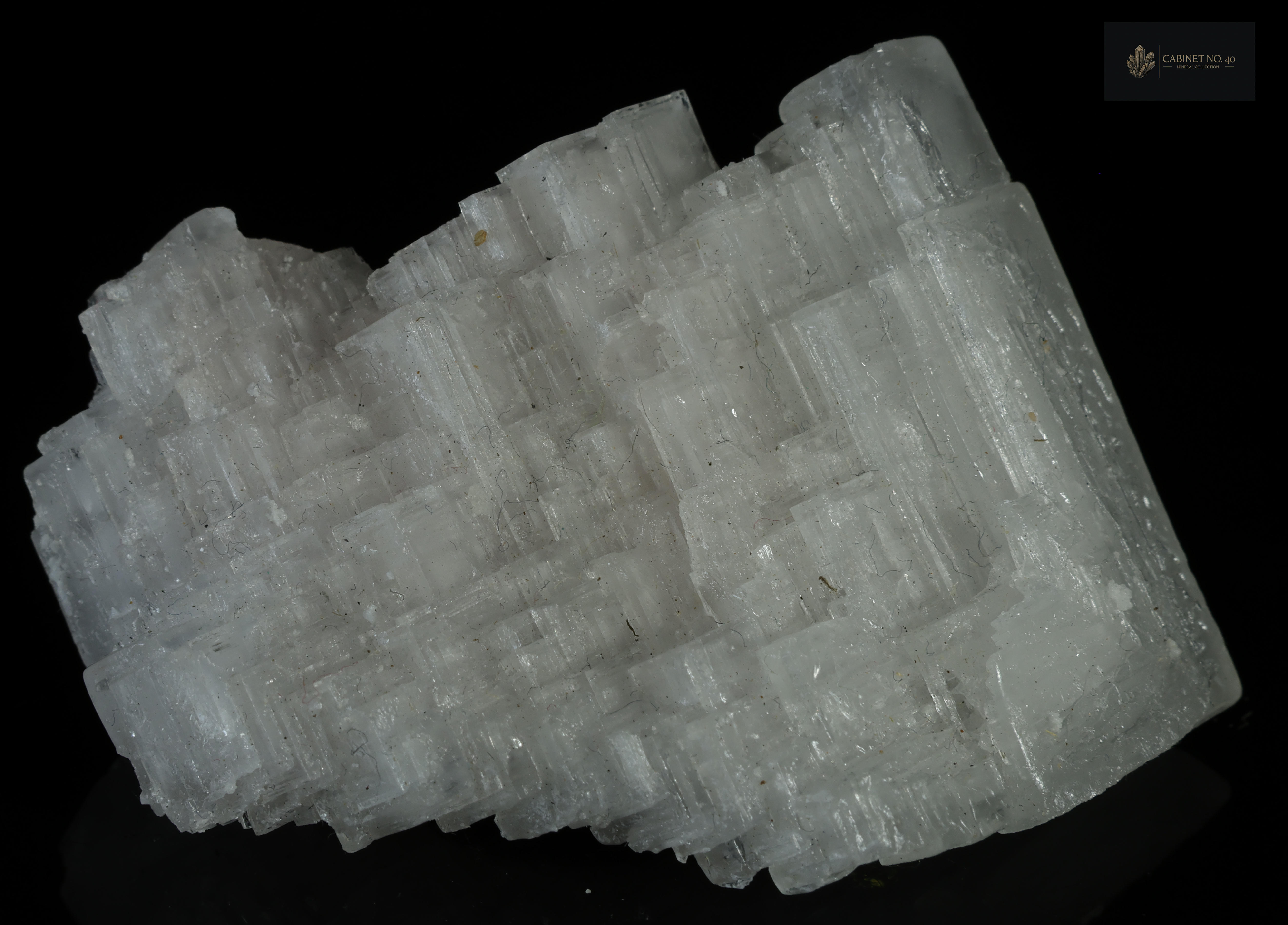
Halite is a mineral from the halide group, commonly known as rock salt, characterized by cubic crystals and easy solubility in water.
Properties
- Mohs hardness
- 2.5
- Luster
- Vitreous
- Streak
- White
- Density
- 2.168
- Cleavage
- On {001}
- Fracture
- Muszlowy
- Transparency
- Transparent,Translucent
- Crystal system
- Isometric
Diagnostic features
## Identification Halite is easy to identify due to its salty taste, low hardness (it can be scratched with a fingernail), and excellent cleavage, which causes it to break into perfect cubes. It often occurs as cubic crystals or massive aggregates. ## Distinguishing from Similar Minerals Halite can be confused with sylvite (KCl), which also forms cubic crystals and has a similar appearance. The main difference is taste – sylvite has a bitter aftertaste, while halite is salty. Additionally, sylvite is slightly harder and has a lower density. Other minerals, such as calcite or quartz, are much harder and do not dissolve in water. ## Crystal Forms Halite crystallizes in the isometric system, most often forming cubes. It can also occur as octahedra, though less commonly. It often forms granular or fibrous aggregates, as well as massive deposits. Skeletal crystals, known as "hopper crystals", which form due to rapid growth at the edges, are also characteristic.
Geological environment
## Genesis Halite forms mainly as a result of the evaporation of saline waters, both marine and lacustrine, in arid climates. It forms in evaporites, which are sedimentary rocks formed from the precipitation of minerals from aqueous solutions. Large halite deposits are often associated with ancient seas or lakes that have dried up. ## Mineral Associations Halite often co-occurs with other evaporite minerals, such as gypsum, anhydrite, sylvite, carnallite, and other potassium and magnesium salts. It can also form layers with clays and sandstones. ## Localities Significant halite deposits occur worldwide. The most important localities include: Wieliczka and Bochnia in Poland, Stassfurt in Germany, the Dead Sea region, as well as numerous deposits in the United States (e.g., in Texas, Louisiana) and Canada.
Rarity
Common
For collectors
## Quality Criteria The most prized halite specimens are those with well-formed, transparent or intensely colored cubic crystals, especially those with rare colors such as blue or purple. Large, undamaged crystals and aesthetic aggregates are also highly valued. Purity and the absence of foreign mineral inclusions increase the value of the specimen. ## Popular Localities Specimens from Wieliczka (Poland) are particularly sought after by collectors due to their historical significance and often beautiful forms. Other valued localities include Stassfurt (Germany) and deposits in the United States, which yield crystals of various colors.
Care and storage
## Cleaning Due to its solubility in water, cleaning halite requires caution. Specimens should be cleaned with a dry, soft brush or compressed air to remove dust. If moisture is necessary, it should be done very quickly and sparingly, preferably using a slightly damp cloth, and then immediately drying the specimen. ## What to Avoid Halite is very sensitive to moisture and water, which can cause it to dissolve and degrade. Contact with water, high humidity, and any chemical solutions should be avoided. Exposure to direct sunlight is not harmful to the mineral itself, but can lead to heating, which, combined with moisture, can accelerate its degradation. ## Storage Halite should be stored in a dry environment, preferably in airtight containers, to protect it from atmospheric moisture. Display cases with humidity control or airtight boxes with desiccants are ideal. Specimens should be placed away from water sources and areas with fluctuating temperatures.