Gibbsite
Chemical formula: Al(OH)<sub>3</sub>
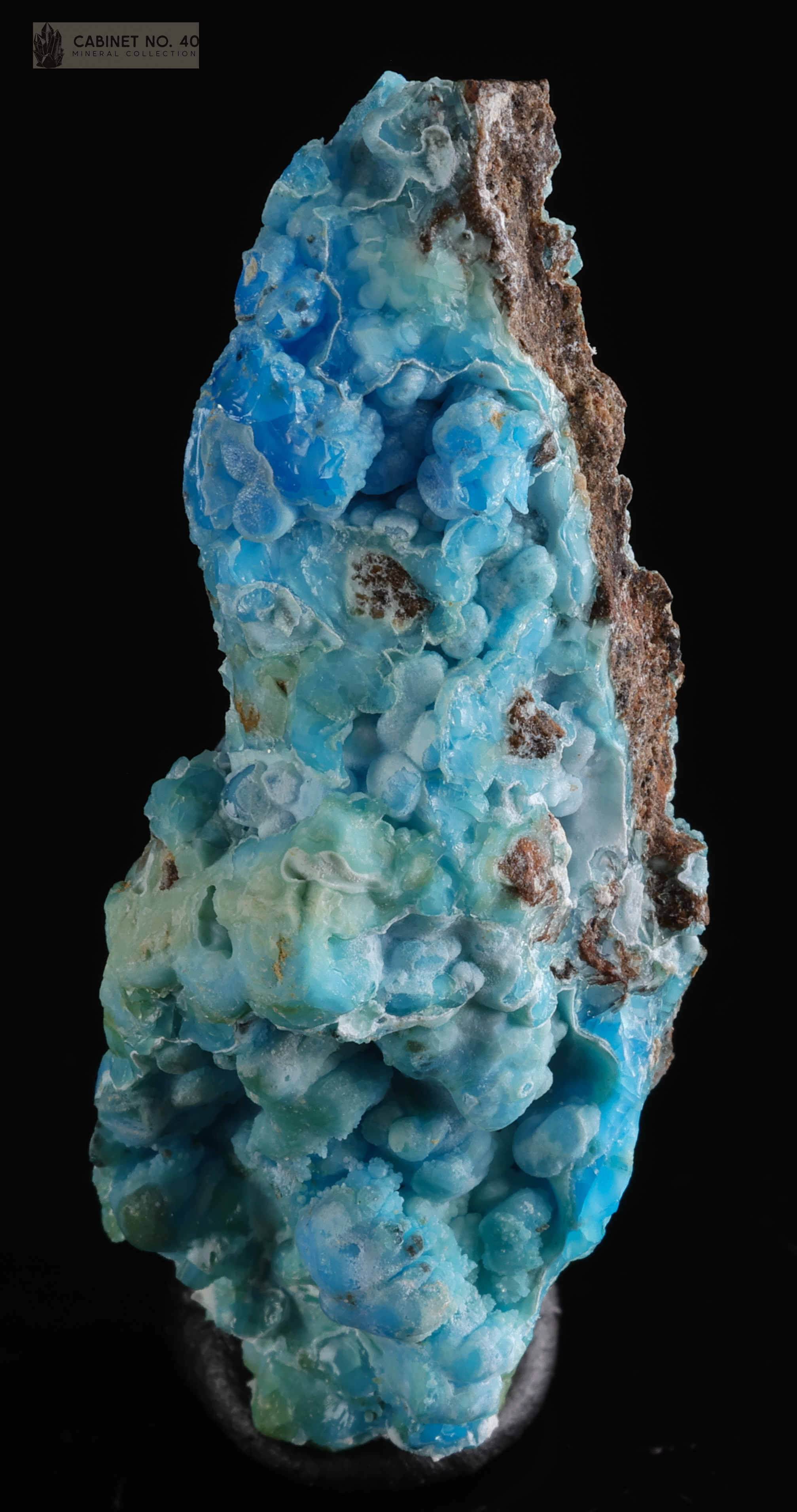
Gibbsite is a mineral from the aluminum hydroxide group, often occurring as coatings and earthy or massive aggregates.
Properties
- Mohs hardness
- 2.5-3
- Luster
- Szklisty, perłowy, ziemisty
- Streak
- White
- Density
- 2.38
- Cleavage
- {001}, but rarely observed because of its fine-grained nature.
- Fracture
- Brak
- Transparency
- Transparent,Translucent
- Crystal system
- Monoclinic
Diagnostic features
## Identification Gibbsite can be identified by its low hardness, white streak, and often earthy or massive habit. It occurs in botryoidal, stalactitic aggregates, or as coatings. Its characteristic pearly luster on cleavage surfaces is also distinctive, although cleavage is rarely observed in fine-grained specimens. ## Distinguishing from Similar Minerals Gibbsite can be confused with other aluminum minerals, such as kaolinite or diaspore, especially when it occurs in the form of massive aggregates. It can be distinguished from kaolinite by its higher density and different crystal structure. It differs from diaspore in chemical composition and optical properties. X-ray diffraction studies are often necessary for unambiguous identification. ## Crystal Forms Gibbsite crystals are usually small, platy, pseudohexagonal, often forming radial or spherulitic aggregates. It also occurs as massive, earthy masses, botryoidal aggregates, stalactites, and coatings. Well-formed, single crystals are rare.
Geological environment
## Genesis Gibbsite forms as a result of the weathering of aluminosilicates in tropical and subtropical environments, where intense leaching of silica and concentration of aluminum hydroxides occur. It is a typical secondary mineral, forming in weathering zones of aluminum-rich rocks such as granites, gneisses, and schists. It also occurs in laterites and bauxites. ## Mineral Associations Gibbsite often co-occurs with other aluminum minerals such as kaolinite, boehmite, diaspore, and with iron minerals such as goethite and hematite. It can also be found in association with quartz and other clay minerals. ## Localities Significant deposits of gibbsite, often as a component of bauxite, occur in many places around the world. Important localities include Guyana, Suriname, Brazil, Jamaica, Australia (e.g., Weipa), India, China, Russia (Urals), and the United States (Arkansas). In Europe, it occurs, among other places, in France and Hungary.
Rarity
Common
For collectors
## Quality Criteria The collector's appeal of gibbsite depends on several factors. The purity of color, especially the rarer shades of blue, green, or violet, is highly valued. Well-formed crystal forms, though rare, increase the specimen's value. The size and aesthetics of aggregates, such as botryoidal aggregates or stalactites, also contribute to its attractiveness. Specimens with a distinct pearly luster are more desirable. ## Popular Localities The most prized gibbsite specimens come from localities known for well-formed crystals or aesthetic aggregates. Such places include some bauxite mines in Brazil and Guyana, where specimens of interesting morphology and color can be found.
Care and storage
## Cleaning Gibbsite is a relatively soft mineral, so it should be cleaned gently. For removing dust and light dirt, a soft brush or paintbrush is recommended. For heavier dirt, lukewarm distilled water with a small amount of mild soap can be used, followed by thorough rinsing and drying with a soft cloth. Avoid vigorous rubbing. ## What to Avoid Avoid contact of gibbsite with strong acids and bases, which can damage it. The mineral is sensitive to high temperatures, which can lead to its dehydration and change in properties. Prolonged exposure to direct sunlight can also affect its color. It is also important to avoid sudden temperature changes. ## Storage Gibbsite is best stored in a dry place, away from heat sources and direct sunlight. Due to its softness, specimens should be stored separately from harder minerals to avoid scratches. Enclosed display cases or boxes with soft lining are ideal for protection against dust and mechanical damage.