Gadolinite
Chemical formula: Ce₂Fe²⁺Be₂O₂(SiO₄)₂
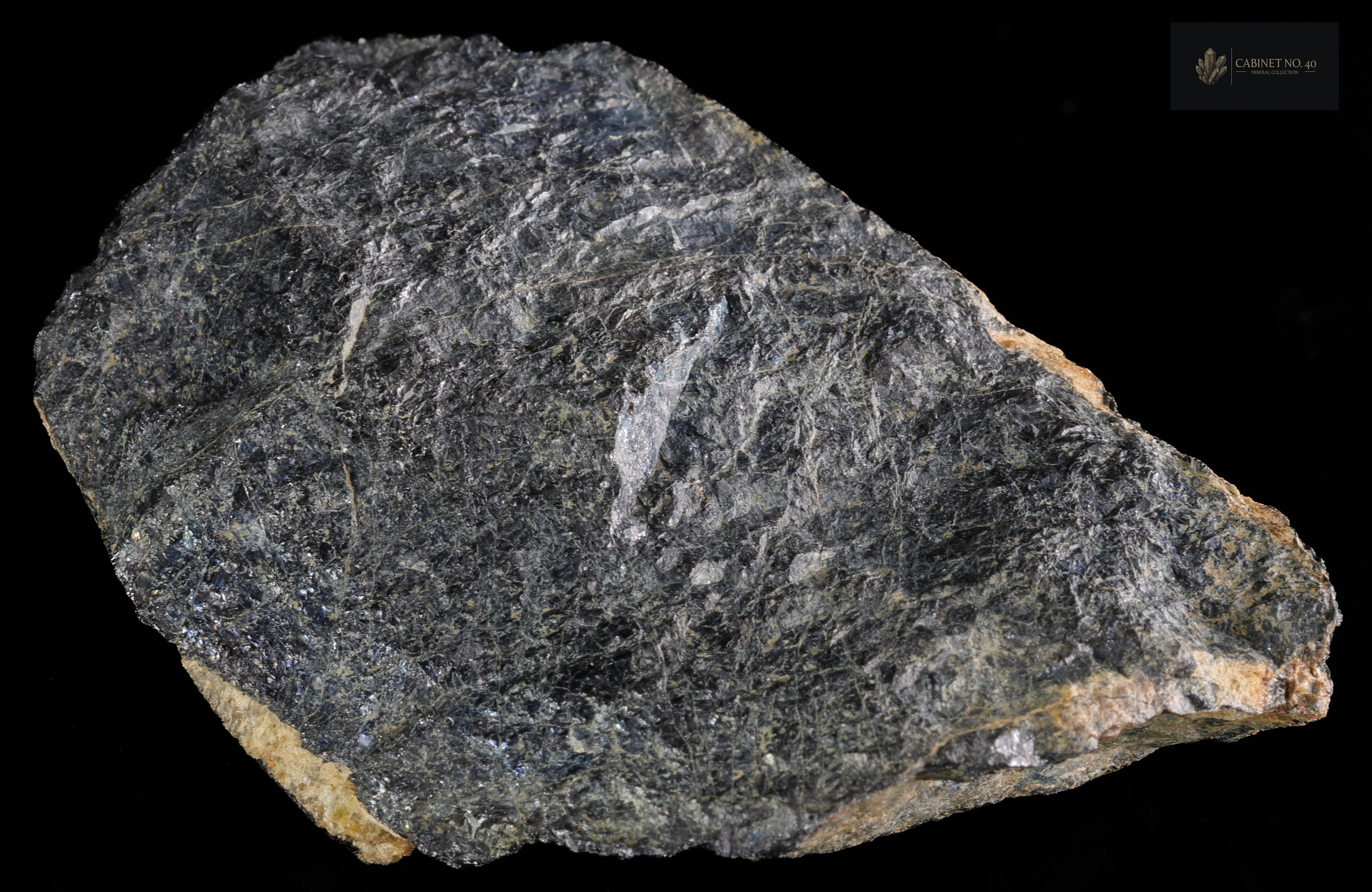
Gadolinite is a rare silicate mineral, an important source of rare earth elements, especially cerium and yttrium.
Properties
- Mohs hardness
- 6.5-7
- Luster
- Vitreous
- Streak
- Zielonkawoszara
- Density
- 4.20
- Cleavage
- Brak
- Fracture
- Muszlowy do nierównego
- Transparency
- Nieprzezroczysty
- Crystal system
- Monoclinic
Diagnostic features
## Identification Gadolinite can be identified by its black color, vitreous luster on the fracture, and relatively high hardness (6.5-7 on the Mohs scale). It often occurs as massive aggregates, less commonly forming distinct crystals. High density (approximately 4.20) is also a diagnostic feature. ## Distinguishing from Similar Minerals Gadolinite can be confused with other black minerals, such as tourmaline (schorl) or obsidian. It differs from tourmaline by the lack of distinct cleavage and a different crystallization habit. From obsidian, which is volcanic glass, gadolinite differs in its crystalline structure and hardness. In case of doubt, precise identification requires chemical or X-ray analysis. ## Crystal Forms Gadolinite most often occurs as massive, granular, or radial aggregates. Less commonly, it forms well-developed, short-prismatic or tabular crystals with a monoclinic habit. Crystal faces are often dull, and the vitreous luster is mainly visible on fresh fractures.
Geological environment
## Genesis Gadolinite forms in granitic pegmatites and in some alkaline igneous rocks. It is a high-temperature mineral, crystallizing in the late stages of magma solidification, in environments rich in rare earth elements, beryllium, and silicon. ## Mineral Associations Gadolinite often co-occurs with other pegmatite minerals, such as quartz, feldspars (orthoclase, albite), micas (biotite, muscovite), as well as other rare earth element-bearing minerals, such as allanite, monazite, or xenotime. It can also be found in association with fluorite, topaz, and beryl. ## Localities Significant deposits of gadolinite were discovered in Ytterby, Sweden, where it was first described. Other important localities include Norway (e.g., Iveland), the United States (Colorado, Texas), Canada (Quebec, Ontario), Russia (Urals), Kazakhstan, and China.
Rarity
Rare
For collectors
## Quality Criteria The most prized gadolinite specimens are well-formed, distinct crystals with an intense black color and vitreous luster. The size of the crystals, their completeness, and the absence of mechanical damage are crucial for their collector's value. Specimens from rare localities or those showing interesting associations with other minerals are also highly valued. ## Popular Localities The most sought-after specimens come from historical localities such as Ytterby in Sweden and from regions of Norway, which are famous for well-formed crystals. Specimens from Colorado in the USA are also highly regarded by collectors.
Care and storage
## Cleaning Gadolinite specimens should be cleaned gently, using a soft brush and lukewarm water. Distilled water can be used to avoid hard water deposits. After washing, the mineral should be thoroughly dried with a soft cloth. ## What to Avoid Avoid using aggressive chemicals such as acids or strong detergents, which can damage the mineral's surface. Gadolinite is a brittle mineral, so it should be protected from impacts and falls. Prolonged exposure to intense sunlight is not recommended, although there is no direct evidence of its negative impact on this mineral. Sudden temperature changes should also be avoided. ## Storage Gadolinite is best stored in enclosed display cases or boxes to protect it from dust and mechanical damage. It is advisable to store it separately from harder minerals that could scratch it. Due to the potential radioactivity of some specimens, it is recommended to store them in ventilated rooms and avoid prolonged direct contact.