Fuchsite
Chemical formula: K(Al,Cr)₃Si₃O₁₀(OH)₂
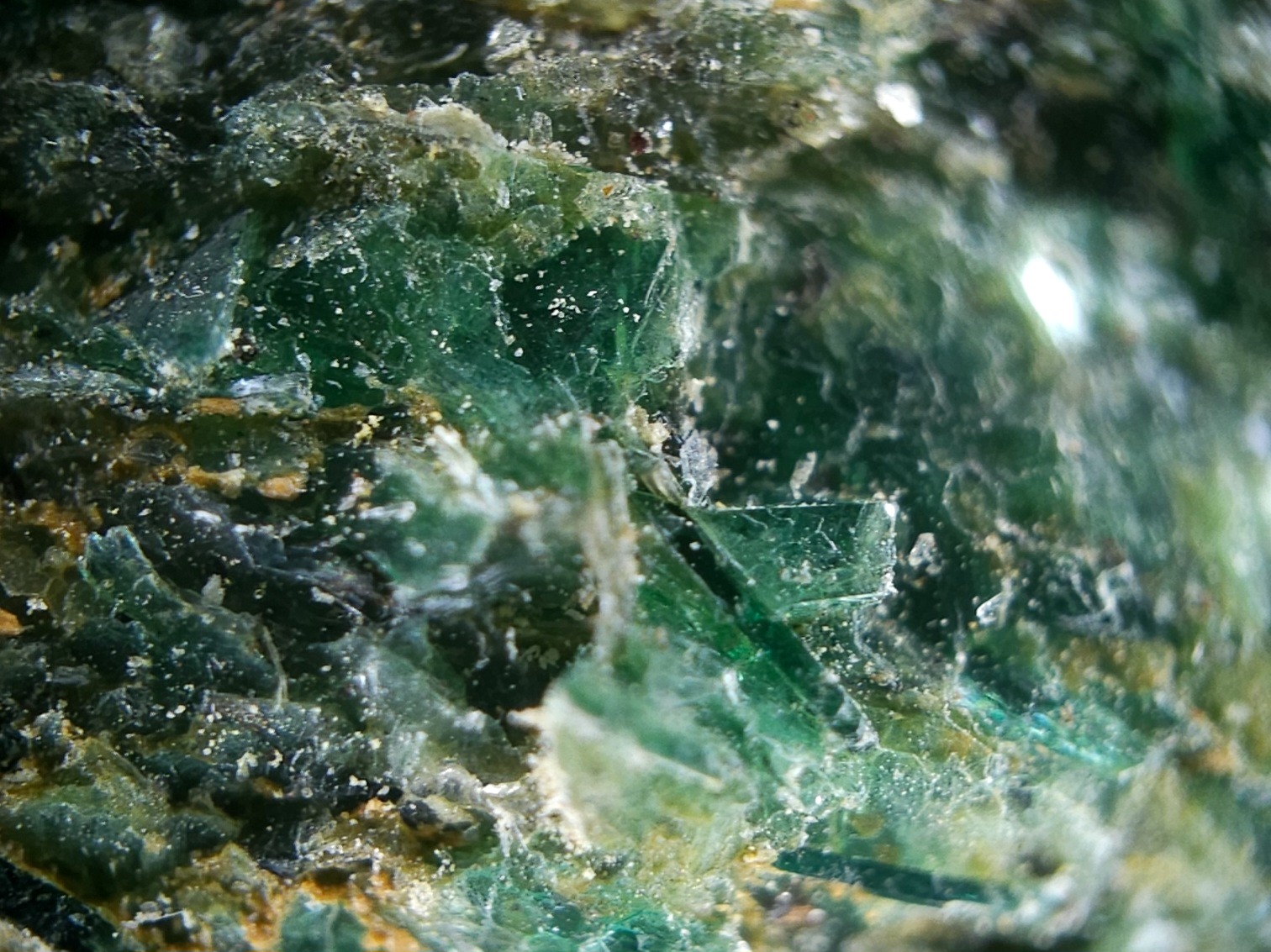
Fuchsite is a green variety of muscovite, a mineral from the mica group, characterized by its intense color imparted by chromium.
Properties
- Mohs hardness
- 2-2.5
- Luster
- Pearly to Vitreous
- Streak
- White
- Density
- 0
- Cleavage
- Perfect on {001}
- Fracture
- Uneven
- Transparency
- Transparent to Translucent
- Crystal system
- Monoclinic
Diagnostic features
## Identification Fuchsite can be identified by its characteristic, intense green color, pearly luster, and perfect cleavage, which allows it to be split into thin, flexible sheets. It is relatively soft and can be scratched with a fingernail. It usually occurs as fine-grained aggregates or flakes. ## Distinguishing from Similar Minerals Fuchsite is sometimes confused with other green minerals such as chlorite or serpentine. It differs from chlorite by the greater flexibility of its flakes and often a more intense, emerald-green color. Serpentine usually has a more waxy luster and a different structure. It differs from aventurine (a green variety of quartz) by its significantly lower hardness and distinct cleavage; aventurine is harder and does not exhibit cleavage. ## Crystal Forms Fuchsite most often occurs as fine-grained aggregates, flakes, or lamellae. Less commonly, it forms well-developed, tabular or prismatic crystals. Aggregates can be compact or disseminated in the host rock.
Geological environment
## Genesis Fuchsite forms in metamorphic rocks, especially in crystalline schists and quartzites, where it is a product of regional or contact metamorphism. Its presence is associated with metasomatic processes in which chromium is introduced into the mineral-forming environment. It often occurs in association with other chromium minerals. ## Mineral Associations Fuchsite often co-occurs with quartz, forming green quartzites known as fuchsite aventurine. It can also be found in association with other micas, chlorites, garnets (especially uvarovite, which also contains chromium), and chromium minerals such as chromite. ## Localities Known deposits of fuchsite are found in many places around the world. Important localities include Brazil (especially the Minas Gerais region), India (where it occurs in aventurine), Russia (Urals), Austria (Alps), Canada (Ontario), USA (North Carolina, Virginia), and Norway.
Rarity
Not very common
For collectors
## Quality Criteria The most prized fuchsite specimens are those with an intense, emerald-green color, without visible impurities or damage. Large, well-formed flakes or aggregates with a distinct pearly luster are particularly sought after. Specimens in which fuchsite is evenly distributed in quartz, creating an attractive aventurine, are also highly desirable. ## Popular Localities The most valued fuchsite specimens come from Brazil and India, where it occurs as high-quality jewelry material. Russian deposits in the Urals also provide beautiful specimens. Specimens from Austria and Norway are valued for their aesthetics and rarity in these regions.
Care and storage
## Cleaning Fuchsite is a relatively soft mineral, so it should be cleaned gently. It is best to use a soft cloth or brush and lukewarm water. Mild soap can also be used, followed by thorough rinsing of the specimen with clean water. After washing, it should be dried with a soft cloth. ## What to Avoid Avoid using aggressive chemicals such as acids or strong detergents, which can damage the mineral's surface. Fuchsite is sensitive to high temperatures, which can cause color loss or structural damage. Prolonged exposure to direct sunlight can also lead to color fading. Due to its cleavage, fuchsite is susceptible to mechanical damage, so it should be protected from impacts and scratches. ## Storage Fuchsite is best stored in separate soft cloth pouches or padded boxes to prevent scratching by harder minerals. Avoid areas with high humidity and fluctuating temperatures. Fuchsite specimens can be displayed in showcases, away from direct sunlight.