Fornacite
Chemical formula: Cu<sup>2+</sup>Pb<sup>2+</sup><sub>2</sub>(Cr<sup>6+</sup>O<sub>4</sub>)(As<sup>5+</sup>O<sub>4</sub>)(OH)
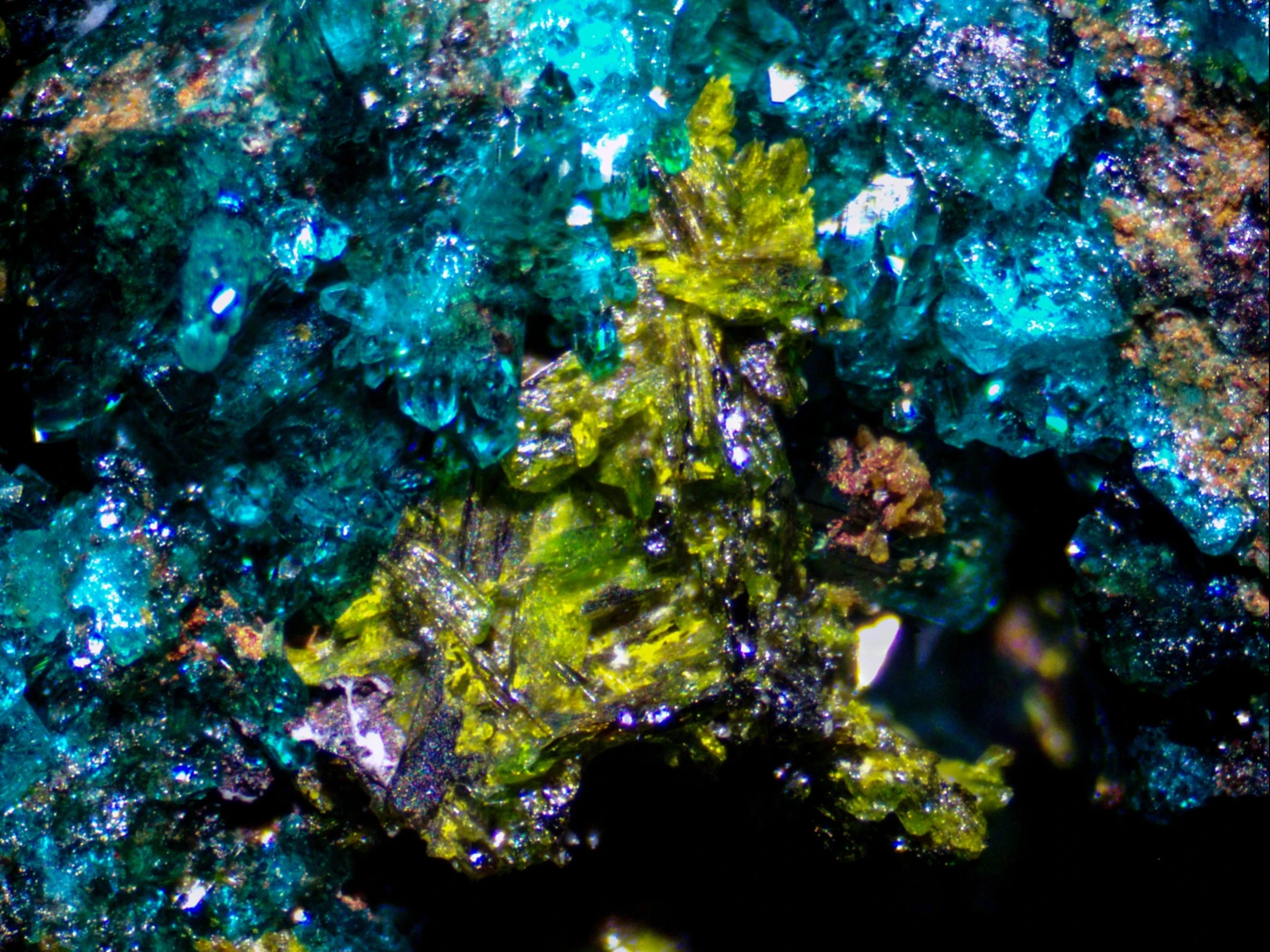
Fornacite is a rare lead, copper, chromium, and arsenic mineral, typically forming small, olive-green crystals.
Properties
- Mohs hardness
- 2-3
- Luster
- Diamentowy do szklistego
- Streak
- Olive green
- Density
- 6.27
- Cleavage
- Brak
- Fracture
- Nierówny
- Transparency
- Transparent
- Crystal system
- Monoclinic
Diagnostic features
## Identification Fornacite can be identified by its characteristic olive-green color, high density, and low hardness. It often occurs as small, well-formed crystals with an adamantine luster. In transmitted light, smaller grains may exhibit golden-yellow hues. The mineral's streak is olive-green. ## Distinguishing from Similar Minerals Fornacite can be confused with other green secondary minerals from the oxidation zone, such as dioptase, malachite, or wulfenite. It differs from dioptase by its lower hardness and lack of characteristic rhombohedral crystals. It differs from malachite by its lack of reaction with acids and a different streak color. From wulfenite, which also contains lead and chromium, it is distinguished by the presence of arsenic and usually a different crystallization habit and color. ## Crystal Forms Fornacite crystallizes in the monoclinic system, most often forming small, columnar or tabular crystals. They frequently occur in radial aggregates, crusts, or as coatings on other minerals. The crystals are usually well-formed, which facilitates their identification.
Geological environment
## Genesis Fornacite is a secondary mineral, formed in the oxidation zones of ore deposits, especially where lead, copper, chromium, and arsenic deposits occur. It forms as a result of the weathering processes of primary ore minerals in the presence of groundwater rich in these elements. ## Mineral Associations Fornacite often co-occurs with other secondary minerals of the oxidation zone, such as cerussite, mimetite, wulfenite, dioptase, malachite, azurite, goethite, and various iron and manganese oxides. The presence of these minerals indicates its formation environment. ## Localities The most important fornacite localities include Fornace in Sardinia, Italy, where it was discovered. Other known occurrences include Tsumeb in Namibia, where well-formed crystals have been found, and some deposits in the United States and Australia.
Rarity
Uncommon
For collectors
## Quality Criteria The most prized fornacite specimens are those with well-formed, distinct crystals of intense, uniform olive-green color. The transparency of the crystals and their luster are also important. Specimens with aesthetic crystal aggregates or those embedded in an attractive matrix are particularly sought after. Crystal size also matters, although fornacite rarely forms large specimens. ## Popular Localities The most prized fornacite specimens come from Fornace in Sardinia, Italy, and from the Tsumeb mine in Namibia. Specimens from these localities often feature the best crystal development and intense color.
Care and storage
## Cleaning Due to its low hardness (2-3 on the Mohs scale) and the presence of lead, fornacite requires gentle cleaning. It is best to use a soft brush to remove dust. For heavier soiling, lukewarm distilled water can be used to gently rinse the specimen, avoiding prolonged soaking. After washing, it should be dried with a soft cloth or left to air dry. ## What to Avoid Avoid using any chemical cleaning agents, acids, or solvents, which can damage the mineral's surface or alter its color. Fornacite is susceptible to scratches, so it should not be cleaned with hard tools. Prolonged exposure to direct sunlight may potentially affect its color, although there is no conclusive data confirming fading. High temperatures and sudden temperature changes can also be harmful. ## Storage Fornacite should be stored in a dry place, away from dust and direct sunlight. It is ideally suited for storage in a closed display case or a box with soft padding to prevent mechanical damage. Due to its lead content, it is advisable to wash hands after contact with the mineral, although the risk is minimal with standard handling of the specimen.