Dresserite
Chemical formula: Ba<sub>2</sub>Al<sub>4</sub>(CO<sub>3</sub>)<sub>4</sub>(OH)<sub>8</sub>·3H<sub>2</sub>O
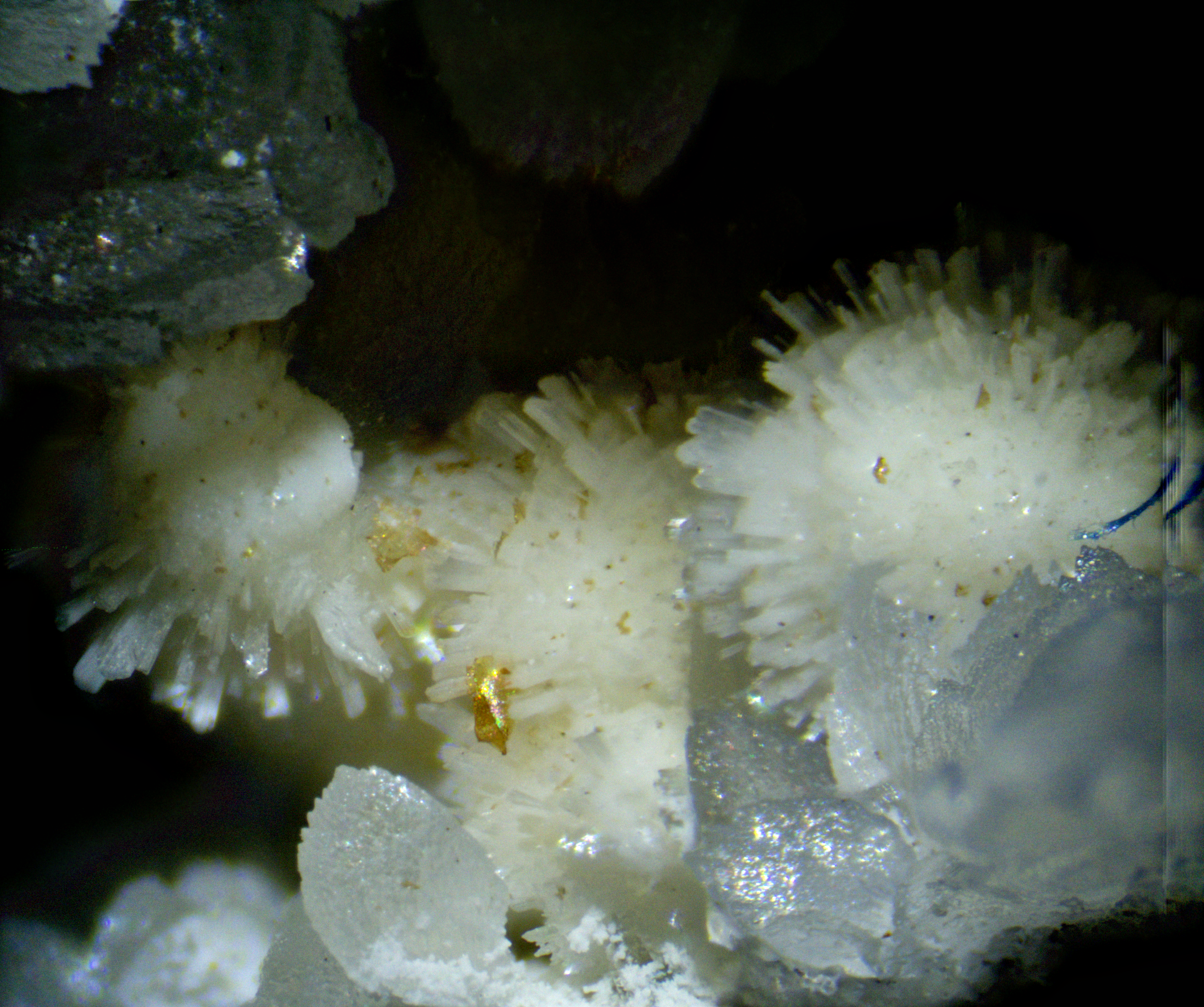
Dresserite is a rare barium and aluminum carbonate mineral, typically forming white, radiating aggregates of acicular crystals.
Properties
- Mohs hardness
- 2.5-3
- Luster
- Vitreous, Silky
- Streak
- White
- Density
- 2.96
- Cleavage
- No cleavage reported.
- Fracture
- Nieokreślony
- Transparency
- Transparent
- Crystal system
- Orthorhombic
Diagnostic features
## Identification Dresserite can be identified by its characteristic habit – radiating aggregates of acicular or platy crystals of white color. Vitreous to silky luster and low hardness (2.5-3 on the Mohs scale) are also diagnostic features. However, definitive identification requires laboratory analysis, such as X-ray diffraction. ## Distinguishing from Similar Minerals Due to its white color and radiating habit, dresserite can be confused with other white, fibrous minerals, such as some zeolites, calcite, or aragonite. It differs from calcite and aragonite by its chemical composition and lack of distinct cleavage. It differs from zeolites primarily in chemical composition and density. ## Crystal Forms Dresserite typically forms acicular or platy crystals that aggregate into radiating clusters, spherulites, or crusts. Individual crystals are usually very small and difficult to observe without magnification.
Geological environment
## Genesis Dresserite is a secondary mineral that forms in low-temperature hydrothermal environments, often in alkaline pegmatites or altered igneous rocks. Its presence is associated with hydrothermal alteration processes, where solutions rich in barium and aluminum react with carbonates. ## Mineral Associations Dresserite often co-occurs with other rare carbonate minerals, such as dawsonite, strontianite, barite, as well as silicate minerals and zeolites, which are typical of hydrothermal environments. ## Localities The most famous locality for dresserite is Mont Saint-Hilaire in Quebec, Canada, where it was discovered. This is a classic locality for many rare alkaline minerals. Other occurrences are very few and usually limited to similar geological environments.
Rarity
Extremely Rare
For collectors
## Quality Criteria The most prized dresserite specimens are those that exhibit well-formed, radiating crystal aggregates with an intensely white color and distinct luster. The size of the aggregates, their aesthetics, and the absence of mechanical damage are key factors influencing collector value. Specimens with rare mineral associations are also highly valued. ## Market Prices Dresserite prices vary widely and depend on the size, quality, and rarity of the specimen. Due to its rarity, even small, well-formed specimens can fetch prices from tens to hundreds of dollars. Larger and more aesthetic aggregates, especially those from Mont Saint-Hilaire, can be significantly more expensive. ## Popular Localities Mont Saint-Hilaire in Quebec, Canada, remains the most important and highly valued source of dresserite for collectors. Specimens from this locality are sought after for their historical significance and often exceptional quality.
Care and storage
## Cleaning Due to its softness and delicate structure, dresserite should be cleaned very carefully. It is recommended to use a soft brush, such as a makeup brush, to remove dust. For heavier soiling, distilled water can be used, applied gently and the specimen quickly dried. ## What to Avoid Avoid using any chemicals, including detergents and acids, as they can damage the mineral's surface. Dresserite is sensitive to temperature changes and direct sunlight, which can lead to its degradation. High humidity is also not advisable. Due to its low hardness, it should be protected from scratches. ## Storage Dresserite specimens are best stored in enclosed display cases or boxes, away from dust and direct light. Ideal conditions include stable temperature and low humidity. Delicate specimens, especially those with a radiating structure, should be protected from mechanical damage, for example, by placing them in soft material or special foam-lined containers.