Herkimer Diamond
Chemical formula: SiO₂
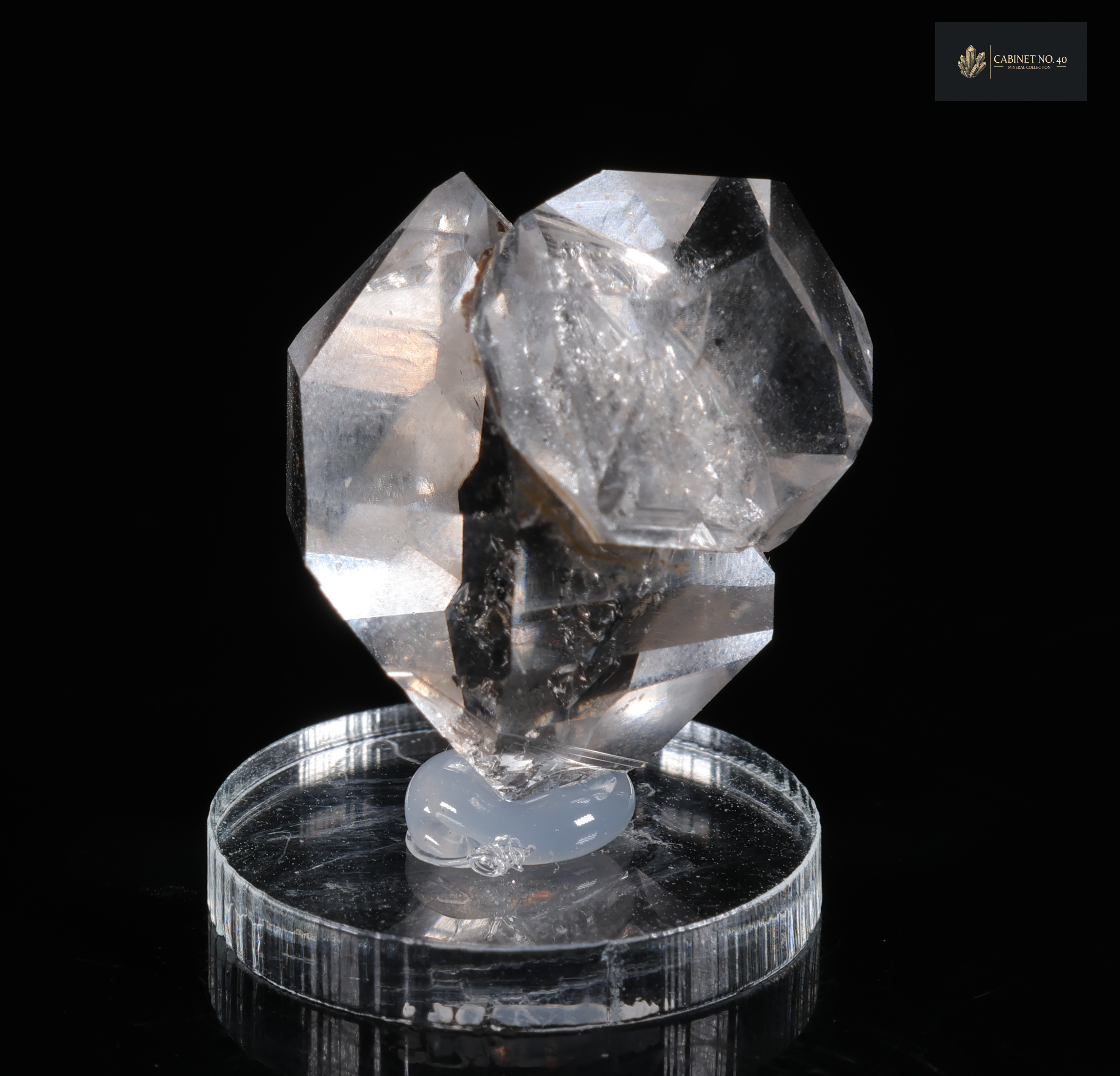
Herkimer Diamond is a variety of quartz characterized by naturally formed, doubly terminated crystals of exceptional clarity and luster.
Properties
- Mohs hardness
- 7
- Luster
- Szklisty
- Streak
- Biała
- Density
- 0
- Cleavage
- Brak
- Fracture
- Muszlowy
- Transparency
- Przezroczysty do przeświecającego
- Crystal system
- Trygonalny
Diagnostic features
## Identification Herkimer Diamonds can be identified by their characteristic, doubly terminated shape, high transparency, and vitreous luster. They often contain inclusions in the form of gas bubbles, water, or bitumens. Their natural faceting is distinct and regular. ## Differentiation from Similar Minerals Herkimer Diamonds, despite their name, are not diamonds. They can be distinguished from true diamonds based on hardness (7 on the Mohs scale for Herkimers, 10 for diamonds) and chemical composition (silicon dioxide for Herkimers, carbon for diamonds). They differ from ordinary quartz by their doubly terminated habit and often higher clarity. ## Crystal Forms The typical form consists of doubly terminated crystals, often columnar, with distinct prismatic faces and double pyramids. They can occur individually, in aggregates, or as crystal druses.
Geological environment
## Genesis Herkimer Diamonds form in cavities and geodes within dolostones, under hydrothermal conditions. The crystallization process occurs at low temperatures and pressures, which favors the formation of perfectly developed crystals. Silica-rich water permeated fissures in the rocks and then slowly crystallized, forming these unique quartz forms. ## Mineral Associations Herkimer Diamonds often coexist with dolomite, calcite, marcasite, pyrite, and various types of bitumens, which may be present as inclusions within the crystals. ## Localities The most famous and prized localities for Herkimer Diamonds are in Herkimer County, New York, USA. Similar forms of quartz, although not always called "Herkimer Diamonds," also occur in other parts of the world, such as Pakistan, China, and Tibet.
Rarity
Not very common
For collectors
## Quality Criteria The most valued specimens of Herkimer Diamonds are those with high transparency, colorless, with distinct doubly terminated habit and well-developed faces. The absence of mechanical damage, cracks, or surface dullness increases the value of the specimen. Inclusions, especially movable water or gas bubbles, can be interesting additions. ## Popular Localities The most sought-after specimens come from Herkimer County, New York, USA, which is the type locality for this variety of quartz.
Care and storage
## Cleaning Herkimer Diamonds can be cleaned with warm water and mild soap. Use a soft brush or cloth to remove dirt from the crystal surface. After washing, rinse the mineral thoroughly with clean water and dry with a soft cloth. ## What to Avoid Avoid using strong chemicals, such as acids or solvents, which can damage the crystal surface. Although quartz is a relatively hard mineral, it should be protected from impacts and scratches. Prolonged exposure to intense sunlight does not negatively affect its color, but it is advisable to avoid sudden temperature changes. ## Storage Herkimer Diamonds are best stored in separate boxes or pouches to prevent scratching by other, harder minerals. They can be displayed in showcases, away from dust and direct sunlight, which will help maintain their natural brilliance.