Diamond
Chemical formula: C
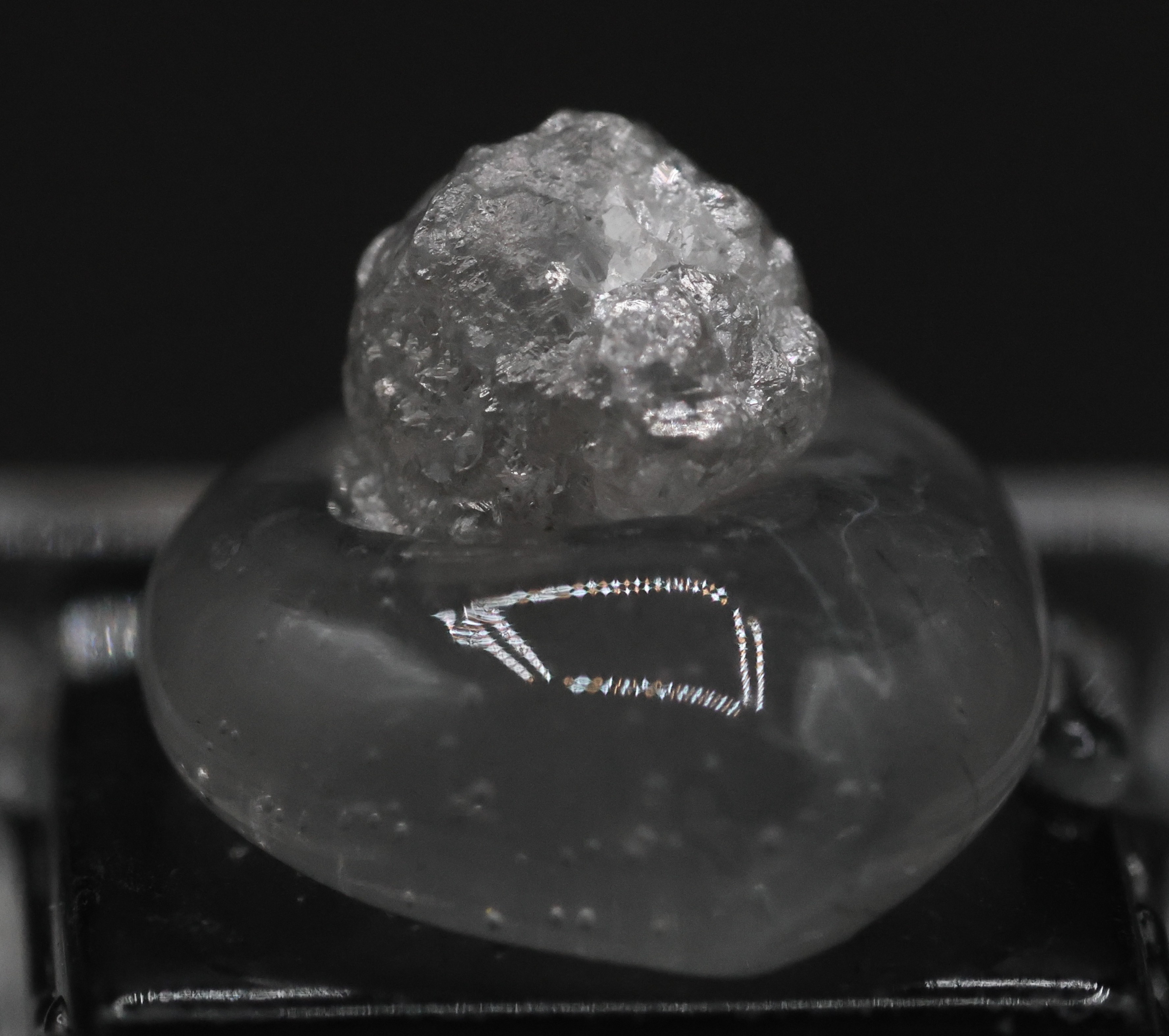
Diamond is a naturally occurring form of carbon, valued for its exceptional hardness, brilliance, and rarity, being the hardest known mineral.
Properties
- Mohs hardness
- 10
- Luster
- Adamantine
- Streak
- none
- Density
- 3.5
- Cleavage
- Perfect octahedral {111}
- Fracture
- Muszlowy
- Transparency
- Transparent,Translucent,Opaque
- Crystal system
- Isometric
Diagnostic features
## Identification Diamond can be identified by its exceptional hardness, its ability to scratch all other minerals. It is also characterized by a high adamantine luster and specific light dispersion, which gives it its "fire". Thermal and electrical conductivity tests can also aid in identification. ## Distinguishing from Similar Minerals Diamonds can be confused with other colorless gemstones, such as cubic zirconia, moissanite, or white sapphire. They can be distinguished by hardness (none of them match diamond), thermal conductivity (diamond is an excellent conductor), and specific optical characteristics, such as double refraction in the case of moissanite. ## Crystal Forms The most common crystal forms of diamond are octahedra, rhombic dodecahedra, and cubes. Crystals with rounded edges and faces, resulting from resorption, are also frequently observed. Diamond aggregates can take compact, granular, or spherical forms.
Geological environment
## Genesis Diamonds form under conditions of high pressure and temperature, deep within the Earth's mantle, at depths of about 150-200 km. They are brought to the surface by volcanic eruptions, forming kimberlite and lamproite pipes. They can also occur in alluvial sedimentary deposits, formed by the erosion of these parent rocks. ## Mineral Associations In kimberlites and lamproites, diamonds are associated with minerals such as olivine, pyrope (garnet), chromian diopside, ilmenite, and phlogopite. In alluvial deposits, they are accompanied by other heavy minerals such as gold, platinum, and magnetite. ## Locations The most important diamond deposits are found in Africa (Botswana, South Africa, Angola, Namibia, Sierra Leone), Russia (Yakutia), Australia (Argyle), Canada (Northwest Territories), and Brazil.
Rarity
Common
For collectors
## Quality Criteria The quality of a diamond is assessed according to the "4C" principle: Carat (weight), Color, Clarity, and Cut. Colorless diamonds of high clarity, excellent cut, and large weight are the most valued. Rare diamonds with intense colors (fancy colors) also fetch very high prices. ## Popular Localities The most valued and sought-after diamonds by collectors come from historic deposits, such as mines in South Africa, as well as from new discoveries in Canada and Russia. Diamonds of unique colors or exceptionally large sizes are particularly sought after.
Care and storage
## Cleaning Diamonds can be cleaned with warm water and mild soap, using a soft brush to remove dirt. Ultrasonic cleaning is also effective, but caution should be exercised with diamonds that have fractures or inclusions. ## What to Avoid Despite their hardness, diamonds are brittle and can chip or break under strong impact. Avoid contact with strong acids and bases; although diamond is chemically inert, these can damage the setting. Prolonged exposure to high temperatures can cause oxidation of the diamond's surface. ## Storage Diamonds should be stored separately from other gemstones and jewelry to prevent scratching. Storing them in soft pouches or separate compartments in a jewelry box is ideal.