Descloizite
Chemical formula: Pb<sup>2+</sup>Zn<sup>2+</sup>V<sup>5+</sup>O<sub>4</sub>(OH)
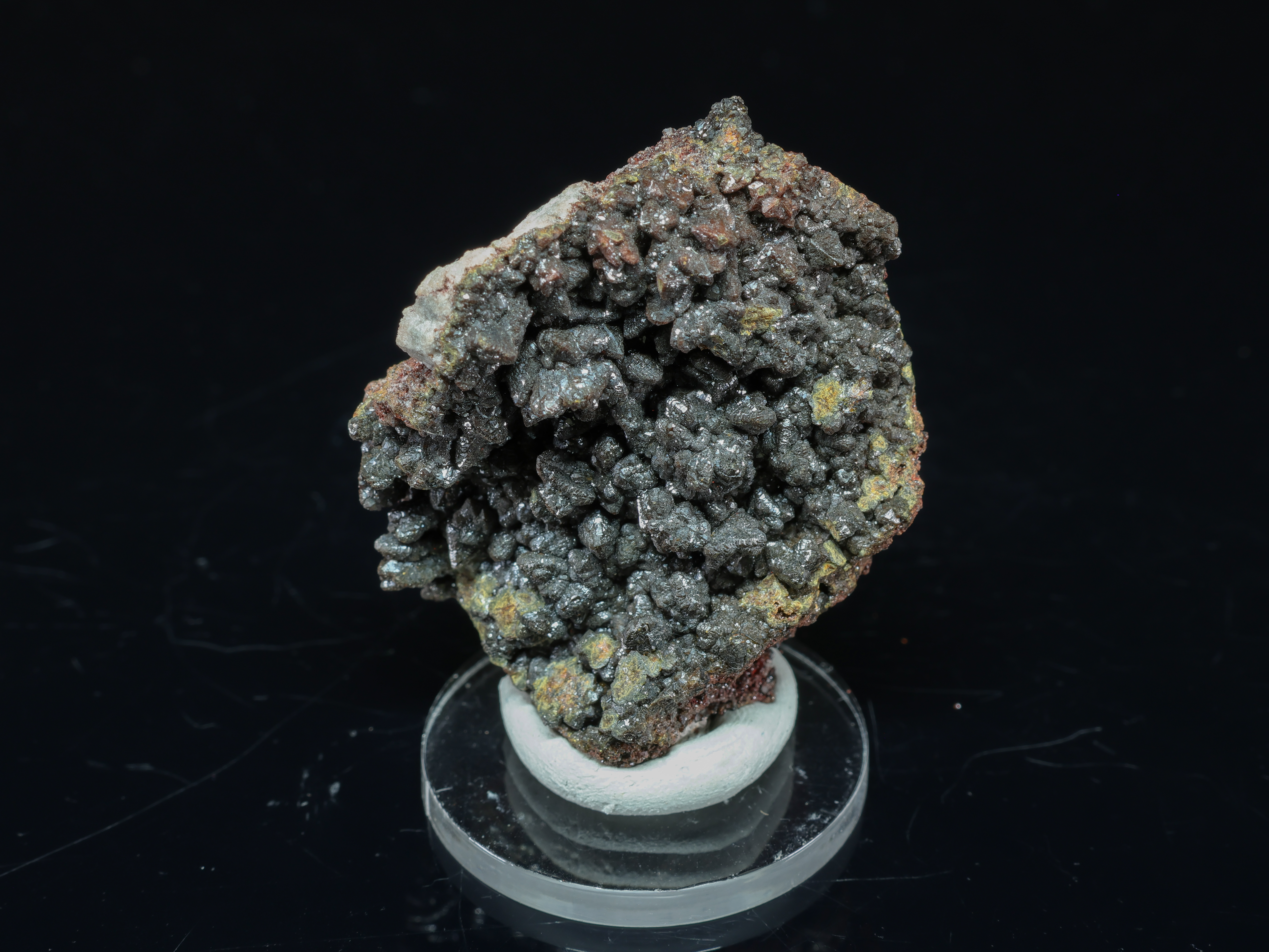
Descloizite is a rare lead-zinc vanadate mineral, forming characteristic crystals with intense colors ranging from reddish-brown to black.
Properties
- Mohs hardness
- 3-3.5
- Luster
- Żywiczny do szklistego
- Streak
- Orange to brownish red
- Density
- 6.2
- Cleavage
- Brak
- Fracture
- Nierówny do muszlowego
- Transparency
- Transparent,Translucent
- Crystal system
- Orthorhombic
Diagnostic features
## Identification Descloizite can be identified by its characteristic color (reddish-brown to black), high density, and its typical streak, which is orange to reddish-brown. Crystals often have a tabular or pyramidal habit, and their surface exhibits a strong luster. The softness of the mineral (3-3.5 on the Mohs scale) is also a diagnostic feature. ## Distinguishing from Similar Minerals Descloizite is sometimes confused with other vanadate or lead minerals, such as vanadinite or wulfenite. It is usually distinguished from vanadinite by its darker color and different crystallization habit. Wulfenite typically has brighter colors and distinctly tabular crystals. The streak of descloizite is also an important distinguishing feature. ## Crystal Forms Descloizite forms crystals in the orthorhombic system. They often occur as small, tabular or pyramidal forms. It can also form radial, reniform, botryoidal aggregates or massive forms. Aggregates are often fine-grained or earthy.
Geological environment
## Genesis Descloizite is a secondary mineral, forming in the oxidation zones of lead and zinc ore deposits, especially in the presence of vanadium. It forms as a result of the weathering of primary ore minerals in vanadium-rich environments. ## Mineral Associations Descloizite often co-occurs with other secondary minerals of the oxidation zone, such as vanadinite, mimetite, cerussite, pyromorphite, goethite, limonite, and manganese minerals. ## Localities Known occurrences of descloizite are found in Tsumeb, Namibia, where some of the best specimens are found. Other important localities include Otavi in Namibia, Broken Hill in Zambia, Arizona and New Mexico in the USA, as well as in Argentina and Mexico.
Rarity
Uncommon
For collectors
## Quality Criteria The most prized descloizite specimens are those with well-formed, distinct crystals, intense and uniform color, and strong luster. The size of the crystals, their clarity, and the absence of mechanical damage also influence their collector's value. Specimens with aesthetic associations with other minerals are particularly sought after. ## Popular Localities The most sought-after descloizite specimens come from Tsumeb, Namibia, which is famous for large and well-formed crystals of excellent color. Other valued localities include Broken Hill in Zambia and some deposits in the USA and Mexico.
Care and storage
## Cleaning Descloizite is a relatively soft mineral, so it should be cleaned gently. It is best to use a soft brush and lukewarm water. For more stubborn dirt, distilled water can be used. Avoid strong rubbing, which can scratch the mineral's surface. ## What to Avoid Avoid contact with acids and other aggressive chemicals that can damage the mineral's structure. High temperatures and prolonged exposure to direct sunlight can cause color fading. The specimen should also be protected from impacts and scratches. ## Storage Descloizite is best stored in a closed display case or a box lined with soft material to protect it from dust and mechanical damage. It is important to avoid sudden changes in temperature and humidity. Specimens can be displayed in areas with stable environmental conditions, away from direct sunlight.