Cumengeite
Chemical formula: Pb<sup>2+</sup><sub>21</sub>Cu<sup>2+</sup><sub>20</sub>Cl<sub>42</sub>(OH)<sub>40</sub>·6H<sub>2</sub>O
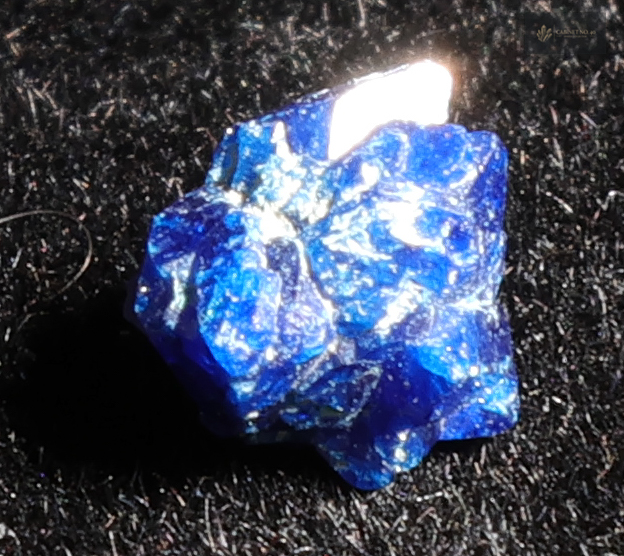
Cumengeite is a rare, secondary lead and copper mineral, characterized by an intense, indigo color and a tetragonal crystal system.
Properties
- Mohs hardness
- 2.5
- Luster
- Adamantine
- Streak
- Sky-blue
- Density
- 4.656
- Cleavage
- {101} good; {110} distinct; {001} Poor.
- Fracture
- Brak danych
- Transparency
- Translucent
- Crystal system
- Tetragonal
Diagnostic features
## Identification Cumengeite can be identified by its characteristic indigo color, adamantine luster, and tetragonal crystal habit, often bipyramidal. The streak of the mineral is blue, which is an important diagnostic feature. Its occurrence in association with other oxidation zone minerals, such as cerussite or atacamite, may also indicate the presence of cumengeite. ## Distinguishing from Similar Minerals Cumengeite can be confused with other blue minerals, such as azurite or dioptase. It is distinguished from azurite by its streak (azurite has a blue, but lighter streak) and crystal system. Dioptase has a green streak and is harder. The key distinguishing feature of cumengeite is its sky-blue streak and tetragonal crystal system. ## Crystal Forms Cumengeite most commonly occurs as well-formed crystals with a bipyramidal or tabular habit. It often also forms radiating clusters, crusts, or small crystalline aggregates.
Geological environment
## Genesis Cumengeite is a secondary mineral that forms in the oxidation zones of lead and copper deposits. It forms as a result of weathering processes and transformation of primary ore minerals, in the presence of solutions rich in chlorine and water. Its formation environment is characterized by the presence of chlorides. ## Mineral Associations Cumengeite often co-occurs with other secondary minerals of the oxidation zone, such as cerussite (PbCO₃), atacamite (Cu₂Cl(OH)₃), boleite (Pb₂₆Ag₁₀Cu₂₄Cl₆₂ (OH)₄₈), and pseudoboleite (Pb₅Cu₄Cl₁₀(OH)₈·2H₂O). It can also occur with malachite and azurite. ## Localities The most important and well-known locality for cumengeite is the Boleo mine in Santa Rosalía, Baja California Sur, Mexico. This is the source of the most aesthetic and well-formed specimens of this mineral.
Rarity
Rare
For collectors
## Quality Criteria The most prized cumengeite specimens are those with well-formed, distinct crystals of intense, indigo color. Crystal size, transparency, and absence of mechanical damage also influence collector value. Crystalline aggregates with an aesthetic habit are also highly valued. ## Popular Localities The most sought-after cumengeite specimens come from the Boleo mine in Santa Rosalía, Mexico. This locality is known for producing crystals of exceptional quality and color.
Care and storage
## Cleaning Cumengeite is a relatively soft mineral, so it should be handled with care. For cleaning, it is best to use a soft brush and lukewarm distilled water. Gentle rinsing under running water is permissible, but strong streams that could damage delicate crystals should be avoided. ## What to Avoid Avoid using any chemical agents, including detergents and acids, which can irreversibly damage the mineral's surface. Cumengeite is sensitive to high temperatures and direct sunlight, which can cause color fading. Protection from excessive moisture is also advisable. ## Storage Cumengeite specimens are best stored in closed display cases or boxes, away from dust and direct light. Due to its softness, it is recommended to store it separately from harder minerals to avoid scratches. Stable temperature and low air humidity are crucial for maintaining its condition.