Chrysocolla
Chemical formula: Cu<sup>2+</sup><sub>2</sub>H<sub>2</sub>Si<sub>2</sub>O<sub>5</sub>(OH)<sub>4</sub>·2H<sub>2</sub>O
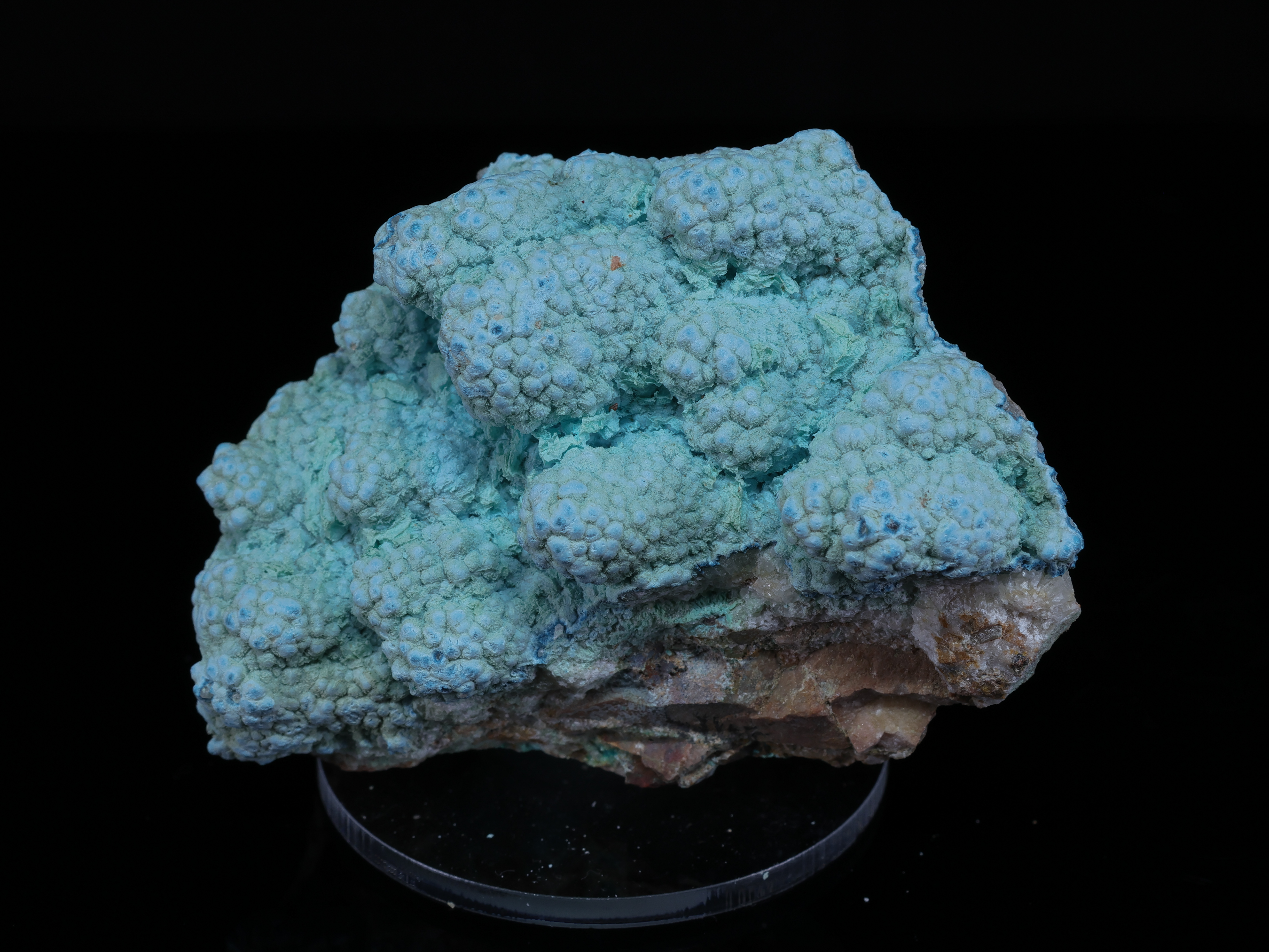
Chrysocolla is a hydrated copper silicate, often found in the oxidation zones of copper deposits, characterized by its beautiful blue-green color.
Properties
- Mohs hardness
- 2.5-3.5
- Luster
- Vitreous - Dull
- Streak
- Light green (unknown for black or yellow varieties)
- Density
- 1.93
- Cleavage
- None
- Fracture
- Muszlowy do nierównego
- Transparency
- Translucent,Opaque
- Crystal system
- Orthorhombic
Diagnostic features
## Identification Chrysocolla is often identified by its characteristic blue-green color and lack of distinct cleavage. It usually occurs in botryoidal, mammillary, or encrusting aggregates. Its relatively low hardness (2.5-3.5 on the Mohs scale) is also a diagnostic feature. ## Distinguishing from Similar Minerals Chrysocolla is sometimes confused with turquoise, azurite, and malachite. It is distinguished from turquoise by its lower hardness and lack of distinct cleavage. It differs from azurite and malachite by its lack of reaction with hydrochloric acid (azurite and malachite react with acid, releasing carbon dioxide). Chrysocolla also has a different streak – light green, while azurite has a blue streak and malachite a green streak. ## Crystal Forms Chrysocolla rarely forms well-developed crystals. It most often occurs as cryptocrystalline aggregates: reniform, botryoidal, spherical, encrusting, coatings, or pseudomorphs after other copper minerals.
Geological environment
## Genesis Chrysocolla is a secondary mineral, forming in the oxidation zones of copper deposits. It forms as a result of the weathering of copper silicates in the presence of silica and water. It often occurs in copper-rich environments where groundwater carrying dissolved copper ions reacts with silicate minerals. ## Mineral Associations Chrysocolla often co-occurs with other copper minerals, such as azurite, malachite, cuprite, tenorite, as well as quartz, chalcedony, limonite, and other minerals of the oxidation zone. ## Localities Significant deposits of chrysocolla are found in many places around the world. Important localities include: Arizona (USA), Chile, Peru, Russia (Urals), Congo (Katanga), Israel (Timna), Australia, Mexico, and the United Kingdom.
Rarity
Very Common
For collectors
## Quality Criteria The most prized chrysocolla specimens are characterized by intense, uniform color (most often blue-green), absence of cracks and inclusions of other minerals that could reduce its aesthetic appeal. Specimens with interesting aggregate forms, such as reniform or botryoidal, as well as those forming pseudomorphs after other minerals, are also valued. Chrysocolla intergrown with quartz (chrysocolla in quartz) is also highly sought after due to its hardness and durability. ## Popular Localities The most prized chrysocolla specimens come from Arizona in the USA, especially from the Ray, Globe, and Miami mines. Other important sources include Chile (e.g., Chuquicamata mine), Peru, Congo (Katanga region), and Russia.
Care and storage
## Cleaning Chrysocolla is a relatively soft mineral, so it should be cleaned gently. It is best to use a soft cloth or brush and lukewarm water. A mild soap can also be used, followed by thorough rinsing with clean water. ## What to Avoid Avoid using aggressive chemicals such as acids or strong detergents, which can damage the surface of chrysocolla. Due to its softness, it should be protected from scratches. Also avoid sudden temperature changes and prolonged exposure to direct sunlight, which can cause color fading. Chrysocolla is porous, so prolonged soaking in water is not recommended. ## Storage Chrysocolla should be stored separately from harder minerals to prevent scratching. It is best to wrap it in a soft cloth or place it in a separate compartment in a mineral box. It is advisable to store it in a place with stable temperature and humidity, away from direct sunlight.