Chalcocite
Chemical formula: Cu<sup>1+</sup><sub>2</sub>S<sup>2-</sup>
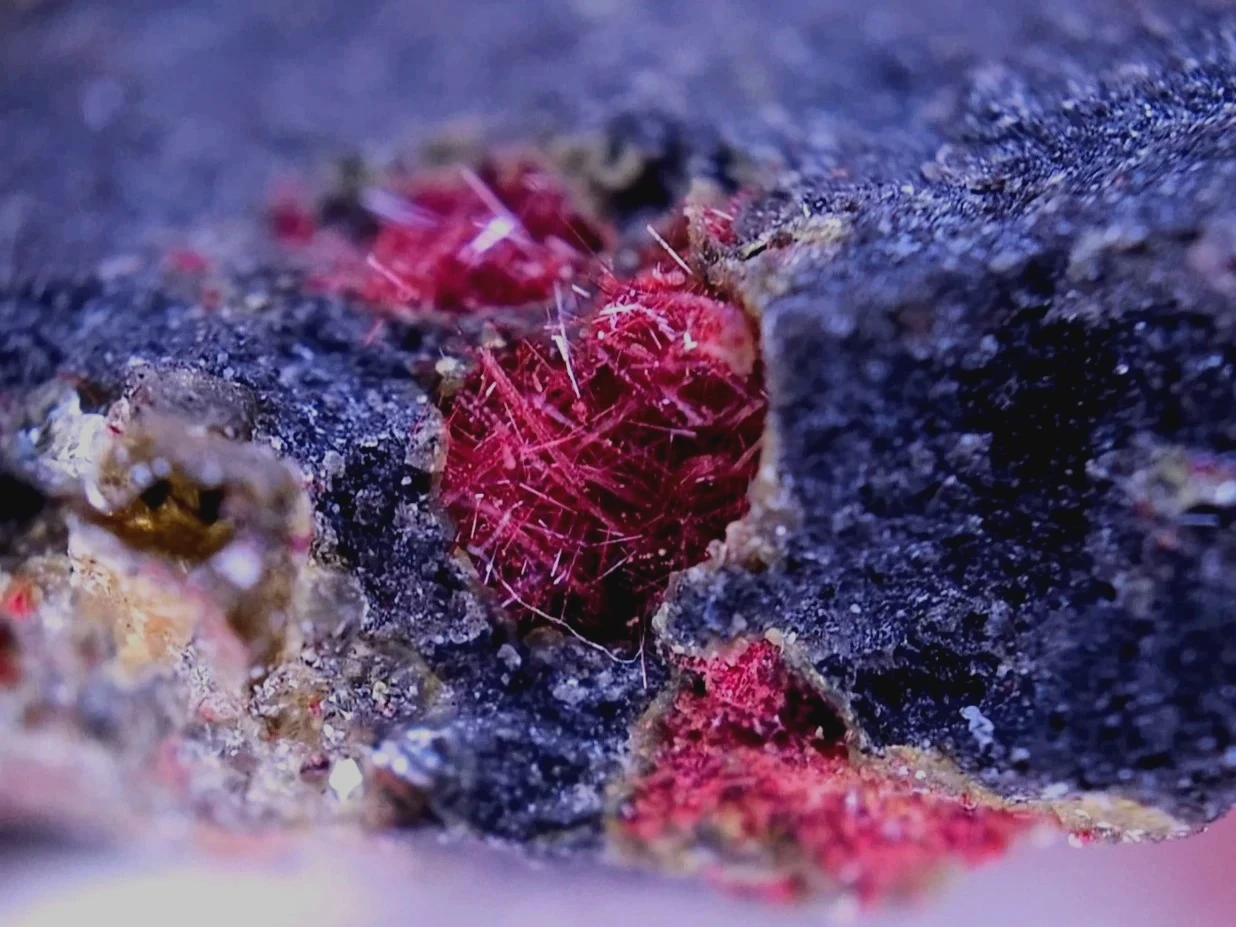
Chalcocite is a variety of cuprite, characterized by a fibrous or acicular habit, often forming velvet-like aggregates.
Properties
- Mohs hardness
- 3.5-4
- Luster
- Diamentowy do półmetalicznego
- Streak
- Czerwonobrunatna
- Density
- 0
- Cleavage
- Brak
- Fracture
- Muszlowy do nierównego
- Transparency
- Nieprzezroczysty
- Crystal system
- Isometric
Diagnostic features
## Identification Chalcocite can be identified by its characteristic fibrous or acicular habit, often forming velvet-like aggregates. The intense red color with an orange tint is also a diagnostic feature. The fibers are often very thin and tangled. ## Distinguishing from Similar Minerals Chalcocite is a variety of cuprite, so its chemical composition is identical. It differs from typical cuprite only in its habit. From other red copper minerals, such as cubic cuprite, it is clearly distinguished by its fibrous structure. ## Crystal Forms Chalcocite occurs as hair-like, acicular crystals that often form dense, tangled aggregates. The crystals are usually very thin and elongated, which gives them a characteristic appearance.
Geological environment
## Genesis Chalcocite, as a variety of cuprite, forms in the oxidation zones of copper deposits. It is formed by the weathering of primary copper minerals, such as chalcopyrite or bornite, in the presence of oxygen. This process leads to the formation of copper oxides, including cuprite, of which chalcocite is a fibrous variety. ## Mineral Associations Chalcocite often co-occurs with other minerals from the oxidation zone of copper deposits, such as malachite, azurite, native copper, goethite, and limonite. It can also occur in association with other forms of cuprite. ## Localities Known localities for chalcocite include Tsumeb in Namibia, where beautiful specimens have been found. Other localities include mines in Russia (Urals), the United States (Arizona, Michigan), and Chile.
Rarity
Uncommon
For collectors
## Quality Criteria The most prized chalcocite specimens are characterized by an intense, vibrant red or orange-red color. The density and uniformity of the fiber arrangement, forming velvety aggregates, are also important. Large, well-formed aggregates with a distinct luster are particularly sought after. The absence of mechanical damage and impurities also affects the value of the specimen. ## Popular Localities The most prized chalcocite specimens come from Tsumeb in Namibia, where they occur as beautiful, velvety aggregates. Other important localities include mines in Russia (Urals) and the United States (Arizona).
Care and storage
## Cleaning Due to its delicate, fibrous structure, chalcocite requires careful cleaning. It is best to use a soft, dry brush to remove dust. For heavier soiling, you can try gently rinsing the specimen with distilled water, then drying it with a soft cloth or allowing it to air dry. ## What to Avoid Avoid using any chemical agents, including detergents and acids, as they can damage the mineral's surface. Chalcocite is sensitive to sunlight, which can cause fading of its color, so it should not be exposed to direct sunlight. High temperatures and sudden temperature changes can also be harmful. Due to its copper content, the mineral can react with moisture, so it should be stored in a dry environment. ## Storage Chalcocite specimens are best stored in closed display cases or boxes, away from dust, moisture, and direct sunlight. A soft lining can be used to prevent mechanical damage to delicate crystals. It is important to avoid touching the specimen with bare hands, as oils and sweat can leave marks.