Chabazite
Chemical formula: (Ca,Na₂,K₂)Al₂Si₄O₁₂·6H₂O
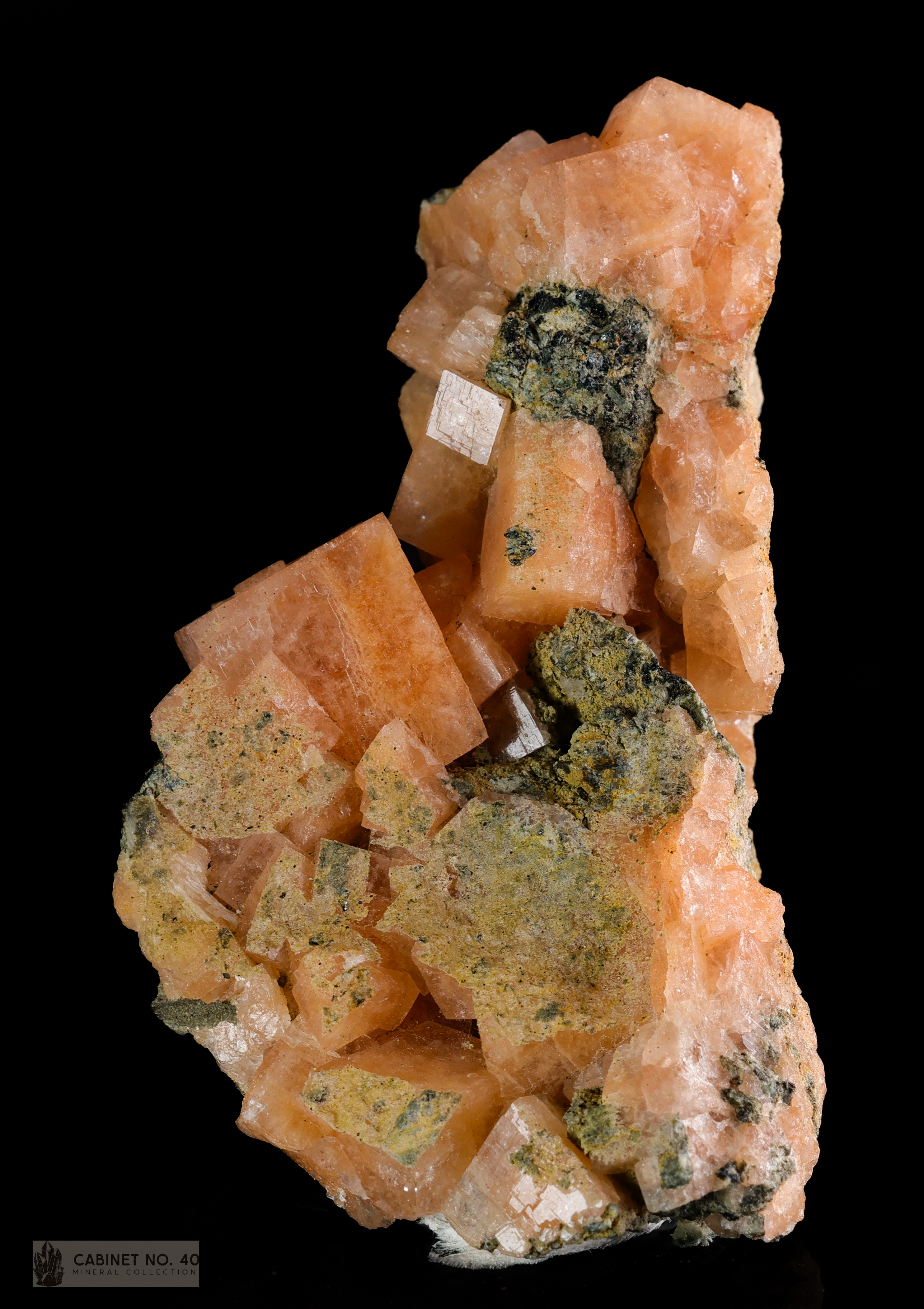
Chabazite is a mineral from the zeolite group, characterized by variable chemical composition and crystallizing in the trigonal system, often forming rhombohedral crystals.
Properties
- Mohs hardness
- 4-5
- Luster
- Vitreous
- Streak
- Biała
- Density
- 2.0-2.2
- Cleavage
- Dobra wg {1011}
- Fracture
- Nierówny
- Transparency
- Przezroczysty do przeświecającego
- Crystal system
- Trygonalny
Diagnostic features
## Identification Chabazite can be recognized by its characteristic rhombohedral crystal habit, often forming pseudo-cubic shapes. It typically occurs in fissures and vesicles in volcanic rocks. Vitreous luster and a hardness of 4-5 on the Mohs scale are also helpful in identification. ## Distinguishing from Similar Minerals Chabazite is sometimes confused with other zeolites, such as analcime or gismondine, which also form similar crystalline shapes. It is distinguished from analcime by its trigonal crystallographic system (analcime is isometric). It usually differs from gismondine in crystal habit and hardness. For precise identification, X-ray diffraction studies are often necessary. ## Crystal Forms Chabazite most often forms well-developed rhombohedral crystals, often with visible penetration twinning, which gives them a pseudo-cubic appearance. It can also occur as granular, compact, or radial aggregates.
Geological environment
## Genesis Chabazite is a secondary mineral, forming under low-temperature hydrothermal conditions. It occurs mainly in vesicles and fissures in volcanic rocks, such as basalts, andesites, and rhyolites. It can also form in lacustrine and marine sediments, as well as in altered volcanic tuffs. ## Mineral Associations Chabazite often co-occurs with other zeolites, such as stilbite, heulandite, analcime, laumontite, as well as with calcite, apophyllite, quartz, and prehnite. ## Localities Known chabazite localities are found worldwide. Important locations include: the Isle of Skye in Scotland, County Antrim in Northern Ireland, Fassa Valley in Italy, Nova Scotia in Canada, Iceland, India (Deccan Traps), and some places in the USA (e.g., Oregon, Washington).
Rarity
Not very common
For collectors
## Quality Criteria The most prized chabazite specimens are those with well-formed, large, and transparent crystals of intense color. Crystal clarity, absence of mechanical damage, and aesthetic arrangement on the matrix also contribute to collector's value. Specimens with rare twinning or in association with other attractive minerals are particularly sought after. ## Popular Localities Particularly valued chabazite specimens come from the Fassa Valley in Italy, where large, orange crystals occur. The Isle of Skye in Scotland is known for transparent, colorless or white crystals. Specimens from India (Deccan Traps) often feature beautiful, pink or orange colors and well-formed shapes.
Care and storage
## Cleaning Chabazite can be gently cleaned under running water, preferably distilled, using a soft brush to remove impurities. After washing, it should be thoroughly dried to prevent the deposition of hard water scale. ## What to Avoid Avoid using aggressive chemicals, such as acids or strong detergents, which can damage the mineral's surface or alter its color. Chabazite is sensitive to high temperatures, so it should not be exposed to direct sunlight or sudden temperature changes. Prolonged exposure to sunlight can also lead to fading of some varieties. ## Storage Chabazite specimens are best stored in closed display cases or boxes, away from dust and moisture. It is advisable to place them in a location with stable temperature and moderate lighting. Delicate specimens with small crystals should be protected from mechanical damage.