Cerussite
Chemical formula: Pb<sup>2+</sup>CO<sub>3</sub>
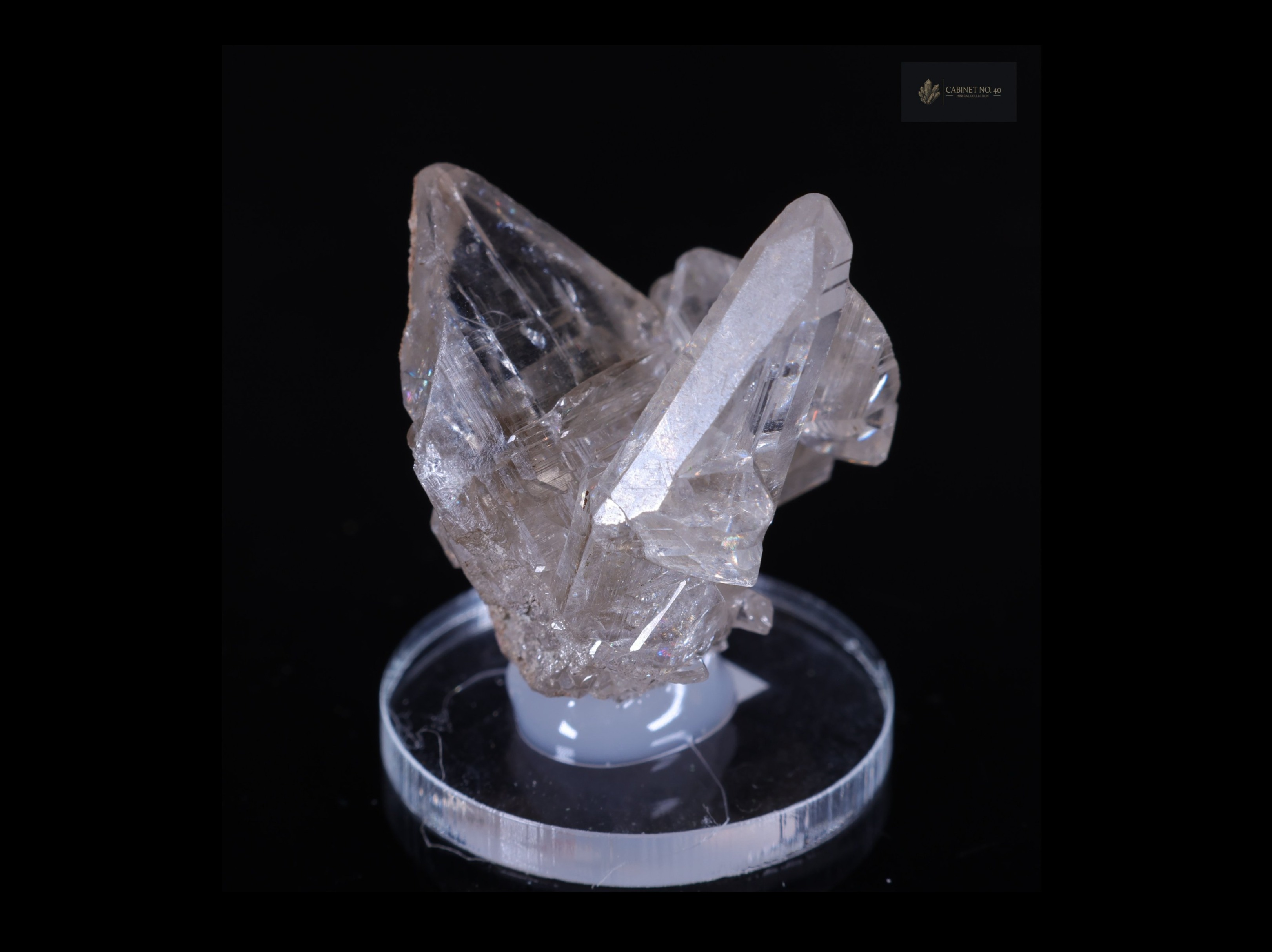
Cerussite is a mineral from the carbonate group, being lead carbonate, often found in the oxidation zones of lead deposits.
Properties
- Mohs hardness
- 3-3.5
- Luster
- Adamantine
- Streak
- White
- Density
- 6.53
- Cleavage
- On {110} and {021} distinct; on {010} and {012} in traces.
- Fracture
- Muszlowy do nierównego
- Transparency
- Transparent,Translucent
- Crystal system
- Orthorhombic
Diagnostic features
## Identification Cerussite can be identified by its high density, characteristic adamantine luster, and hardness in the range of 3-3.5 on the Mohs scale. It often occurs as transparent or translucent crystals with prismatic or tabular habits. It reacts with hydrochloric acid, releasing carbon dioxide. ## Distinguishing from Similar Minerals Cerussite can be confused with anglesite (lead sulfate), which is also a lead mineral and has similar physical properties. However, anglesite has a lower density and slightly different cleavage. It differs from calcite by its much higher density and the absence of the rhombohedral cleavage characteristic of calcite. ## Crystal Forms Cerussite forms prismatic, tabular, acicular crystals, as well as twins, often in star or reticulated shapes. It also occurs in granular, massive, fibrous, and radial aggregates.
Geological environment
## Genesis Cerussite is a secondary mineral, formed in the oxidation zones of lead deposits. It forms as a result of the weathering of galena (lead sulfide) in the presence of carbonates. This process occurs under conditions rich in oxygen and carbon dioxide. ## Mineral Associations Cerussite often co-occurs with other secondary lead minerals, such as galena, anglesite, pyromorphite, mimetite, wulfenite, as well as with limonite, calcite, and quartz. ## Localities Known cerussite localities include Tsumeb in Namibia, where large, well-formed crystals are found. Other important sites include Broken Hill in Australia, Mibladen in Morocco, Stříbro in the Czech Republic, as well as numerous deposits in the United States (e.g., Arizona and Colorado) and Europe (e.g., Germany and the United Kingdom).
Rarity
Very Common
For collectors
## Quality Criteria The most prized cerussite specimens are those with well-formed, transparent crystals with a distinct adamantine luster. Large sizes, interesting twinning, and unusual colors (e.g., blue or green) increase their collector's value. Specimens with rare mineral associations are also sought after. ## Popular Localities The most sought-after cerussite specimens come from Tsumeb in Namibia, known for exceptionally large and aesthetic crystals. Other valued localities include Broken Hill in Australia and Mibladen in Morocco, which provide specimens of various forms and colors.
Care and storage
## Cleaning Cerussite is a relatively soft and brittle mineral, requiring gentle cleaning. It is best to use a soft brush or paintbrush to remove dust. If necessary, the specimen can be rinsed with distilled water, avoiding prolonged soaking. ## What to Avoid Avoid using aggressive chemical agents, acids, and bases, which can damage the mineral's surface. Cerussite is sensitive to high temperatures, so it should not be exposed to direct sunlight or sudden temperature changes. Due to its lead content, caution should be exercised when handling the mineral, and hands should always be washed after contact. ## Storage Cerussite should be stored in a dry place, away from heat sources and direct sunlight. It is best to place it in a closed display case or box to protect it from dust and mechanical damage. Due to its brittleness, impacts and falls should be avoided.