Carrollite
Chemical formula: Cu<sup>1+</sup>Co<sup>3+</sup><sub>2</sub>S<sub>4</sub>
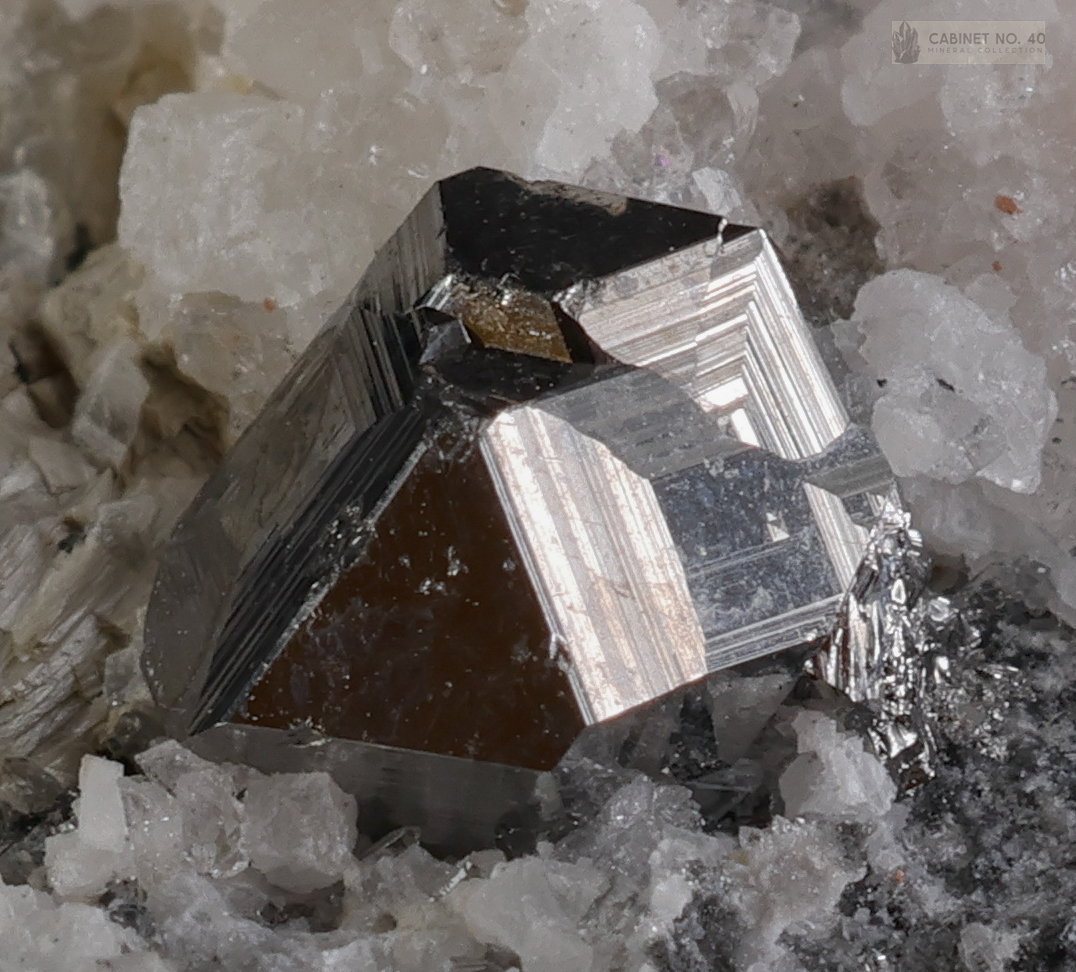
Carrollite is a rare cobalt and copper sulfide mineral, prized by collectors for its metallic luster and characteristic crystal forms.
Properties
- Mohs hardness
- 5.5
- Luster
- Metallic
- Streak
- Black
- Density
- 4.8-5.0
- Cleavage
- None
- Fracture
- Uneven to conchoidal
- Transparency
- Opaque
- Crystal system
- Isometric
Diagnostic features
## Identification Carrollite can be identified by its characteristic metallic luster, steel-gray color with possible violet or pinkish tarnishes, and typical octahedral or hexoctahedral crystal habit. A Mohs hardness of approximately 5.5 is also a diagnostic feature. ## Distinguishing from Similar Minerals Carrollite can be confused with other sulfide minerals with a metallic luster, such as pyrite or chalcopyrite. It differs from pyrite by the absence of a yellow tint and lower hardness. It differs from chalcopyrite by color (chalcopyrite is more yellowish) and the absence of a greenish streak. Chemical analysis is the ultimate identification method. ## Crystal Forms Carrollite most often occurs as well-formed isometric crystals, most commonly octahedral or hexoctahedral. It can also form granular or massive aggregates.
Geological environment
## Genesis Carrollite is a hydrothermal mineral, forming at low to medium temperatures. It occurs in hydrothermal veins, often associated with copper and cobalt deposits. It forms in environments rich in sulfur, cobalt, and copper. ## Mineral Associations Carrollite often co-occurs with other sulfide minerals, such as chalcopyrite, pyrite, bornite, sphalerite, galena. It can also be found in association with calcite, quartz, and other vein minerals. ## Localities The most important carrollite localities are in the Democratic Republic of Congo (Katanga region, e.g., Kamoya, Mashamba West mines), where large and well-formed crystals occur. Other known localities include the United States (Carroll County, Maryland - discovery site), Zambia, and Russia.
Rarity
Rare
For collectors
## Quality Criteria The most prized carrollite specimens are those with well-formed, distinct crystals, preferably with an octahedral or hexoctahedral habit. The size of the crystals, their luster, and the absence of mechanical damage are also important. Specimens with attractive violet or pinkish tarnishes are also sought after. ## Popular Localities The most prized carrollite specimens come from the Democratic Republic of Congo, especially from the Katanga region, where large and aesthetic crystals are found. Specimens from the USA (Maryland) are of historical significance.
Care and storage
## Cleaning Carrollite should be cleaned gently, using a soft brush or cotton cloth. Distilled water can be used, but prolonged soaking should be avoided, especially for specimens with tarnishes or inclusions of other minerals. ## What to Avoid Avoid contact of carrollite with acids and strong bases, which can damage the mineral's surface. Prolonged exposure to direct sunlight is not recommended, as it can lead to slight changes in surface color. Also, avoid sudden temperature changes. ## Storage Carrollite should be stored in a dry place, away from dust and chemicals. It is best to place it in a closed display case or a box lined with soft material to prevent scratches and mechanical damage. Due to its cobalt content, it is not recommended to store carrollite in direct contact with other sensitive minerals that could react.