Boulangerite
Chemical formula: Pb<sup>2+</sup><sub>5</sub>Sb<sup>3+</sup><sub>4</sub>S<sup>2-</sup><sub>11</sub>
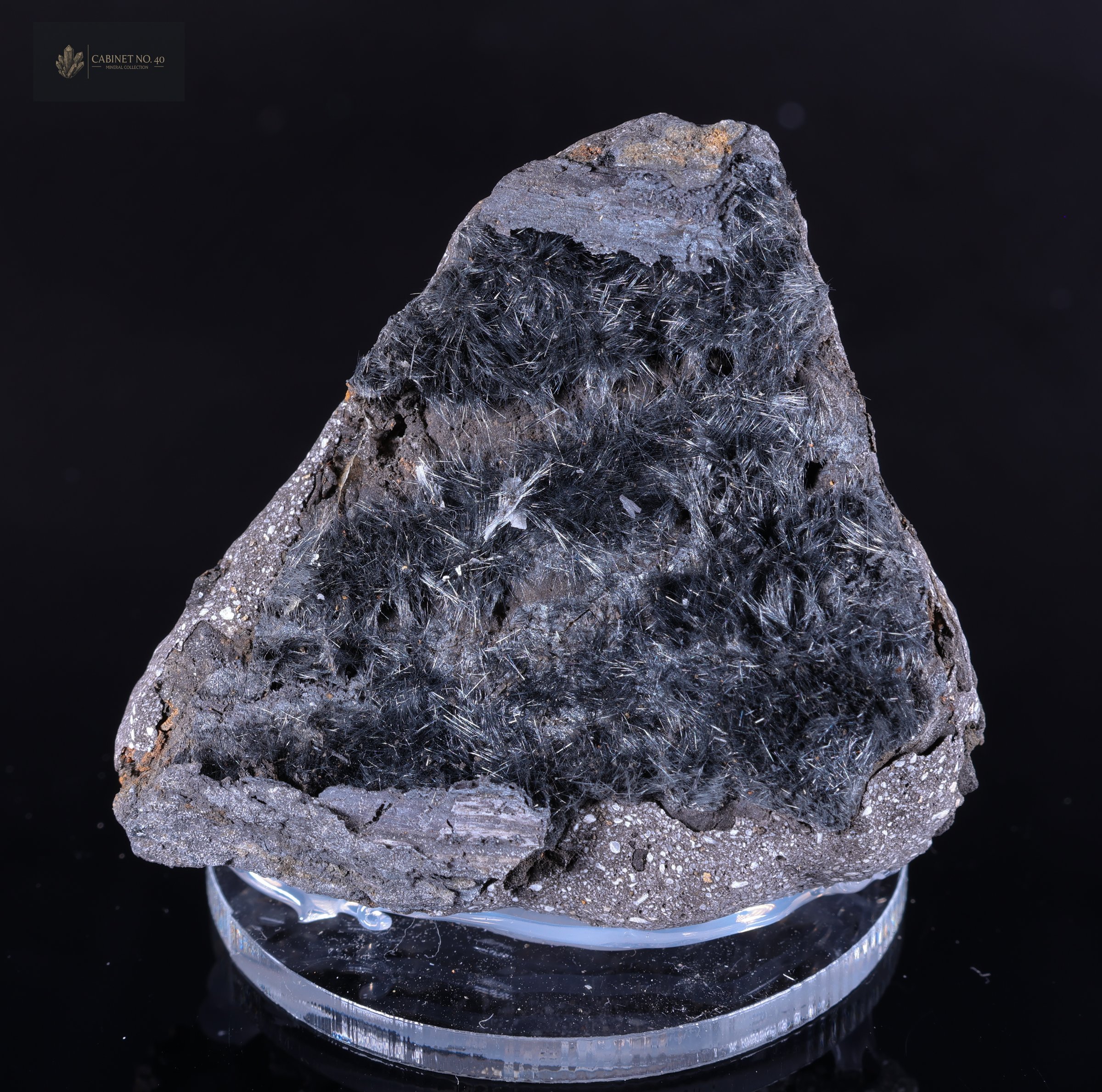
Boulangerite is a rare lead antimony sulfosalt mineral, characterized by its lead-gray color and metallic luster.
Properties
- Mohs hardness
- 2.5-3
- Luster
- Metallic
- Streak
- Brownish
- Density
- 6.2
- Cleavage
- Distinct on {100}
- Fracture
- Nierówny
- Transparency
- Opaque
- Crystal system
- Monoclinic
Diagnostic features
## Identification Boulangerite can be identified by its lead-gray color, metallic luster, and characteristic fibrous or acicular aggregates. The softness of the mineral (Mohs hardness 2.5-3) and its brownish streak are also important diagnostic features. ## Distinguishing from Similar Minerals Boulangerite can be confused with other lead and antimony sulfosalts, such as jamesonite or stibnite. It differs from jamesonite by the absence of perfect cleavage in one direction, and from stibnite by its usually more compact and less elongated crystals and the presence of lead in its chemical composition. Chemical analysis is often necessary for unambiguous identification. ## Crystal Forms Boulangerite most commonly occurs as small, acicular or fibrous crystals that form radiating or felted aggregates. Well-formed, elongated prismatic crystals are less common.
Geological environment
## Genesis Boulangerite forms in low-temperature, hydrothermal ore veins, often in association with other metal sulfides. It forms in environments rich in lead, antimony, and sulfur, typically in the oxidation or cementation zones of deposits. ## Mineral Associations This mineral often co-occurs with other sulfides, such as galena, stibnite, pyrite, sphalerite, as well as with quartz, barite, and calcite. It can also be found in association with other sulfosalts. ## Localities Known boulangerite localities include deposits in Saxony (Germany), the Czech Republic, Hungary, Romania, France, Bolivia, and the United States (e.g., Montana and Colorado).
Rarity
Very Common
For collectors
## Quality Criteria The most prized boulangerite specimens are those that exhibit well-formed, long, and distinct crystals, forming aesthetic, radiating or fibrous aggregates. Intense lead-gray color, strong metallic luster, and absence of mechanical damage also increase collectible value. ## Popular Localities Specimens from historical European localities, such as Freiberg in Saxony, where some of the first and best-formed crystals were found, are particularly sought after. Other valued localities include those in Bolivia, known for rich fibrous aggregates.
Care and storage
## Cleaning Boulangerite is a relatively soft mineral, so it should be handled with care. For cleaning, it is best to use a soft brush or paintbrush to gently remove dust. Lukewarm water with a small amount of mild soap can also be used, followed by thorough rinsing with distilled water and drying with a soft cloth. ## What to Avoid Avoid using aggressive chemicals, acids, and strong detergents, which can damage the mineral's surface. Boulangerite is sensitive to high temperatures and direct sunlight, which can lead to color changes or damage. Due to its lead content, it is advisable to wash hands after contact with the mineral. ## Storage Boulangerite specimens are best stored in closed display cases or boxes, away from dust and moisture. It is recommended to place them in a location with stable temperature and away from direct sunlight. Delicate fibrous specimens should be protected from mechanical damage.