Boracite
Chemical formula: Mg<sub>3</sub>B<sub>7</sub>O<sub>13</sub>Cl
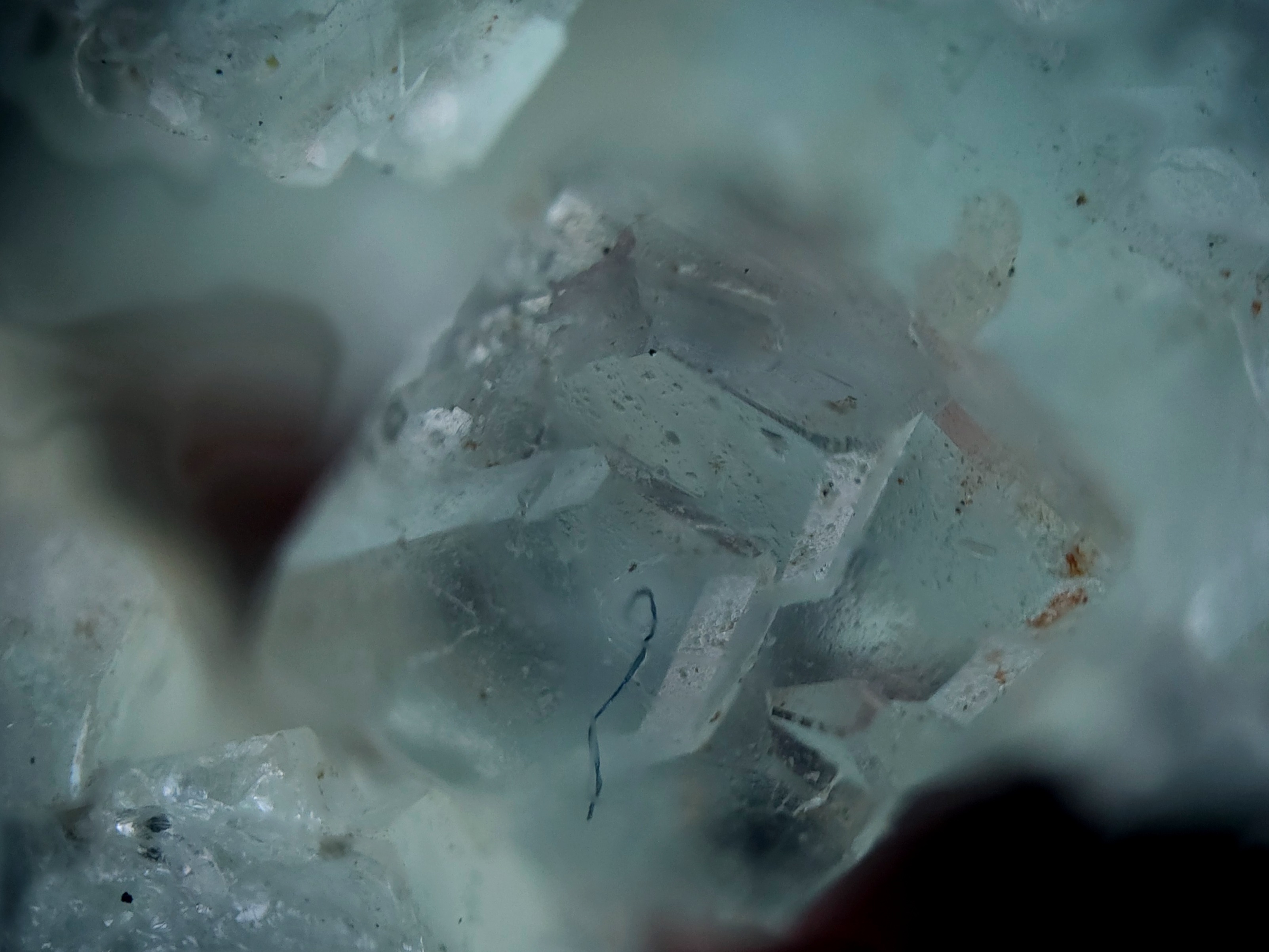
Boracite is a rare magnesium and chlorine borate mineral, typically forming small, isometric crystals, valued by collectors for its rarity and interesting properties.
Properties
- Mohs hardness
- 7-7.5
- Luster
- Vitreous
- Streak
- White
- Density
- 2.91
- Cleavage
- Brak
- Fracture
- Muszlowy do nierównego
- Transparency
- Transparent,Translucent
- Crystal system
- Orthorhombic
Diagnostic features
## Identification Boracite can be identified by its characteristic crystal habit, often isometric, and a Mohs hardness of 7-7.5. The color, although variable, often includes shades of green and blue. Vitreous luster and a white streak are also helpful in identification. ## Distinguishing from Similar Minerals Boracite is sometimes confused with other minerals of similar habit and color, such as some garnets or spinels. However, its hardness, density, and the presence of chlorine in its chemical composition allow it to be distinguished from these minerals. Chemical analysis is the ultimate confirmation. ## Crystal Forms Boracite typically forms well-developed, isometric crystals, often as cubes, dodecahedra, or combinations thereof. Granular forms and massive aggregates also occur, though they are less typical for collector specimens.
Geological environment
## Genesis Boracite forms in evaporitic environments, associated with potassium and magnesium salt deposits. It is a secondary mineral, forming as a result of metamorphism or diagenesis of these deposits. It occurs in rock salt and potash deposits, often in association with other evaporite minerals. ## Mineral Associations Boracite often co-occurs with halite, sylvite, carnallite, anhydrite, and gypsum. It can also be found in association with other rare borate minerals, forming complex associations within evaporite deposits. ## Locations Known boracite localities include Germany (e.g., salt mines in Stassfurt), France (Provence), Great Britain (Yorkshire), and the United States (California). In Poland, boracite is a very rare mineral, sporadically found in salt deposits.
Rarity
Rare
For collectors
## Quality Criteria The most prized boracite specimens are those with distinct, well-formed crystals of intense and uniform color. Transparency and lack of inclusions also increase the value of a specimen. Larger crystals are generally more sought after, but even small, perfectly formed specimens are highly valued. ## Popular Localities The most prized boracite specimens usually come from classic European localities, such as Stassfurt in Germany, where many well-formed crystals of beautiful colors have been found.
Care and storage
## Cleaning Boracite can be cleaned gently using a soft brush and lukewarm water. For more stubborn dirt, distilled water can be used. Avoid vigorous scrubbing to prevent damage to the crystal surfaces. ## What to Avoid Avoid contact of boracite with aggressive chemicals that may react with its chemical composition. The mineral is sensitive to sudden temperature changes, which can lead to cracks. Prolonged exposure to direct sunlight can affect the intensity of the color of some specimens. High humidity is also not recommended. ## Storage Boracite is best stored in a dry place, away from heat sources and direct light. Enclosed display cases or boxes with soft lining are ideal, protecting specimens from dust and mechanical damage. It is important to keep each specimen separate from others to avoid scratches.