Bolivarite
Chemical formula: Al<sub>2</sub>PO<sub>4</sub>(OH)<sub>3</sub>·4H<sub>2</sub>O
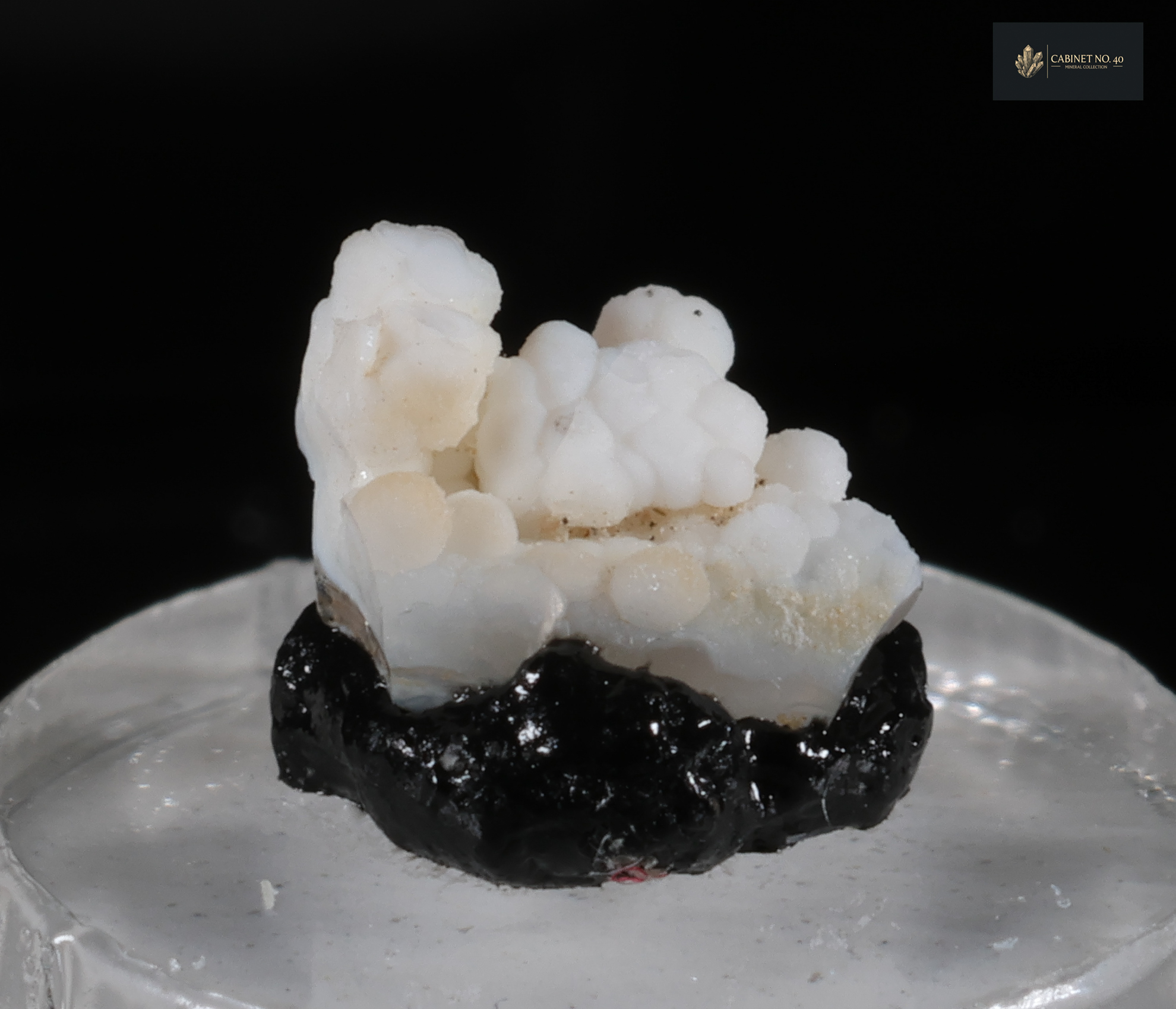
Bolivarite is a rare, hydrated aluminum phosphate, characterized by its light greenish-yellow color and amorphous structure.
Properties
- Mohs hardness
- 2.5
- Luster
- Vitreous
- Streak
- Biała
- Density
- 1.97
- Cleavage
- Brak
- Fracture
- Nierówny
- Transparency
- Przeświecający
- Crystal system
- Amorphous
Diagnostic features
## Identification Bolivarite can be identified by its characteristic light greenish-yellow color, amorphous habit, and low hardness. It often occurs as coatings or incrustations on other minerals. ## Distinguishing from Similar Minerals Due to its amorphous nature and color, bolivarite can be confused with other hydrated aluminum phosphates, such as wavellite or variscite, which, however, often form radial aggregates or have different hardness. Accurate differentiation requires laboratory analysis. ## Crystal Forms Bolivarite does not form crystals in the macroscopic sense, as it is an amorphous mineral. It occurs as reniform, botryoidal, or massive aggregates.
Geological environment
## Genesis Bolivarite is a secondary mineral, forming in the oxidation zones of phosphate deposits, often in aluminum-rich environments. It forms as a result of weathering processes and hydrothermal alteration of primary minerals. ## Mineral Associations Bolivarite often co-occurs with other secondary minerals, such as wavellite, variscite, turquoise, as well as iron and manganese minerals. ## Localities The most important locality for bolivarite is the Bolivar mine in Castellón province, Spain, where it was discovered. Other, less significant occurrences have been reported in Portugal and the United States.
Rarity
Very Rare
For collectors
## Quality Criteria The most prized bolivarite specimens are those with an intense, uniform light greenish-yellow color, forming well-developed, reniform or botryoidal shapes. The size of the specimen and the absence of mechanical damage are also important. ## Popular Localities The most sought-after specimens come from the type locality – the Bolivar mine in Spain.
Care and storage
## Cleaning Bolivarite is a relatively soft mineral, so it should be handled with care. For cleaning, it is best to use a soft, dry cloth or brush to gently remove dust. For more stubborn dirt, a small amount of distilled water can be used, applied locally and dried immediately. ## What to Avoid Avoid using any chemical cleaning agents, which can damage the mineral's surface. Bolivarite is sensitive to high temperatures and prolonged exposure to sunlight, which can lead to color fading. Due to the water content in its structure, extreme changes in humidity should be avoided. ## Storage Bolivarite specimens are best stored in closed display cases or boxes, away from direct sunlight and heat sources. It is advisable to maintain stable ambient temperature and humidity to prevent mineral degradation.