Austinite
Chemical formula: CaZn<sup>2+</sup>As<sup>5+</sup>O<sub>4</sub>(OH)
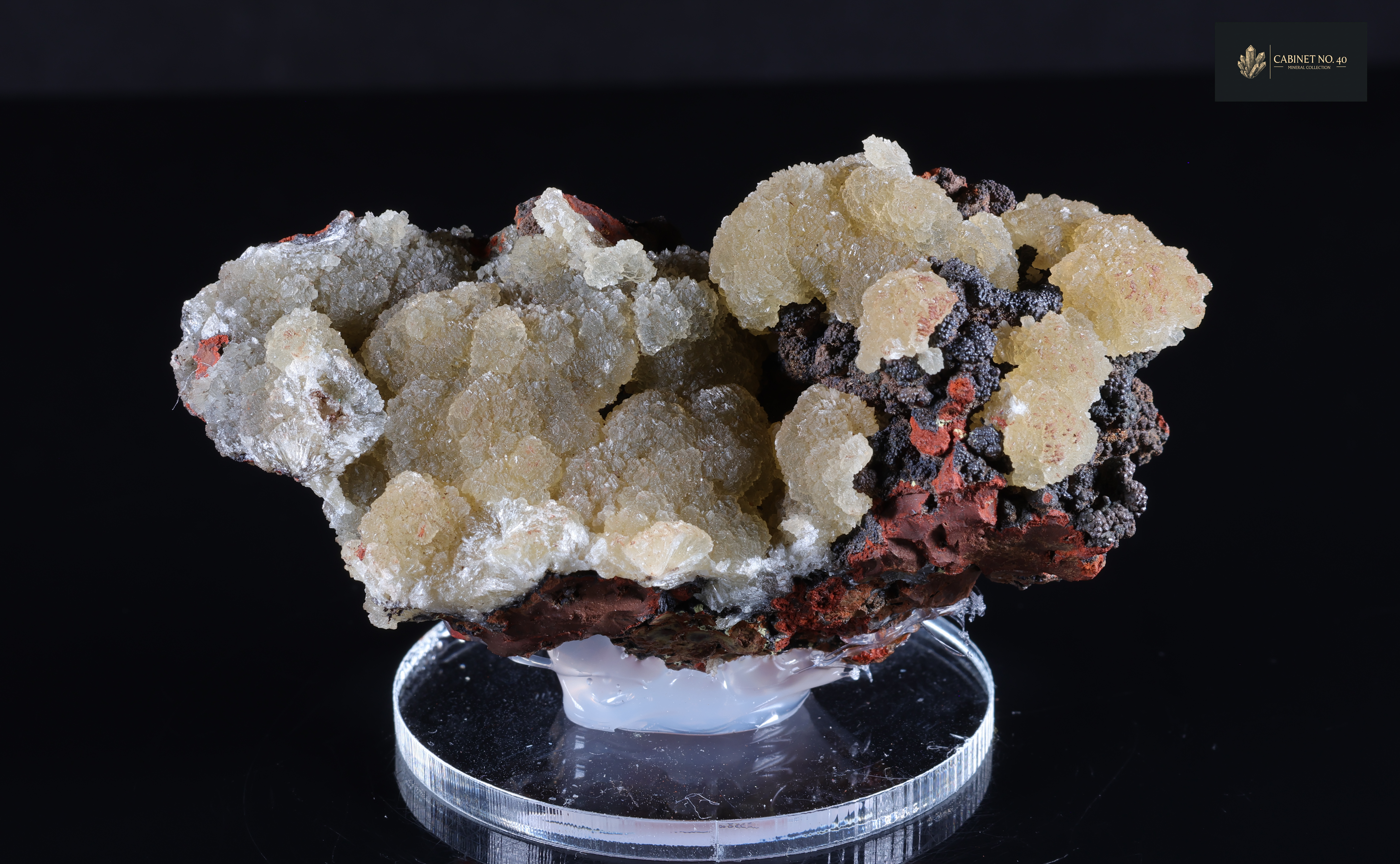
Austinite is a rare mineral of arsenic, calcium, and zinc, typically forming small, yellow or greenish crystals, often found in the oxidation zones of zinc deposits.
Properties
- Mohs hardness
- 4-4.5
- Color
- Colorless to pale yellowish white or bright green; colourless in transmitted light.
- Luster
- Subadamantine, Silky in fibrous aggregates.
- Streak
- White
- Density
- 4.13
- Cleavage
- Good on {011}.
- Fracture
- Uneven
- Transparency
- Transparent,Translucent
- Crystal system
- Orthorhombic
Diagnostic features
## Identification Austinite can be identified by its characteristic crystal habit (acicular, tabular), color (yellow, greenish, colorless), and occurrence in the oxidation zones of zinc deposits. Its physical properties, such as hardness and luster, are also helpful in identification. ## Distinguishing from Similar Minerals Austinite can be confused with other minerals from the adamite group, such as adamite (Zn₂AsO₄OH) or olivenite (Cu₂AsO₄OH). It differs from adamite by the presence of calcium, and from olivenite by the absence of copper as a main component. Differences in color and environment of occurrence can be helpful in distinguishing them. ## Crystal Forms Austinite typically forms small crystals with an acicular, tabular, or prismatic habit. They often occur as radial aggregates, crusts, or small druses. Aggregates can be massive or fibrous.
Geological environment
## Genesis Austinite is a secondary mineral, formed in the oxidation zones of zinc and arsenic deposits. It forms as a result of the reaction of hydrothermal solutions with primary zinc and arsenic minerals, under calcium-rich conditions. ## Mineral Associations Austinite often co-occurs with other secondary minerals of the oxidation zone, such as adamite, smithsonite, hemimorphite, limonite, malachite, azurite, and with arsenic minerals such as mimetite. ## Localities The most important localities for austinite include the Gold Hill Mine in Tooele, Utah, USA (type locality), Tsumeb in Namibia, Mapimi in Durango, Mexico, and Lavrion in Greece. It also occurs in smaller quantities in other localities worldwide where zinc and arsenic deposits are found.
Rarity
Rare
For collectors
## Quality Criteria The most prized austinite specimens are those characterized by well-formed, distinct crystals, intense and uniform color (especially yellow or green), and lack of damage. Large aggregates of radial crystals are also highly sought after. The transparency and luster of the crystals contribute to the specimen's attractiveness. ## Market Prices The prices of austinite vary and depend on the quality, size, and rarity of the specimen. Small specimens from less known localities can cost from several tens to several hundreds of Polish zlotys. Exceptional specimens with well-formed crystals, originating from renowned localities, can reach prices from several hundreds to several thousands of Polish zlotys. ## Popular Localities The most sought-after austinite specimens come from the Gold Hill Mine in Utah, USA, and from Tsumeb in Namibia. Specimens from Mapimi in Mexico are also highly regarded by collectors due to their aesthetics and often intense colors.
Care and storage
## Cleaning Austinite is a relatively soft mineral, so it should be cleaned gently. It is best to use a soft brush and lukewarm water. Distilled water can also be used to avoid hard water deposits. ## What to Avoid Avoid using strong chemical agents that can damage the mineral's surface. Austinite is sensitive to acids. Prolonged exposure to direct sunlight can cause color fading. The mineral should also be protected from sudden temperature changes. ## Storage Austinite is best stored in closed display cases or boxes, away from dust and moisture. Due to its fragility, impacts and falls should be avoided. Ideal storage is in a place with constant temperature and humidity.