Aurichalcite
Chemical formula: (Zn<sup>2+</sup>,Cu<sup>2+</sup>)<sub>5</sub>(CO<sub>3</sub>)<sub>2</sub>(OH)<sub>6</sub>
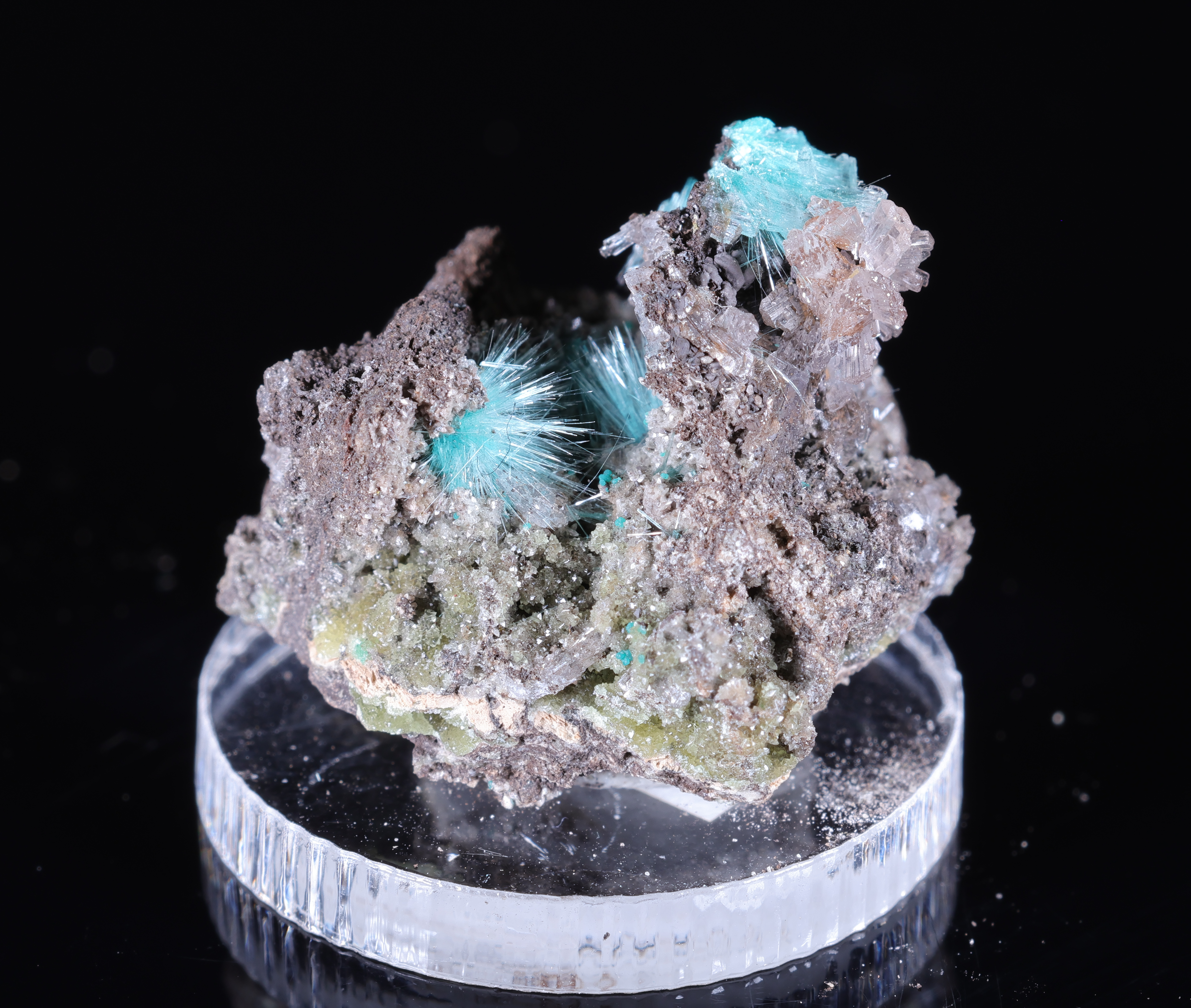
Aurichalcite is a rare secondary zinc and copper mineral, forming delicate, acicular crystals with a characteristic blue or greenish color.
Properties
- Mohs hardness
- 1-2
- Luster
- Pearly
- Streak
- Light blue
- Density
- 3.96
- Cleavage
- Perfect on {010} and {100}.
- Fracture
- Nierówny
- Transparency
- Transparent
- Crystal system
- Monoclinic
Diagnostic features
## Identification Aurichalcite can be identified by its characteristic light blue or greenish-blue color, low hardness (can be scratched with a fingernail), and pearly luster. It often occurs as small, acicular or platy crystals forming radial aggregates. ## Distinguishing from Similar Minerals Aurichalcite can be confused with other secondary copper and zinc minerals, such as azurite, malachite, or hemimorphite. It differs from azurite and malachite by its lower hardness and color hue (azurite is intensely blue, malachite is green). Hemimorphite usually has higher hardness and a different crystal habit. ## Crystal Forms Aurichalcite crystallizes in the monoclinic system, typically forming elongated, acicular or platy crystals. They often occur as radial, fibrous, or spherical aggregates, as well as coatings and crusts on other minerals.
Geological environment
## Genesis Aurichalcite is a secondary mineral, forming in the oxidation zones of zinc and copper deposits. It forms as a result of the weathering of primary minerals of these metals in the presence of carbonates. ## Mineral Associations It co-occurs with other minerals of the oxidation zone, such as azurite, malachite, hemimorphite, smithsonite, calcite, limonite, and other copper and zinc minerals. ## Localities Known localities of aurichalcite include Tsumeb in Namibia, Chessy in France, Laurion in Greece, Mapimí in Mexico, and some locations in the United States (e.g., Arizona, Utah).
Rarity
Very Common
For collectors
## Quality Criteria The most prized aurichalcite specimens are those with intense, uniform color (light blue or sky blue), well-formed, undamaged crystals, and aesthetic aggregates. The size of the specimen and the absence of impurities also affect its collector's value. ## Popular Localities Specimens from Tsumeb in Namibia are particularly sought after, known for their exceptional quality and intensity of colors. Other valued localities include Chessy in France and Mapimí in Mexico.
Care and storage
## Cleaning Due to the low hardness and delicacy of aurichalcite, cleaning should be performed with the utmost care. It is recommended to use a soft brush to remove dust. For heavier soiling, you can try gently rinsing the specimen with distilled water, avoiding rubbing and strong water jets. ## What to Avoid Avoid using any chemical agents, including detergents and acids, as they can damage the mineral's surface. Aurichalcite is sensitive to high temperatures and direct sunlight, which can cause color fading. High humidity is also not recommended. ## Storage Aurichalcite should be stored in a dry, cool place, away from direct sunlight. It is best to place it in a closed display case or a box lined with soft material to protect it from dust and mechanical damage. Due to its delicacy, direct handling of the specimen with fingers should be avoided.