Atacamite
Chemical formula: Cu<sup>2+</sup><sub>2</sub>Cl(OH)<sub>3</sub>
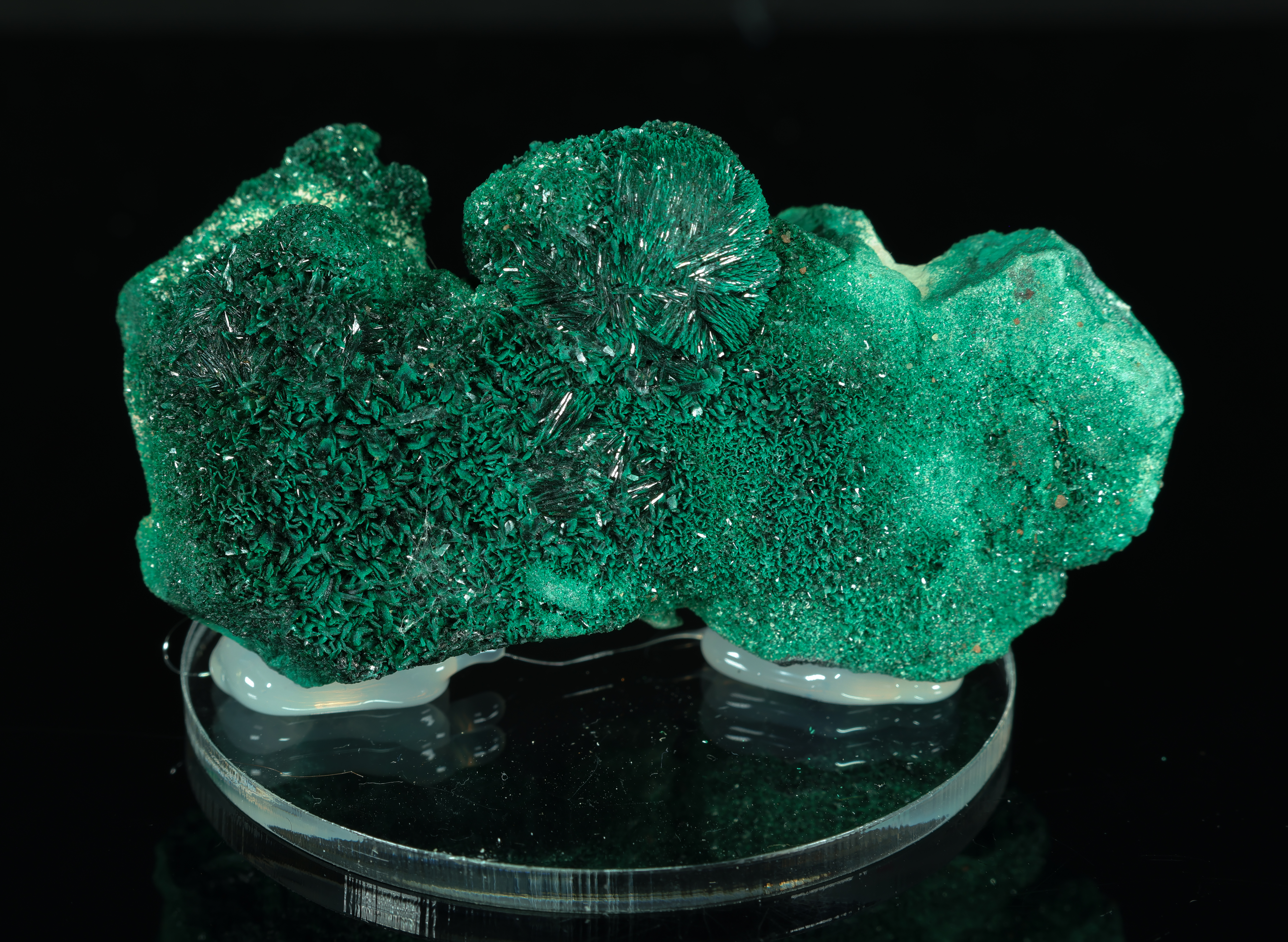
Atacamite is a rare copper halide-hydroxide mineral, characterized by its intense green color and often occurring as small, acicular crystals.
Properties
- Mohs hardness
- 3-3.5
- Luster
- Adamantine to Vitreous
- Streak
- Apple-green.
- Density
- 3.745
- Cleavage
- On {010}, fair on {101}.
- Fracture
- Muszlowy do nierównego
- Transparency
- Transparent,Translucent
- Crystal system
- Orthorhombic
Diagnostic features
## Identification Atacamite can be identified by its characteristic, intense green color, which is typical for copper minerals. It often occurs as small, acicular or tabular crystals forming aggregates. The streak of the mineral is green, which is an important diagnostic feature. ## Distinguishing from Similar Minerals Atacamite is sometimes confused with malachite, another green copper mineral. It differs from malachite by its lack of reaction with hydrochloric acid (malachite reacts strongly) and its different crystallographic system and crystal forms. Dioptase is also similar, but its crystals are usually more distinct and have a different habit. Atacamite also has a lower hardness than dioptase. ## Crystal Forms Atacamite most commonly forms small, acicular, columnar, or tabular crystals. They often occur in radial, fibrous, granular aggregates, or as crusts on other minerals. Well-formed, single crystals are less common.
Geological environment
## Genesis Atacamite is a secondary mineral, formed in the oxidation zones of copper deposits, especially in arid climates. It forms as a result of the reaction of chlorides with copper-bearing solutions, often in the presence of groundwater. It is typical of desert regions where oxidation processes are intense and rainfall is rare. ## Mineral Associations Atacamite often co-occurs with other copper minerals, such as malachite, azurite, cuprite, chrysocolla, and with iron and manganese minerals. It can also occur with quartz and calcite as gangue minerals. ## Localities The most important atacamite localities are in the Atacama Desert in Chile, from which historical specimens originate. Other significant occurrences include Australia (especially Broken Hill), Arizona in the USA, Russia (Urals), Namibia, and some areas in Europe, e.g., in Greece and Italy.
Rarity
Common
For collectors
## Quality Criteria The most prized atacamite specimens are those characterized by an intense, emerald-green color, well-formed crystals, and an aesthetic habit. Large, radial aggregates of acicular crystals or well-defined tabular forms are particularly sought after. Color purity and absence of mechanical damage also influence the value of the specimen. ## Popular Localities The most sought-after specimens come from Chile, especially from the Atacama Desert regions, which are historical localities. Specimens from Arizona (USA) and Australia are also highly regarded by collectors for their quality and aesthetics.
Care and storage
## Cleaning Atacamite is a relatively soft mineral, so it requires gentle cleaning. It is best to use a soft brush and lukewarm distilled water. Avoid vigorous rubbing, which could scratch the surface of the crystals. ## What to Avoid The mineral is sensitive to acids, which can damage it. Avoid contact with household chemicals, detergents, and strong cleaning agents. Prolonged exposure to direct sunlight can cause color fading. Atacamite is not resistant to high temperatures, which can lead to its decomposition. ## Storage Atacamite specimens are best stored in closed display cases, away from dust and direct sunlight. Due to its softness, avoid contact with harder minerals that could scratch it. Stable temperature and moderate humidity are recommended to preserve the integrity of the specimen.