Apophyllite
Chemical formula: AB₄[Si₈O₂₀]X · 8H₂O
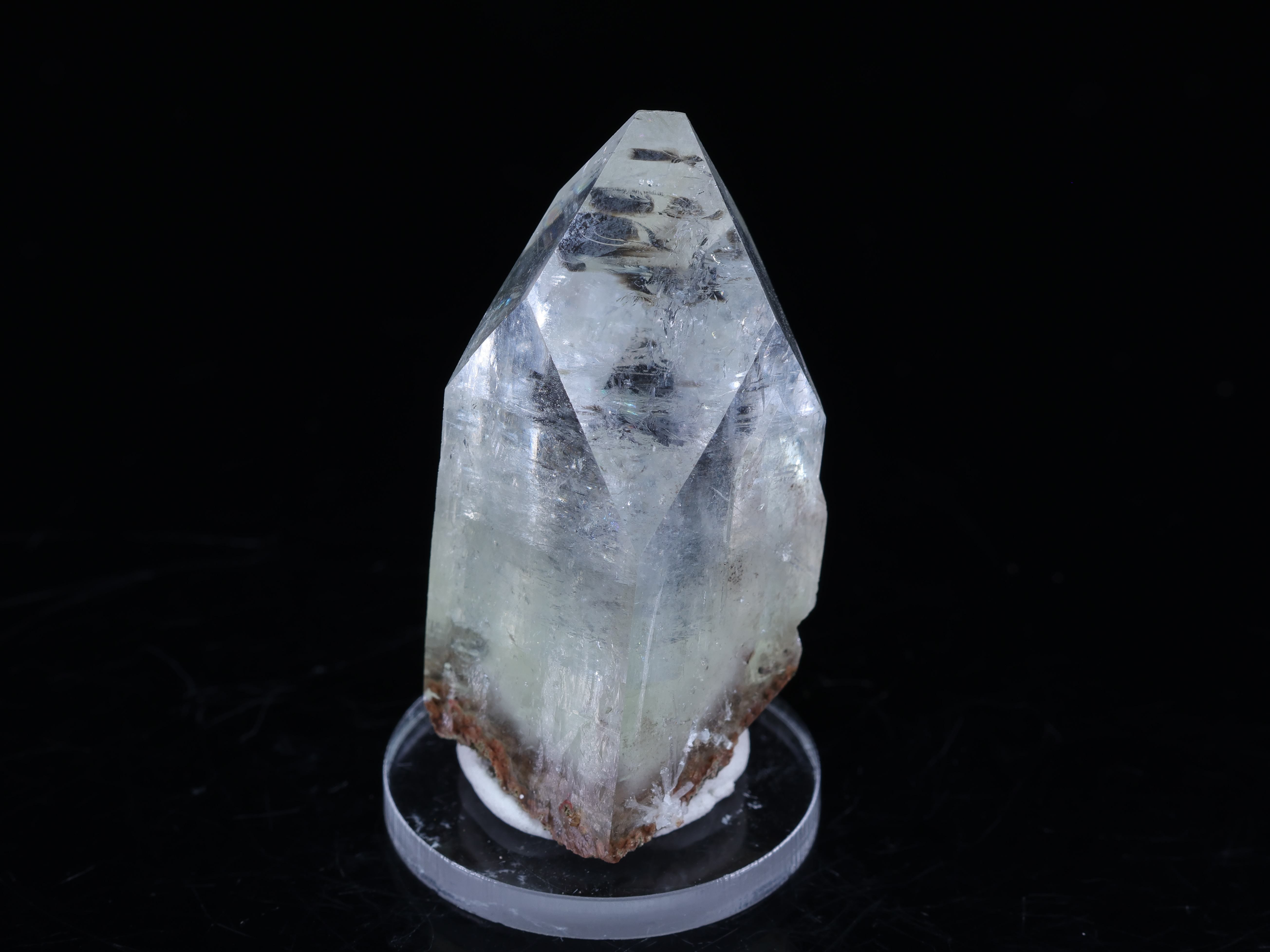
Apophyllite is a group of silicate minerals characterized by tetragonal or orthorhombic crystals, often occurring in pseudocubic forms.
Properties
- Mohs hardness
- 4.5-5
- Luster
- Szklisty, perłowy
- Streak
- Biała
- Density
- 2.3-2.5
- Cleavage
- Doskonała wg {001}
- Fracture
- Nierówny
- Transparency
- Przezroczysty do przeświecającego
- Crystal system
- Tetragonalny
Diagnostic features
## Identification Apophyllite can be identified by its characteristic crystal habit, often pseudocubic or prismatic, and vitreous to pearly luster. It often occurs in geodes and fissures in volcanic rocks. Perfect cleavage in one direction is also a diagnostic feature. ## Distinguishing from Similar Minerals Apophyllite can be confused with zeolites, such as stilbite or heulandite, due to similar occurrence environments and habits. However, apophyllite is distinguished by its perfect cleavage in one direction and different crystallographic system. In case of doubt, precise optical studies or X-ray diffraction can help in identification. ## Crystal Forms Apophyllite typically forms tetragonal crystals, often with pseudocubic, prismatic, or pyramidal habits. Crystal surfaces can be smooth or show delicate striations. It often occurs in radial, lamellar, or granular aggregates, forming beautiful clusters on the matrix.
Geological environment
## Genesis Apophyllite forms mainly in hydrothermal environments, often in gas vesicles (geodes) and fissures in basalts, andesites, and other volcanic rocks. It can also occur in skarns and hydrothermal veins associated with granitoid intrusions. ## Mineral Associations Apophyllite often co-occurs with zeolites (such as stilbite, heulandite, chabazite), calcite, quartz, prehnite, and other secondary minerals formed in volcanic rocks. ## Localities Key apophyllite localities include India (especially the Deccan Traps, where large and well-formed crystals occur), Brazil, Mexico, Canada, USA, Iceland, Germany, and Italy.
Rarity
Not very common
For collectors
## Quality Criteria The most prized apophyllite specimens are characterized by well-formed, large, and transparent crystals with intense coloration (especially green or pink). The aesthetics of the aggregate, absence of mechanical damage, and the presence of interesting associations with other minerals are also important. ## Popular Localities The most sought-after apophyllite specimens come from India, especially from the Deccan region, where spectacular geodes with large, green crystals are found. Other valued localities include Brazil and Mexico, known for their diverse forms and colors.
Care and storage
## Cleaning Apophyllite is a relatively soft mineral, so it should be cleaned carefully. It is best to use a soft brush and lukewarm water. A mild soap can also be used, followed by thorough rinsing of the specimen with distilled water. Avoid vigorous scrubbing, which can scratch the crystal surfaces. ## What to Avoid Apophyllite is sensitive to acids, so contact with chemical substances should be avoided. High temperatures can cause water loss from the mineral and its exfoliation. Prolonged exposure to direct sunlight can lead to fading of some colored varieties. Due to its cleavage, apophyllite is susceptible to mechanical damage, so it should be handled with care. ## Storage Apophyllite specimens are best stored in closed display cases or boxes lined with soft material to protect them from dust and damage. It is important to avoid sudden changes in temperature and humidity. Large, well-formed crystals should be displayed in a way that ensures their stability and protection from accidental impact.