Apatite
Chemical formula: Ca₅(PO₄)₃(F,Cl,OH)
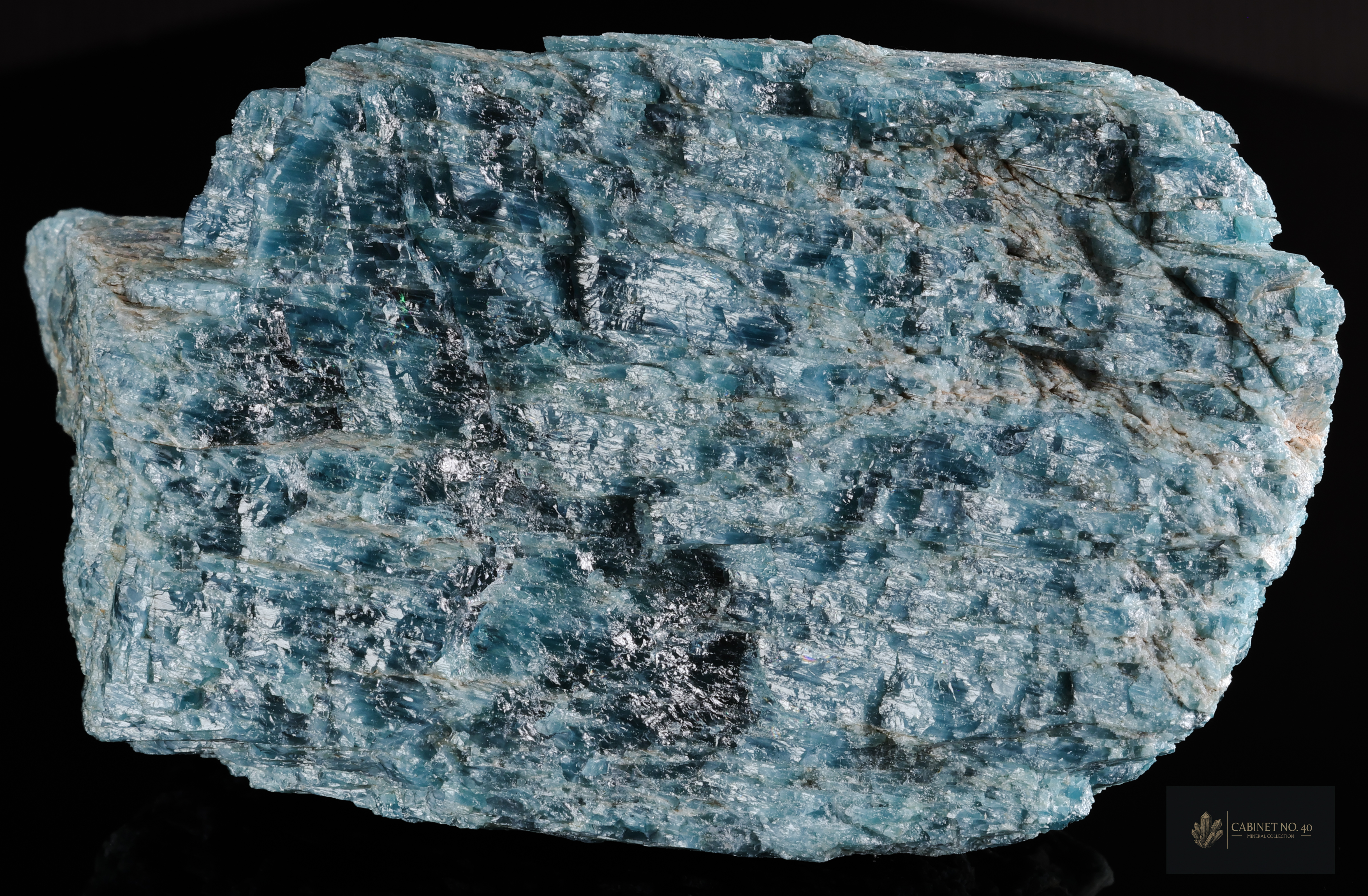
Apatite is a group of phosphate minerals characterized by variable chemical composition and a wide range of colors, often occurring as hexagonal crystals.
Properties
- Mohs hardness
- 5
- Luster
- Szklisty do żywicznego
- Streak
- Biała
- Density
- 3.1-3.2
- Cleavage
- Niewyraźna
- Fracture
- Muszlowy do nierównego
- Transparency
- Przezroczysty do przeświecającego
- Crystal system
- Heksagonalny
Diagnostic features
## Identification Apatite can be identified by its hardness (5 on the Mohs scale), which is a diagnostic feature. It often occurs as hexagonal crystals, which can be prismatic or tabular. The luster is vitreous to resinous, and the streak is white. The variability of colors is also characteristic of this mineral. ## Distinguishing from Similar Minerals Apatite is often confused with beryl, tourmaline, olivine, or quartz. It is distinguished from beryl and tourmaline by its lower hardness. It differs from olivine by its crystallographic system and lack of conchoidal fracture. It is distinguished from quartz by its significantly lower hardness. In case of doubt, a hardness test is crucial for identification. ## Crystal Forms Apatite most commonly forms hexagonal crystals, with prismatic, tabular, or acicular habits. Flattened prism faces and the presence of pyramids are common. It can also form granular, massive, radial, reniform, or botryoidal aggregates.
Geological environment
## Genesis Apatite is a common mineral, occurring in a wide range of geological environments. It forms in igneous (acidic and basic), metamorphic, and sedimentary rocks. In igneous rocks, it crystallizes as an accessory mineral in granites, syenites, diorites, and gabbros, as well as in pegmatites and carbonatites. In metamorphic rocks, it occurs in marbles, gneisses, and schists. In sedimentary rocks, it forms as a result of diagenetic processes, often as phosphorites, which are the main source of phosphorus. ## Mineral Associations Apatite often co-occurs with minerals such as quartz, orthoclase, biotite, muscovite, hornblende, calcite, dolomite, fluorite, tourmaline, beryl, and also with metal ores. ## Localities Known localities of apatite include Russia (Kola Peninsula), Canada (Ontario, Quebec), Brazil (Minas Gerais), Mexico (Durango), USA (Maine, California), Norway (Kragerø), Germany (Saxony), Pakistan, Madagascar, and Myanmar. In Poland, apatite occurs, among others, in Sudetic pegmatites and in carbonatites near Ełk.
Rarity
Common
For collectors
## Quality Criteria The most prized apatite specimens are those with distinct, well-formed crystals, with intense and rare colors, such as blue, violet, or pink. Transparency and lack of inclusions also increase collectible value. Large specimens, especially those with a cat's eye effect or asterism, are particularly sought after. ## Popular Localities Among the most sought-after specimens are those from Brazil (especially from Minas Gerais, known for beautiful, transparent crystals), Mexico (Durango, with large, well-formed crystals), Canada (Ontario, Quebec, with blue and green varieties), and Madagascar (pink and green specimens).
Care and storage
## Cleaning Apatite is a mineral with relatively low hardness, so it should be handled with care. For cleaning specimens, it is best to use a soft brush and lukewarm water with mild soap. After washing, rinse the mineral thoroughly with clean distilled water and dry it with a soft cloth. ## What to Avoid Avoid using aggressive chemicals, acids, and ultrasonic cleaners, which can damage the surface of apatite or alter its color. The mineral is sensitive to high temperatures and sudden thermal changes, which can lead to cracks. Prolonged exposure to direct sunlight can cause some colored varieties to fade. Apatite is also susceptible to scratches, so it should be protected from contact with harder minerals. ## Storage Apatite specimens are best stored separately from other minerals, in a soft pouch or in a box lined with soft material to prevent scratches. For jewelry specimens, it is recommended to store them in a jewelry box. Display should be in a place with stable temperature and away from direct sunlight.