Anorthoclase
Chemical formula: (Na,K)AlSi<sub>3</sub>O<sub>8</sub>
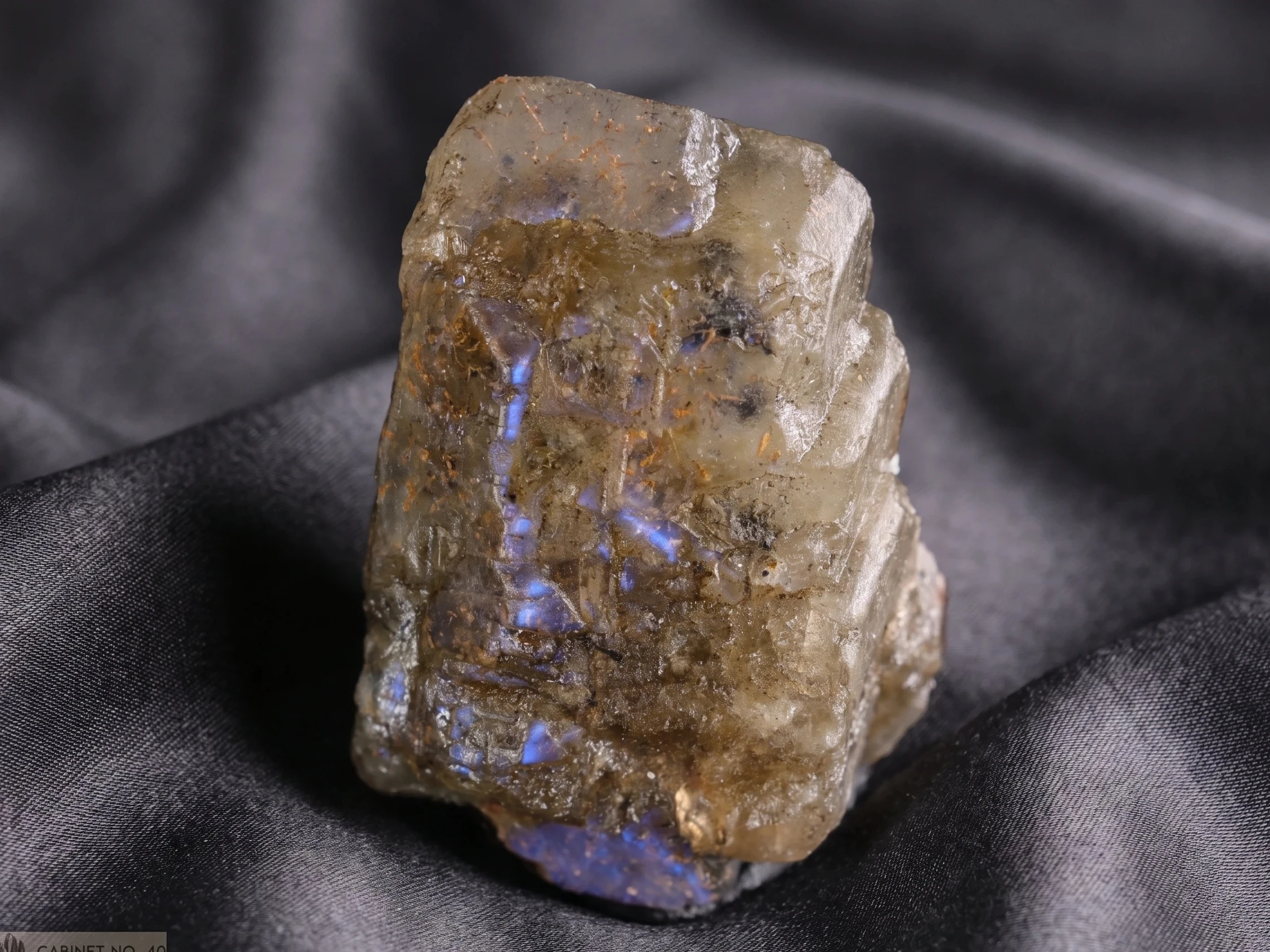
Anorthoclase is a feldspar mineral, a variety of plagioclase with an intermediate chemical composition between albite and orthoclase, often characterized by peristerite.
Properties
- Mohs hardness
- 6-6.5
- Luster
- Szklisty do perłowego
- Streak
- Biała
- Density
- 0
- Cleavage
- Doskonała wg {001} i {010}
- Fracture
- Nierówny do muszlowego
- Transparency
- Przezroczysty do przeświecającego
- Crystal system
- Trójskośny
Diagnostic features
## Identification Anorthoclase can be identified by its appearance, often gray or white color, vitreous or pearly luster, and characteristic cleavage. A key diagnostic feature is the often-present peristerite effect, a bluish-white iridescence, similar to that in labradorite, but usually more subtle. ## Distinguishing from Similar Minerals Anorthoclase can be confused with other feldspars, such as albite, orthoclase, or labradorite. It is distinguished from albite and orthoclase by its chemical composition and the often-present peristerite. It is distinguished from labradorite by its usually less intense and more limited range of iridescence colors, which in labradorite is often multicolored and more pronounced. ## Crystal Forms Anorthoclase most commonly occurs as massive aggregates or granular masses. Less frequently, it forms tabular or prismatic crystals, which are usually twinned.
Geological environment
## Genesis Anorthoclase forms in igneous rocks, especially in volcanic basic and intermediate rocks, such as trachytes, basalts, and andesites. It is a typical high-temperature mineral, crystallizing under conditions of rapid magma cooling. ## Mineral Associations Anorthoclase often co-occurs with other feldspar minerals, such as plagioclase (albite, oligoclase, andesine), and with pyroxenes, amphiboles, and olivine. It can also be found in association with quartz and biotite. ## Localities Known occurrences of anorthoclase are found in many places around the world. In Norway, it occurs near Larvik, where it is associated with larvikite. Other important localities include Italy (Vesuvius area), Greenland, Japan, and some areas in the United States.
Rarity
Extremely Rare
For collectors
## Quality Criteria The most prized anorthoclase specimens are those that exhibit a strong and distinct peristerite effect. The purity of the mineral, absence of cracks and inclusions, and aesthetic crystal shape, if present, are also important. Large, well-formed crystals are rare and of great collector's value. ## Popular Localities Specimens of anorthoclase from Norway, especially those exhibiting intense peristerite, are particularly sought after. Other prized specimens come from Italy and Greenland.
Care and storage
## Cleaning Anorthoclase can be cleaned with a soft brush and lukewarm water. For heavier soiling, a mild soap may be used. After washing, rinse the mineral thoroughly with clean water and dry with a soft cloth. ## What to Avoid Avoid using aggressive chemicals, such as acids or bases, which can damage the mineral's surface. Anorthoclase is sensitive to sudden temperature changes, which can lead to cracks. Prolonged exposure to direct sunlight can cause colors to fade, especially in specimens with delicate hues. Excessive moisture, which can promote the growth of tarnish, should also be avoided. ## Storage Anorthoclase is best stored in a dry place, away from direct sunlight and heat sources. High-quality specimens, especially those with the peristerite effect, should be stored separately to prevent scratching by harder minerals. The ideal solution is to place them in soft pouches or padded boxes.