Anhydrite
Chemical formula: CaS<sup>6+</sup>O<sub>4</sub>
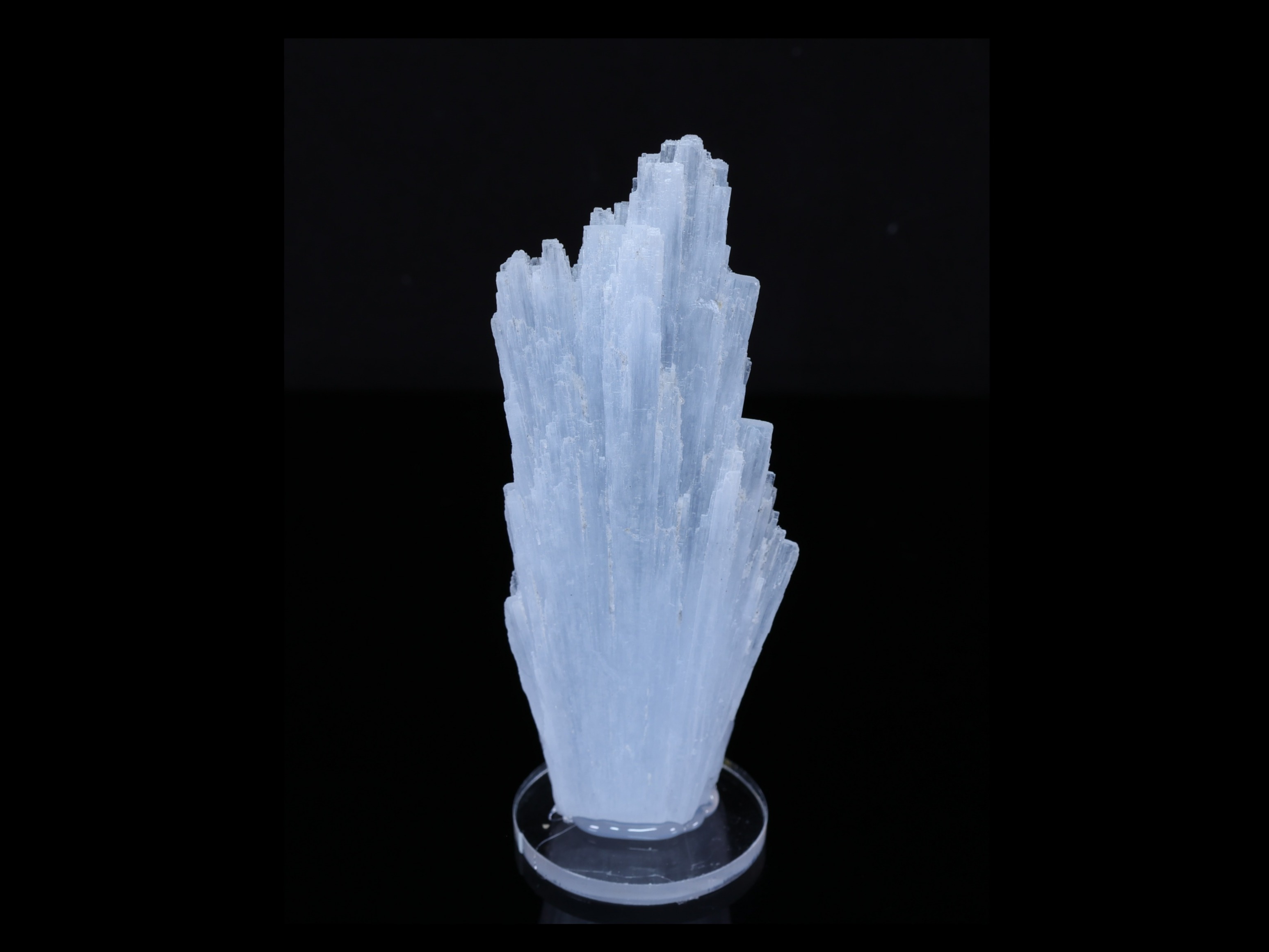
Anhydrite is a sulfate mineral, a variety of anhydrite, characterized by delicate, blue colors.
Properties
- Mohs hardness
- 3-3.5
- Luster
- Szklisty do perłowego
- Streak
- Biała
- Density
- 0
- Cleavage
- Doskonała wg {010}, {100} i {001}
- Fracture
- Nierówny
- Transparency
- Przezroczysty do przeświecającego
- Crystal system
- Rombowy
Diagnostic features
## Identification Anhydrite can be identified by its characteristic blue color, often with shades of violet or gray, and its compact, fine-grained structure. It is relatively soft, which can be checked by trying to scratch it with a fingernail (although this is not a recommended method for valuable specimens). It exhibits a vitreous to pearly luster on fresh fractures. ## Distinguishing from Similar Minerals Anhydrite can be confused with chalcedony, lapis lazuli, or sodalite, but it differs from them in hardness and chemical composition. Chalcedony is much harder, lapis lazuli often contains pyrite, and sodalite usually has a darker, more intense blue. Anhydrite is also a variety of anhydrite, which means that in contact with water it can transform into gypsum, which is not observed in the case of other blue minerals. ## Crystal Forms Anhydrite most often occurs as compact, granular, or fibrous aggregates. Less often, it forms well-developed crystals, which are usually tabular or prismatic.
Geological environment
## Genesis Anhydrite forms in evaporitic environments, where saline marine or lake waters evaporate. It is a secondary mineral, forming from anhydrite as a result of metamorphism or diagenesis. It often occurs in salt and gypsum deposits. ## Mineral Associations Anhydrite often co-occurs with other evaporitic minerals, such as gypsum, halite, celestine, and calcite. It can also be found in association with native sulfur. ## Localities The most famous deposits of anhydrite are located in Peru, especially in the San Pedro de Cachiyacu region. Other occurrences include Mexico, Poland (e.g., the Lubin area), Germany, and the United States.
Rarity
Extremely Rare
For collectors
## Quality Criteria The most prized anhydrite specimens are characterized by an intense, uniform blue color, without significant inclusions or discolorations. Transparency or translucency and the absence of cracks and mechanical damage are also important. Specimens with well-developed crystals are rare and particularly sought after. ## Market Prices The prices of anhydrite vary and depend on the quality, size, and form of the specimen. Small, rough pieces can cost from a few to several dozen Polish zlotys. Larger, well-colored specimens, especially those in the form of cabochons or carvings, can reach prices from several dozen to several hundred Polish zlotys. Extremely rare and aesthetic crystals can be significantly more expensive. ## Popular Localities The most prized anhydrite specimens come from Peru, where they occur in large quantities and are characterized by a beautiful, blue color.
Care and storage
## Cleaning Anhydrite is a relatively soft mineral, so it should be cleaned gently. It is best to use a soft, damp cloth or brush. Lukewarm water with a small amount of mild soap can be used, then rinse thoroughly with clean water. After washing, it should be dried, avoiding leaving moisture. ## What to Avoid Avoid contact of anhydrite with acids, strong detergents, and chemicals that can damage its surface or change its color. Due to its softness, it should be protected from scratches and impacts. Prolonged exposure to sunlight can cause color fading. Anhydrite is also sensitive to moisture, as it is a variety of anhydrite, which in contact with water can transform into gypsum, leading to a loss of structure and appearance. ## Storage Anhydrite is best stored in a dry place, away from direct sunlight and sources of moisture. Ideally, it should be placed in a soft pouch or separate box to prevent scratches from other, harder minerals. When displayed, it should be provided with stable conditions, protecting it from changes in temperature and humidity.