Analcime
Chemical formula: NaAlSi<sub>2</sub>O<sub>6</sub>·H<sub>2</sub>O
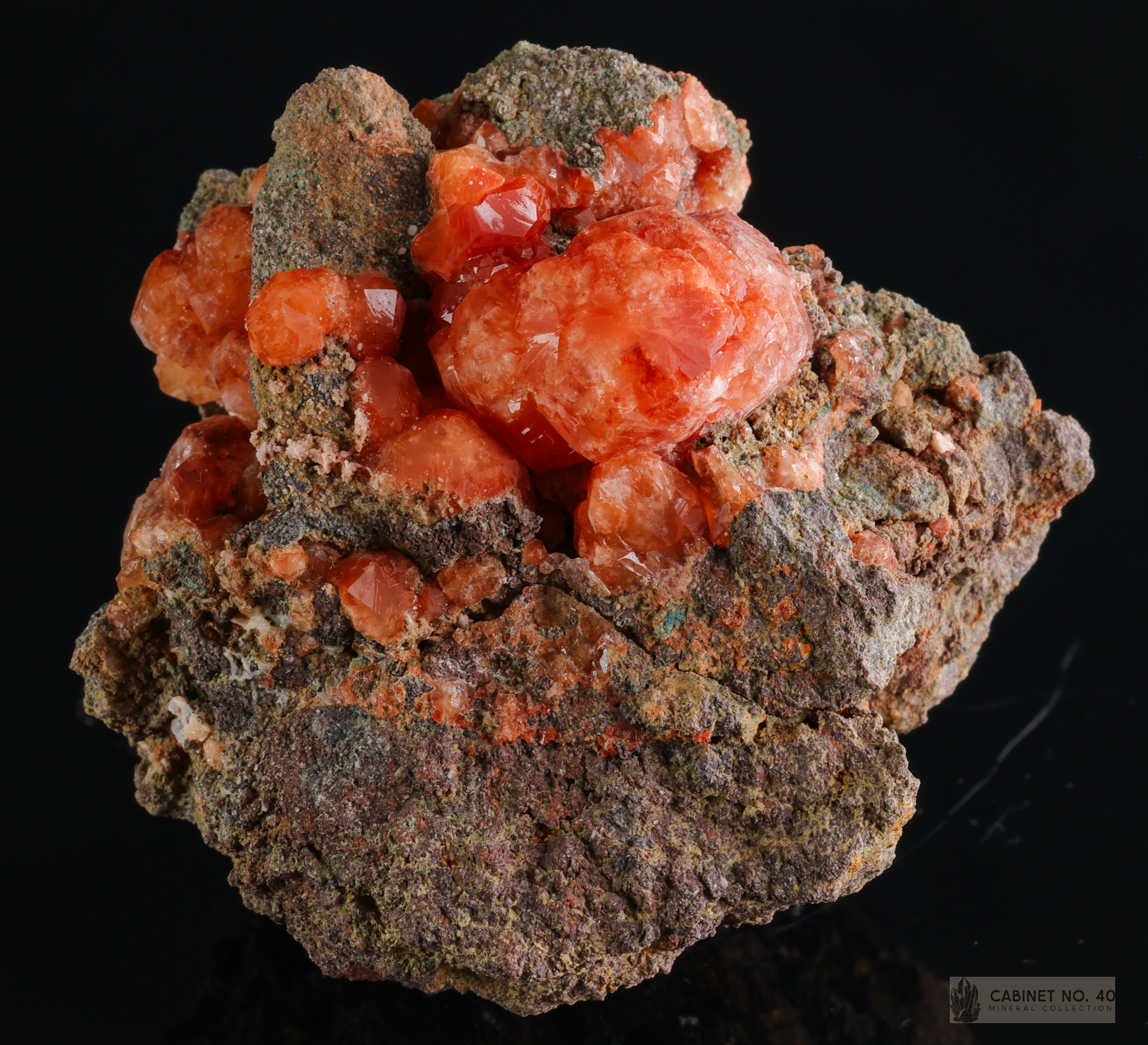
Analcime is a mineral from the zeolite group, a hydrated sodium aluminosilicate, often forming characteristic, isometric crystals.
Properties
- Mohs hardness
- 5-5.5
- Luster
- Vitreous
- Streak
- White
- Density
- 2.24
- Cleavage
- on {100}
- Fracture
- Muszlowy do nierównego
- Transparency
- Transparent,Translucent
- Crystal system
- Triclinic
Diagnostic features
## Identification Analcime can be identified by its characteristic crystal habit (most often trapezohedra), vitreous luster, and hardness in the range of 5-5.5 on the Mohs scale. It often occurs in cavities of volcanic rocks. ## Distinguishing from Similar Minerals Analcime is sometimes confused with garnets, but garnets are much harder (6.5-7.5) and have a different genesis. It is usually distinguished from other zeolites by its crystal habit and chemical composition. It can be distinguished from leucite, which has a similar habit but different hardness and lacks water in its composition. ## Crystal Forms Analcime most often forms isometric crystals with a trapezohedral habit. Less commonly, cubes or combinations of these forms are found. It can also occur as massive or granular aggregates.
Geological environment
## Genesis Analcime forms mainly in low-temperature hydrothermal environments, filling fractures and cavities in volcanic rocks, especially basalts and andesites. It can also form in lacustrine and marine sediments as a product of volcanic glass alteration. ## Mineral Associations Analcime often co-occurs with other zeolites, such as chabazite, heulandite, stilbite, and natrolite. It can also be found in association with calcite, apophyllite, and prehnite. ## Localities Known analcime localities include India (Deccan, especially the Mumbai region), Italy (Vesuvius area, Sicily), Iceland, Canada (Nova Scotia), the United States (Colorado, Oregon), and Scotland.
Rarity
Very Common
For collectors
## Quality Criteria The most prized analcime specimens are those with well-formed, large, and transparent crystals with intense coloration (e.g., pink, orange). The aesthetics of the entire matrix on which the crystals are embedded, and the absence of mechanical damage, are also important. ## Popular Localities The most sought-after specimens come from India, especially from the Deccan region, where it forms beautiful, often orange crystals in basaltic geodes. Other valued localities include Italy and Iceland.
Care and storage
## Cleaning Analcime is a relatively delicate mineral, so it is best to use a soft brush and lukewarm water for cleaning. For heavier soiling, distilled water can be used to avoid hard water deposits. ## What to Avoid Avoid using strong acids and bases, which can damage the mineral's surface. Prolonged exposure to direct sunlight can lead to fading of some colored varieties. Analcime is not resistant to high temperatures, which can lead to the loss of crystallization water and changes in its structure. ## Storage Analcime specimens are best stored in closed display cases, away from dust and sudden temperature changes. Due to its hardness, contact with harder minerals that could scratch it should be avoided.